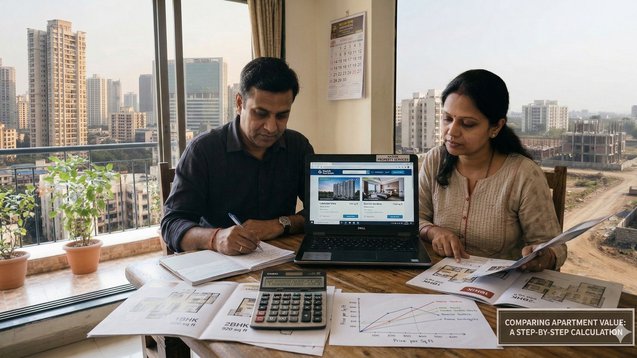
Introduction: The number that confuses most buyers
Buyers in India begin their property selection process by checking one specific number which shows the cost of each square foot. The system offers users a simple scientific method which enables them to perform direct comparisons. The quotation for ₹6,500 per sq ft makes the project appear more affordable than the one which charges ₹8,200 per sq ft. But is it really that straightforward? The process of comparing property value through square foot measurements requires more detailed assessment than most buyers think. The calculation depends on what type of area is being measured, how amenities are factored in, what infrastructure surrounds the project, and how future appreciation might unfold. The pricing systems in Tier 1 cities which include Mumbai and Delhi NCR and Bengaluru face complications because of their expensive land prices and their elite brand image. The rapid urban expansion in Tier 2 cities causes price differences between Jaipur and Lucknow and Coimbatore. The pricing differences in Tier 3 towns result from both unpredictable development patterns and the existing demand for local services. You need to learn how to compare per square foot value before you make any decisions through Property Aaj (https://www.propertyaaj.com) because this knowledge will help you find real value and prevent you from paying too much.
Carpet Area vs Built-Up vs Super Built-Up: Know What You’re Comparing
The first rule of comparing price per square foot requires full understanding of the area type which needs assessment. In India, developers may quote rates based on carpet area, built-up area, or super built-up area. The carpet area defines the space that your apartment walls enclose as usable space. Built-up areas include walls and sometimes balcony space. Super built-up areas include all common areas which exist within a building together with the amenities that each unit must share according to specific ratios. Most branded developers in Tier 1 cities now present their property prices according to RERA-defined carpet area measurements. In Tier 2 and Tier 3 cities, super built-up figures are still frequently advertised because they appear larger. The second option becomes more advantageous when one project quotes ₹7,000 per sq ft on super built-up and another project quotes ₹8,000 per sq ft on carpet area. Value assessment requires area definition comparison between different measurement standards.
Location Premium Plays a Major Role
The cost per square foot depends on the geographic location of the property. Central Mumbai and South Delhi properties will sell at higher prices than properties located in outer areas. The elevated price of the product indicates its superior capacity to connect different areas and deliver social services and maintain value throughout the years. The central districts of Tier 2 cities show limited development of new properties which results in increased market prices. Emerging corridors near ring roads or IT hubs may offer lower rates but higher growth potential. In Tier 3 towns, properties near highways or government offices typically attract premium pricing. The Property Aaj website (https://www.propertyaaj.com) allows users to browse listings which include multiple projects that exist within the same micro-market. Buyers will receive incorrect information through area comparisons that do not consider location benefits.
Amenities and Infrastructure Impact Value
The two properties located in the same area have different costs per square foot because of their different facilities. The expenses for building the gated security system and clubhouse and landscaped gardens and power backup system and parking areas create higher construction expenses which lead to increased project costs. The high-rise towers in Tier 1 cities that offer luxury amenities receive higher pricing because of their premium status. The new township projects in Tier 2 cities demonstrate their worth through their premium pricing model which includes premium lifestyle amenities. The availability of amenities in Tier 3 towns creates a clear distinction between contemporary developments and traditional independent structures. The higher price of Project A which costs ₹500 per sq ft more becomes reasonable because it provides superior security and parking and recreational spaces. You should examine both the rate and the components that make up that rate.
Construction Quality and Builder Reputation
Builders' reputation directly affects their pricing for construction work. Builders with established market presence charge higher prices because customers trust their brand and their projects are delivered on schedule and their building work meets high standards. Branded developers control premium market areas because they maintain their presence in Tier 1 cities. Regional developers in Tier 2 cities establish strong market presence although their business standards differ from one another. In Tier 3 towns, different price ranges show which builders people trust more than actual construction expenses. A builder with recognized industry status will charge higher rates per square foot but this will result in fewer maintenance issues and decreased legal liability for the customer. When you select properties from Property Aaj (https://www.propertyaaj.com) you should examine both builder performance history and property costs.
Floor Level and View Premium
The price per square foot of high-rise buildings shows different values for each building level. People are willing to pay more for higher floors because those floors provide superior sightlines and better air circulation. Tier 1 cities offer significant view premiums which apply to units that face either the sea or the park. In Tier 2 cities, garden-facing or corner units may cost more. The differences between these two areas show smaller variations which still remain visible. Your rate comparison requires you to check both floor height and building orientation of the items being compared. The lower rate for the lower floor does not guarantee better value because resale demand favors higher floors.
Hidden Costs Beyond Per Square Foot Price
The quoted per square foot rate does not include everything. The total expenses include preferential location charges, parking fees, clubhouse membership maintenance deposits and registration costs which include GST for under-construction units. The framework of Tier 1 cities allows corner units and premium view properties to charge higher PLC costs. Infrastructure development charges exist in Tier 2 cities. Local municipal fees differ between various Tier 3 towns. A property that appears cheaper per square foot will become more expensive after you add all additional costs. The total agreement value should be calculated because base rate alone does not show the complete amount.
Rental Yield and Return Potential
The evaluation of investment property requires assessment of both price per square foot and rental yield. In Tier 1 cities, high property prices create a situation where investors receive reduced rental yield percentages. Tier 2 cities experience situations where their moderate property prices result in higher yield ratios. The rental market in Tier 3 towns exhibits restricted demand, which results in diminished rental returns. The property with higher per square foot price and better proximity to employment centers will deliver stronger rental income stability. The assessment of project value requires examination of both starting costs and potential revenue.
Market Trends and Supply-Demand Dynamics
The assessment of pricing requires an evaluation of the existing supply-demand equilibrium. In micro-markets with limited new launches, prices may rise faster. Competitive pricing in oversupplied areas will maintain price stability. Land scarcity in Tier 1 cities provides a foundation for enduring price stability. The expansion of Tier 2 cities leads to temporary periods when certain corridors experience excessive supply. Government projects in Tier 3 towns create unexpected demand increases for their services. People should assess per square foot value by examining the overall market situation. The stable, high-demand location provides more safety through its slightly higher rate than the low rate which exists in the oversupplied area.
Practical Comparison Method
The method requires you to verify the area type which includes carpet and super built-up before proceeding to compare the two areas which exist in the same locality. The total cost per usable square foot should include all extra fees which need to be added to the initial calculation. The assessment process requires you to examine both the available amenities and the quality of construction. The evaluation process requires you to examine both rental income potential and resale value potential. The established structure of this approach protects against emotional decision making.
Conclusion
The price per square foot operates as a valuable standard measurement which requires proper understanding for accurate use. The building costs together with the location and brand and facilities and transportation system and market forces create actual construction expenses. Cities classified as Tier 1 show their high pricing rates because they demonstrate both connectivity and liquidity. The price changes which occur between different areas of Tier 2 cities will show the path of future development. The demand patterns which exist in Tier 3 towns will create major effects on property valuation. Property Aaj requires users to conduct property searches through its website (https://www.propertyaaj.com) by means of deep analytical comparisons instead of basic inspection methods. Users should investigate aspects beyond the basic rate. Users must determine total expenses while assessing their living requirements and future growth possibilities. The buyer who understands smart buying practices avoids searching for properties with the cheapest square foot price. The buyer who understands smart buying practices selects properties which provide the greatest worth through their square foot price.
FAQs
1. What is the most accurate area measurement for comparing prices?
The measurement standards determine that carpet area serves as the most appropriate method to measure price differences because it displays the actual usable area of your apartment. The carpet to carpet comparison method provides you with accurate measurement results for your work.
2. Why do some projects show lower per square foot rates?
They may be quoting on super built up areas or excluding additional charges. The verification process requires you to check what elements exist before making any cost assumption.
3. Does higher per square foot price always mean better quality?
Not necessarily but builders who have established a strong reputation together with properties located in desirable areas tend to charge premium prices because customers trust them and their products are in high demand.
4. Should I compare properties across different localities?
You should begin your comparison process by testing properties that exist within the same micro-market. Different areas have different infrastructure, connectivity, and demand patterns.
5. How do amenities affect per square foot pricing?
Projects that include clubhouses together with landscaped gardens and security systems and parking facilities will experience increased development costs which will result in higher per square foot prices.
6. Is lower per square foot always a better investment?
No. Lower price may indicate weaker demand, limited infrastructure, or lower construction quality. You should assess the total worth of the product instead of focusing on its pricing structure.
Read more about property matters with our specialists and browse the latest property listings on Property Aaj. Download the app from the Play Store and App Store now for easy buying, selling, and renting!