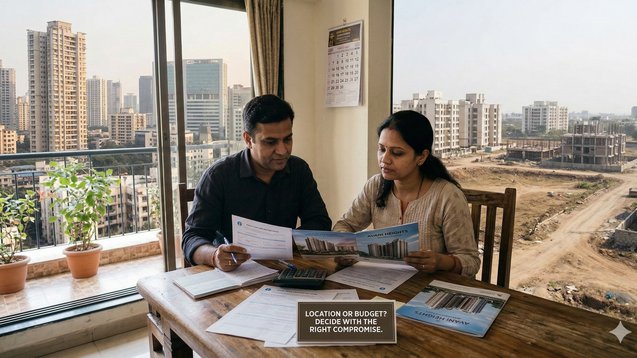
Introduct: Why location matters more than we think
The process of purchasing real estate in India requires buyers to choose between two competing needs which are their desired location and their available financial resources. The top neighborhoods of Tier 1 cities which include Mumbai and Delhi NCR and Bengaluru charge buyers premium prices. Central areas of Tier 2 cities which include Jaipur and Lucknow and Coimbatore require customers to pay much higher prices than those who purchase properties in developing areas. The pricing in Tier 3 towns depends on how close properties are to essential places which include main markets and highways and government institutions. The situation demands people to decide whether they must accept a poor location in order to obtain their financial objectives. The response appears straightforward when someone begins to investigate the situation. The lower price results in smaller essential payments which include the EMI and stamp duty while providing a bigger carpet area. The location of a property determines how much time people need to travel to work and how much rent they can charge and the price they will receive when they sell their property and the development of nearby facilities and their daily activities. Your choice of location in real estate will establish your future existence more than any other aspect of property selection. People should evaluate all financial and lifestyle impacts which result from selecting a property in less busy areas before they create their final property list on Property Aaj (https://www.propertyaaj.com). The act of saving money in the present time creates intelligent results when the person involved maintains peace during the entire process.
Understanding What “Location” Really Means
Buyers express their preference for a particular area when they use the term "good location" because they want to have easy access to their workplaces, educational institutions, medical facilities, public transportation systems, and shopping areas. People need to understand the location of the site because it contains multiple components which include its ability to connect to other areas, upcoming building projects, the standard of the surrounding neighborhood, the local community atmosphere, and the level of protection from dangers. People who live in Tier 1 cities near metro stations or business areas or IT corridors experience less difficulties when commuting between their home and work. Property values in Tier 2 cities experience growth from locations near city centers and upcoming industrial areas. People in Tier 3 towns prefer homes which provide them with easy access to highways and district headquarters because these two locations determine home value. People who want to stay in the same area need to understand that they must choose between two distance options. The distance people need to travel from their current location will extend to 5 to 10 kilometers which leads them to work in a developing area. The main purpose requires people to identify whether the corridor contains actual growth capacity or exists solely for promotional reasons. The main purpose requires people to identify whether the corridor contains actual growth capacity or exists solely for promotional reasons.
Immediate Savings vs Long-Term Costs
The residential properties found in peripheral regions demonstrate lower price levels than other areas. The price gap between central micro-markets and suburban extensions shows extreme variation in Tier 1 cities. The outer ring roads and bypass areas of Tier 2 cities provide residents with access to more spacious homes which cost less than typical home prices. The costs of developing plots in Tier 3 towns can reach up to 50 percent lower than their typical market value. The total cost of ownership for an item extends beyond its initial purchase price according to common beliefs. The longer a person spends driving to work their costs for gasoline increase while their journey time extends which takes away from the time they spend with their family. The daily traffic pattern in Tier 1 cities creates a two-hour delay which negatively affects mental well-being. The ongoing development of infrastructure in Tier 2 cities creates challenges for residents. The absence of public transportation systems in Tier 3 towns forces residents to use multiple cars for their transportation needs. You need to calculate your monthly EMI savings together with your ongoing expenses for your daily way of life.
Infrastructure and Future Growth Potential
The only situation which justifies location compromises arises when the area demonstrates actual progress in building its infrastructure system. The first question to address is whether a metro line exists as a scheduled project while the second question requires assessment of highway expansion plans and the third question needs information about the upcoming business park and the fourth question needs details on the government-approved development plan. In Tier 1 cities, peripheral areas often appreciate once connectivity improves. The NCR metro-linked corridors and Mumbai suburbs with railway connections serve as two examples. The development of ring roads and IT parks leads to population growth in outer areas of Tier 2 cities. In Tier 3 towns, state highway improvements can change property demand quickly. The website property Aaj (httpswww.propertyaaj.com) requires users to study area descriptions before their search. Users should examine government notifications instead of depending on builder statements. A cheaper property in a well-planned growth corridor may outperform a stagnant central pocket.
Rental Demand and Liquidity
The importance of location increases for property owners who intend to lease their property in future. Tenants usually prioritize connectivity and convenience over extra space. The highest rental demand in Tier 1 cities occurs at locations which provide access to both employment centers and metro stations. The college zones and business districts of Tier 2 cities serve as attractive rental areas for tenants. The rental demand in Tier 3 towns tends to focus on areas which surround government offices and educational facilities. Excessive location concessions will decrease your property's rental value while increasing the chance of extended vacancies. The financial advantages from reduced EMI payments do not provide sufficient benefits to cover expenses from extended property vacancy periods. You should consider your property for use by others. You should evaluate your financial position based on your ability to sell assets.
Lifestyle and Social Comfort
The location of a place has a greater impact on daily activities than its actual size. The distance to markets and schools and hospitals and parks creates better living conditions for residents. Proximity to locations decreases traffic fatigue for people who reside in Tier 1 cities. Central neighborhoods in Tier 2 cities provide better civic infrastructure than other parts of the city. The central areas of Tier 3 towns which have existed for a long time provide better community connections than other parts of the town. You must determine your actual ability to handle long distance travel which you need to do on a daily basis. Your children's education and your parents' medical treatment will experience changes because of your travel plans. Essential convenience should not face any restrictions because people want to save money.
Security and Civic Infrastructure
The development of civic infrastructure in peripheral areas will require time until all necessary components reach their complete operational state. The development process for roads and drainage systems and street lighting and public safety systems requires an extended period until they achieve full operational capacity. New suburban developments in Tier 1 cities maintain gated security systems which rely on privately owned infrastructure. Public services in Tier 2 and Tier 3 cities experience delays when operating in their newly established areas. The assessment should focus on present living conditions instead of evaluating upcoming construction work.
Psychological Factors in Decision-Making
People tend to exceed their financial limits because they want to live in high-status areas which they believe will improve their social image. People who want bigger homes move to distant locations where they can find larger properties to buy. People who experience both extreme circumstances will develop feelings of regret. A person will find more peace of mind from living in a small house located in a highly accessible area than from residing in a big apartment situated away from important daily activities. A person who works from home and has infrequent trips to work will find greater value in moving to distant areas according to their circumstances. Your personal lifestyle choice determines the correct decision which exists outside public perception.
Balancing Budget and Location Strategically
The selection should focus on "emerging but connected" instead of "prime" and "far" options. Transit-oriented suburbs exist as potential locations in Tier 1 cities. New ring road corridors will develop throughout Tier 2 cities. The development plans for Tier 3 towns include areas that will be situated close to their educational institutions and industrial zones. Property Aaj (https://www.propertyaaj.com) allows users to examine property listings while comparing micro-market costs through price per square foot. The same zone allows for better money savings when users shift their location to nearby areas.Organizations benefit more from minor changes executives their organizations through situations that need complete reorganization.
When Compromising Makes Sense
The first condition which allows you to work from home or take public transportation to your job requires both public transportation access and ongoing infrastructure development work. The second condition exists because the area experiences increasing demand together with effective development plans. The first condition requires your EMI savings to increase your financial ease. The second condition exists because your health will suffer from commute stress. The situation requires essential services to be present in the area. The market shows weak rental demand. The value increase depends solely on market guessing. The situation requires you to keep a positive outlook while showing your actual capabilities.
Conclusion
The answer to the question about location-based cost savings requires multiple aspects to be evaluated. Central supply shortages in Tier 1 cities force residents to move outside the city limits while only specific strategic relocations provide solutions. Tier 2 cities develop new growth corridors through their infrastructure expansion which requires thorough assessment. Central areas in Tier 3 towns provide residents with central access that maintains its strong value. You should evaluate EMI savings against your selected property Aaj (https://www.propertyaaj.com) because it affects your commute and lifestyle and rental market and future property value growth. Your daily life experience comes from your selected location. People need to save money but they should not sacrifice their ability to maintain peace and practical needs throughout their entire life. A smart buyer does not simply chase low prices. A smart buyer evaluates value.
FAQs
1. Is it always better to buy in a prime location?
Prime locations provide people with convenient access to their properties but they must pay higher expenses for these prime locations. Emerging areas with good transportation links should be investigated when budget limitations create substantial financial difficulties.
2. How can I evaluate growth potential in a new area?
Official infrastructure announcements and metro plans and highway projects and commercial developments provide essential information about upcoming advancements. Avoid relying only on builder promises.
3. Does location affect resale value?
Yes. Properties situated in well-connected areas tend to experience higher resale demand which results in quicker sales compared to properties located in remote areas.
4. First-time buyers need to choose between location and property size.
Most situations require people to choose their location before they decide their home size. A slightly smaller home in a better location often provides better long-term value and lifestyle convenience.
5. The location of a property determines its rental income potential.
Tenants prefer places that provide them with easy access to the workplace and educational institutions. The poor location of a property decreases rental interest from potential tenants while it increases the likelihood of vacant units.
6. Can infrastructure development fully compensate for a distant location?
The process requires time to complete but it will enhance value with passing time because infrastructure development requires time to implement. Buyers should assess existing infrastructure conditions instead of relying on future development plans.
Read more about property matters with our specialists and browse the latest property listings on Property Aaj. Download the app from the Play Store and App Store now for easy buying, selling, and renting!