Introduction
The Indian real estate sector has functioned as a dreamland for people since its inception, but construction delays have prevented most people from achieving their dreams. Any homebuyer faces a nightmare when they see a construction crane that has stopped working in both Noida Extension high-rises and Chennai suburban gated communities. The financial impact of project delays extends beyond the waiting period because people must pay both their home loan EMI and their house rent. The Indian legal system has experienced a fundamental transformation. The Real Estate (Regulation and Development) Act (RERA) which the Indian government introduced in 2016 turned "helpless buyers" into "empowered consumers." At Property Aaj (https://www.propertyaaj.com), we believe that knowing your rights is the first step toward getting your investment back on track. You have several powerful legal tools at your disposal if your developer misses the possession deadline. The developer will be held accountable when we investigate your legal rights and the actions you can take to enforce them.
The Right to Information and Project Tracking
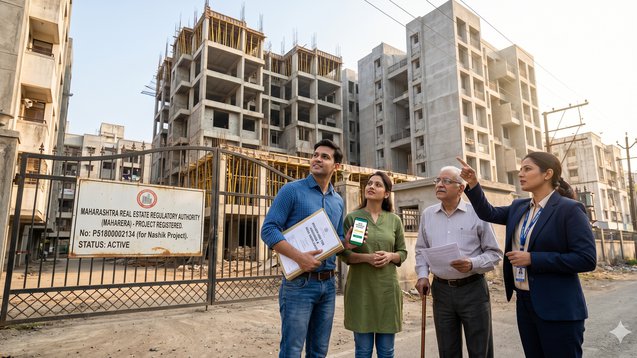
You have the right to request an explanation for your project delay which remains your legal entitlement before any complaint process begins. RERA regulations require all developers to provide project updates through the state RERA website on a quarterly basis. The report must include details about sold apartments and the current status of approvals and the updated construction schedule. Builders can provide only general information through their emails to you when your project in Mumbai or Bengaluru experiences delays. The official portal allows you to determine whether the delay results from genuine approval issues or unauthorized fund usage. Your fundamental right to information grants you access to all details. At Property Aaj (https://www.propertyaaj.com) we advise buyers to maintain documentation of quarterly reports which will prove essential if they need to initiate legal proceedings against their developer.
The Right to Withdraw with a Full Refund
The right to exit stands as one of the most powerful rights through Section 18 of the RERA Act. The buyer can terminate their involvement with the project when the developer fails to deliver the apartment according to the Builder-Buyer Agreement (BBA) specifications. The full amount paid by the buyer must be refunded to them by the developer who is obligated to return their payment with state-ordered interest which follows the state's standard rate of SBI's Marginal Cost of Funds Based Lending Rate plus 2%. Your initial contract remains protected from "no refund" clauses that the builder might have hidden within it. The law establishes the same regulations for both Tier 2 cities and Tier 3 towns because builders who fail to meet project deadlines must allow you to receive a full refund and exit the project.
The Right to Interest for Every Month of Delay
Many buyers do not want to exit their projects because they have already spent money on a valuable location which has become more expensive since their initial investment. The project allows you to stay in the project while you seek "Delay Interest" compensation. The developer pays monthly compensation to the project for every month of delay until the actual date of possession. The buyer uses this interest to pay their rent or EMI costs. You can start the RERA Authority petition process as soon as the date in your BBA passes because you do not need to wait for project completion. The developer provides guaranteed cash payments to the buyer during the uncertain time period according to legal requirements.
Seeking Relief through Consumer Courts and NCDRC
While RERA is the specialized body for real estate, Indian buyers also have the option to approach Consumer Courts under the Consumer Protection Act. The National Consumer Disputes Redressal Commission (NCDRC) in New Delhi will hear complaints from buyers whose total project value and compensation claims exceed ₹2 Crore. Consumer courts have shown strong support to homebuyers which results in them awarding larger monetary awards than RERA authorities provide for "mental agony" and "harassment" claims. The "dual remedy" system enables buyers to select their preferred solution from available options which match their particular situation. The RERA system delivers faster results through their specialized technical process which handles construction milestone-related issues.
Taking Action via the Insolvency and Bankruptcy Code (IBC)
Homebuyers who face extreme situations in which a developer stops all work or a developer goes bankrupt become "Financial Creditors" under the Insolvency and Bankruptcy Code. The homebuyers can ask the National Company Law Tribunal (NCLT) to start insolvency proceedings against the builder when the developer defaults on their obligations and at least 100 homebuyers or 10 percent of allottees join the request. The "nuclear option" serves as a last resort for homebuyers to protect their rights during the builder asset liquidation process and the selection of a new developer for project completion. The right to this entitlement has transformed the Delhi-NCR area because it enables buyers to proceed with their stalled projects.
The Importance of the "Force Majeure" Clause
Developers frequently use the "Force Majeure" or "Act of God" clause to explain their project delays. This clause protects against events which people cannot predict such as earthquakes and floods and the recent global pandemic. You as a buyer can dispute this matter because the builder uses it to cover his inadequate planning and financial mismanagement. RERA authorities maintain strict control over this matter which prevents developers from using Force Majeure to justify midconstruction labor shortages or welding material price increases or delays in their routine water service request. The buyer holds the right to request evidence that proves the developer faced genuine uncontrollable situations which caused the delay. The builder remains responsible for penalties because the excuse fails to meet legal standards.
The Right to Compensation for Structural Defects
Your rights remain active through your entire home construction period even when a project completes after its scheduled time. The "Defect Liability" clause which RERA provides you with lasts for five years. The builder must correct all construction faults which arise from rushed work during the delay period for five years after you take possession of the property. This situation applies to homebuyers in Tier 2 cities because local construction companies use substandard methods to achieve faster project completion. The developer must fix all observed dampness and cracks and electrical problems within 30 days at no charge to you during this timeframe. The service providers must provide you with extra compensation when they fail to accomplish their responsibilities. Property Aaj provides comprehensive defect documentation guides which you can access at (https://www.propertyaaj.com).
The Power of Collective Bargaining: Allottee Associations
The most effective method for exercising your rights requires membership in a registered Association of Allottees. The combined legal strength of 50 or 100 buyers shows much greater force than the legal capacity of one individual. Through their collective power, associations can secure superior legal representation because they will share their legal expenses and they can use social media and public platforms to create stronger pressure against developers. RERA actually encourages the formation of these associations. In various Indian regions, these organizations have successfully reached agreements with builders to resume their projects or they have taken control of construction operations. The most effective way to restore a dormant construction site as an active community requires people to work together.
Conclusion
Your power remains intact despite the stressful situation which comes from your home being delayed. The Indian legal system establishes extensive protection for homebuyers through RERA and the Consumer Protection Act and the IBC. The law protects your rights whether you choose to receive your money back with interest or you wait for the project completion which includes monthly payments. The key is to act early because a six-month delay will become a six-year delay. You should review your Builder-Buyer Agreement while you maintain records of all communication and you should contact legal professionals for assistance when needed. At Property Aaj (https://www.propertyaaj.com), we remain committed to helping buyers navigate these hurdles with confidence, ensuring that your journey to homeownership, though delayed, ends in a secure and valuable asset.
Frequently Asked Questions (FAQs)
1. Do I have the right to stop my EMI payments because the project has been delayed?
The home loan agreement functions as a distinct contractual relationship which exists between you and the bank. Your decision to stop paying EMIs will damage your CIBIL score and result in the bank initiating legal proceedings against you. You can request the bank to provide you with a "moratorium" option or loan restructuring service according to your needs. The builder must give you "Delay Interest" which you need to use for paying EMIs during the project suspension period.
2. How long does a RERA case for a delayed project typically take?
The RERA Act requires authorities to resolve complaints within a 60 day period. The duration of the process depends on case complexity and the particular state system which includes MahaRERA and UP RERA in addition to other systems. The process takes longer than instant services but it provides faster results than traditional civil courts which require more than ten years to complete cases.
3. Is "lack of funds" a valid excuse for a builder to delay a project?
The RERA law requires developers to maintain 70 percent of project funding in an escrow account which they must use exclusively for construction activities of that particular project. The law treats "lack of funds" as a result of financial mismanagement which involves improper handling of money and it serves as an invalid legal defense for possession deadline violations.
4. What happens if the builder’s RERA registration has expired?
When a builder's RERA registration expires without an extension application they lose their right to sell or promote their project. This situation raises a serious warning sign. The RERA authority will impose severe penalties on the developer when you report this issue to them. The RERA authority can choose a third party to finish the project after you report this issue to them.
5. Can I claim compensation if the builder offers me a different flat because mine isn't ready?
You do not need to accept any unit that differs from your BBA result. The builder commits a contract violation when he fails to provide the particular flat that you reserved. You can choose to receive a full refund with interest or you can request a large price reduction or premium upgrade for the alternate unit.
6. Do these rights apply to commercial properties as well?
RERA regulations extend their coverage to both residential properties and commercial real estate. Office space and retail shop investors who experience project delays possess the same rights as homebuyers to receive refunds that include interest and compensation. Allottee complaints in commercial systems follow the same process as residential systems which include matching penalty structures.
Read more about property matters with our specialists and browse the latest property listings on Property Aaj. Download the app from the Play Store and App Store now for easy buying, selling, and renting!