Introduction
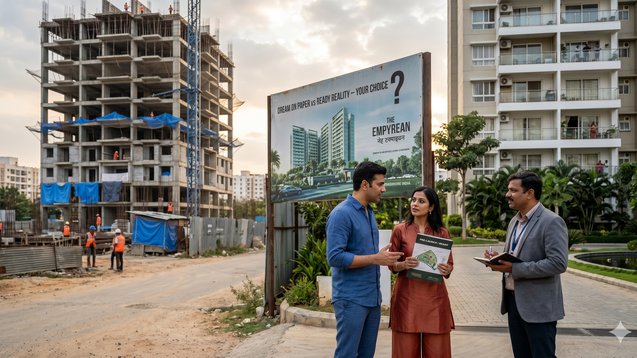
The home financing decision process for first-time buyers in Mumbai and experienced investors in Indore's developing areas leads to the same question. Which type of investment should you make between a project that exists only on paper and a project that allows you to visit its actual site? The "Pre-Launch vs. Ready-to-Move-In" debate functions as the main legal conflict between two parties in the Indian real estate market. Your first option presents "lowest-ever" prices which offer high appreciation potential while your second option provides instant home access that comes with no construction danger. The current RERA regulations have created a major transformation of business operations. The regulations have established transparency which enables under-construction projects with their new requirements to operate. The public maintains a strong preference for finished homes because they provide complete visibility of what customers will receive. Your financial decision requires evaluation of two different options which will determine your future living conditions and investment objectives based on your risk tolerance. At Property Aaj (https://www.propertyaaj.com) we have found that people who want instant access to their new apartment keys will choose to buy ready apartments but they will actually make their buying decision based on pre-launch deal prices. The comparison will show which option shows better results for modern Indian buyers.
The Price Advantage of Pre-Launch Projects
The price of any new project which exists before its official launch serves as its main attractive feature. In India developers provide their customers with soft-launch and pre-launch prices which cost 15 to 30 percent less than the future market value of the completed unit within their area. Why do they do this?The developers use this method to gather funds for their initial building expenses while avoiding the need to depend on expensive bank financing. The home buyer in Tier 2 cities Lucknow and Coimbatore experiences a price difference which determines their ability to purchase either a 2BHK or 3BHK apartment. Your purchase of a project at its beginning stage enables you to acquire ownership of the project value which will develop over time. The selling price however includes more than its initial selling price. The pre-launch stage provides payment options which enable you to secure a property by making a small initial payment through 10:90 or 20:80 payment methods. The pre-launch entry price represents the best option for investors who want to achieve their highest return on investment within a four to five year period.
The Assurance of Ready-to-Move-In Homes
The pre-launch stage focuses on potential while ready-to-move-in (RTMI) properties deliver definite results. The mid-2010s stalled projects continue to create traumatic experiences for many Indian families. The complete home solution eliminates delivery delay which stands as the primary risk factor in real estate development. Buyers of completed apartments have the ability to assess construction quality and test bathroom water pressure and verify whether the advertised "garden view" from the brochure actually shows a park area or a wall. The ready-to-move-in option in Tier 1 cities such as Bengaluru and Delhi-NCR allows you to evaluate neighborhood livability through its actual impact on traffic and commuting time. Your purchase includes more than just physical space because it encompasses the complete network of educational institutions and food stores and public transportation systems. The premium for "peace of mind" which people call the "ready-to-move premium" provides immediate financial benefits to renters who switch to EMI payments.
Tax Implications and GST Benefits
The tax structure stands as the primary yet most important distinction between these two categories. The Indian tax system currently provides Goods and Services Tax (GST) exemption for Ready-to-Move-In properties which have obtained their Completion Certificate (CC) in India. The total amount saved through this exemption reaches extensive proportions. The GST rate for premium housing projects which are currently being built or have not yet started construction stands at 5% while affordable housing projects face a lower rate of 1%. The 5% GST on a property valued at ₹1 Crore increases your expenses by ₹5 Lakh which you could have allocated toward your interior design work or modular kitchen construction. The Income Tax Act gives home loan interest deductions through Section 24b, yet you must wait until you obtain your home to use these deductions. The construction period interest for pre-launch properties becomes capitalized, and the owner can deduct the amount in five equal parts after taking possession of the properties. A ready property serves as the better option for tax deductions which will help you decrease your tax obligations that arise from your high income level.
Capital Appreciation and the Growth Curve
The real estate market requires investors to select their investment times precisely. The highest potential for capital growth exists in pre-launch projects located in developing areas which include the Jewar Airport Noida project and the Hyderabad Peripheral Ring Road project. The project pricing increases with each development stage from its initial fence construction to its complete building completion. The early-bird investor achieves a 40-50% profit by project completion. The "jump" in value which ready-to-move properties experience has already reached its peak. The market will drive property value increases yet the property no longer experiences its period of rapid expansion. The pre-launch approach offers better wealth-building results when investors maintain their investment for three years. Property Aaj (https://www.propertyaaj.com) provides excellent information about growth patterns which exist in different Indian micro-markets.
The Rental Income Factor
The investor needs ready-to-move-in houses because they enable him to achieve his goal of having the property "pay for itself." You can begin selling the property once you obtain the keys and complete the essential woodwork. The rental yields in Pune and Gurugram maintain their strength because corporate professionals move through these cities. Your immediate cash flow will help you reduce your EMI payments. The pre-launch project exists as a "dead" asset until it reaches its operational phase. You will not receive rent payments and you will need to pay rent for your existing home while you pay either your EMI or your milestone payments. The "double whammy" of outflow creates financial stress for middle-class families. The immediate yield from a ready home becomes your best option because you require a secondary income source to handle extended construction periods.
Customization vs. Standardized Finishes
People who invest in projects during their pre-launch or initial building phase gain multiple options for their investment. Do you want a higher floor apartment that has a particular Vaastu-compliant direction? Would you like to combine two small bedrooms into a single large master bedroom? Developers will permit greater internal changes when building plans remain unexecuted. You can select your favorite parking space as well as the view you prefer. The ready project gives you access to all remaining components of the project. The most desirable units which have optimal facing and maximum airflow become unavailable to buyers during the initial months after a project begins. Purchasing ready products requires customers to accept whatever stock remains, which could result in obtaining products from lower floors or products with less attractive views. Homeowners who want a specific atmosphere and room design through pre-launch access gain significant benefits from early-bird access.
The RERA Safety Net
The Wild West period of Indian real estate operations existed before the year 2017. RERA has established an equal playing ground for all participants in the real estate market. Developers need to register their pre-launch projects with the state RERA authority before they begin construction operations. The developer needs to provide information about the project's layout, construction schedule, and actual land ownership rights. Developers need to maintain 70 percent of their customers' money in an escrow account which protects that amount from being used in different projects. Although pre-launch operations have become safer through this process, it still allows for the possibility of pre-launch operations to face two specific risks which include "force majeure" delays and developer bankruptcy. The safest legal option exists in a completed project which has reached its final stage. Every potential buyer needs to check the Occupancy Certificate (OC) along with the CC because this process helps them confirm that the building meets local municipal regulations which Property Aaj (https://www.propertyaaj.com) considers an essential requirement for all potential buyers.
Psychology of the Indian Buyer: Metro vs. Emerging Cities
The psychological factors that influence buyers in India show significant variations throughout the different regions of the country. Young professionals in Mumbai and South Delhi need to choose pre-launch or under-construction properties because the "Ready" premium in those markets has reached such extreme levels. They are willing to take the risk for the sake of entry. However, in Tier 2 and Tier 3 cities like Jaipur, Nagpur, or Bhubaneswar, there is a traditional preference for "physicality." The Indian buyer in these regions often feels more comfortable buying something they can touch. There is a cultural skepticism toward "paper deals." Yet, this is changing as reputable national developers move into these smaller cities. The brand equity of large construction companies has grown to the point where Indian customers now trust pre-launch projects because they want modern facilities that existing standalone buildings do not offer.
The Hidden Costs: Interest and Maintenance
You need to calculate the total expenses for both options before making your decision. The brochure presents the pre-launch unit as a less expensive option but you need to include "Pre-EMI" interest into your calculations. The bank construction interest charges you during the construction period but they do not decrease your outstanding principal balance. Your effective expenses will increase by multiple lakhs during a four-year period. The purchase of ready-to-move-in homes requires immediate payment of maintenance costs and property taxes and financing expenses. The holding costs of a vacant ready house for six months before tenant acquisition or moving plans will reduce your initial savings. Home buyers must pay out-of-pocket costs for essential renovations to secondary market ready houses because these expenses remain uncovered by home loans.
The Verdict: Which is Better for You?
The search for a specific answer leads to two distinct solutions. You need to evaluate your financial status and your motivational factors before making a decision between the two options. Do you want to establish future wealth while living with your parents in your current role as a 30-year-old professional? The most effective method for creating wealth operates through a pre-launch project situated within a high-growth corridor. Do you want to settle down with your family and eliminate the uncertainty which comes from renting homes that landlords control? Your investment in a ready-to-move-in home will help you achieve mental tranquility and establish a stable environment for your family. The Indian market currently exhibits two distinct segments which both show successful performance. The market experiences price stability because ready homes have restricted availability while customers show strong interest in new properties because of their improved designs and RERA safeguards. Before proceeding with the plunge, you must execute your research process by confirming the developer's background and using Property Aaj (https://www.propertyaaj.com) to determine market values and project details..
Conclusion
The choice between pre-launch projects and ready-to-move-in projects requires project managers to assess potential dangers and possible benefits. The real estate market in India has developed into a stronger system today because of economic structure changes and the introduction of better qualified builders. The pre-launch path provides an investment opportunity that becomes a "wealth-creator" when you have a 5 to 7 year investment period and can control your present expenses. The system provides you access to luxurious living conditions at lower prices. The ready-to-move-in market provides a safe place for people who need immediate access to things and want to see everything clearly while avoiding building-related disturbances. The system allows users to enjoy homeownership benefits while receiving tax advantages without any waiting period. Real estate investments require people to stay committed for an extended period. Investors should evaluate property values based on current market conditions and future neighborhood developments that will occur during the next decade. Your property selection process will succeed when you use your present life situation and your financial objectives as decision factors.
Frequently Asked Questions (FAQs)
1. Is it safe to buy a pre-launch property in India today after RERA?
The statute requires developers to establish registered projects which maintain dedicated escrow accounts. The construction process can still experience delays because of labor shortages and economic changes. The developer's previous performance in delivering projects on schedule should be verified together with the project's possession of a valid RERA registration before any booking payment occurs.
2. Why are ready-to-move-in houses more expensive than under-construction ones?
Ready houses command a premium because they offer immediate possession and have zero construction risk. The developer has incurred expenses for land and materials and interest payments which total until now. The higher initial expense becomes acceptable because you avoid GST costs for ready homes which have an OC and you can begin saving on rent or generating rental income right away.
3. Can I get a home loan for a pre-launch project as easily as a ready one?
Yes, most major Indian banks provide loans for pre-launch projects, provided the project is "approved" by them. The bank provides funding through staggered payments which depend on the completion of different construction stages. The bank provides all funds at once for a ready-to-move-in house. The disbursement method changes while your eligibility for funds stays constant.
4. What are the tax benefits of buying a ready-to-move-in house?
The purchase of a ready house allows you to immediately obtain tax deductions that total ₹2 Lakh through home loan interest deduction under Section 24 and ₹1.5 Lakh through principal repayment deduction under Section 80C for the current financial year. The tax benefits of an under-construction project can only be obtained after you receive possession of the project, although you can claim interest payments made during construction through five future installments.
5. How much appreciation can I expect from a pre-launch project in a Tier 2 city?
The period between pre-launching and completing a project in rapidly developing Tier 2 cities such as Ahmedabad, Chandigarh, and Kochi results in property value increases between 20% and 40%. Property value increases through new highway construction and IT park establishment create more substantial effects in smaller cities than they do in saturated Tier 1 markets because these areas lack existing infrastructure.
6. Do I have to pay GST on both types of properties?
This major distinction explains the situation. You only pay GST on under-construction or pre-launch properties which have standard rates of 5% and affordable housing rates of 1%. The transfer of ready-to-move-in properties which possess Completion Certificates (CC) occurs as an immovable asset transfer that qualifies for GST exemption, allowing you to save a considerable amount.
Read more about property matters with our specialists and browse the latest property listings on Property Aaj. Download the app from the Play Store and App Store now for easy buying, selling, and renting!