Introduction
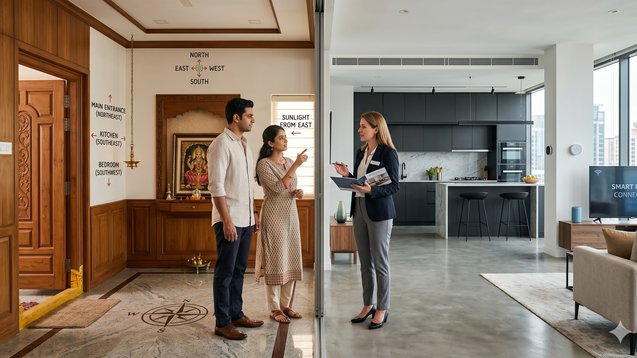
The home buying process in India presents to home buyers today an essential decision between two architectural styles: Vastu compliance or modern architectural design. The situation creates a genuine problem for decision-making. The first option presents traditional design elements which have existed for many years while the second option delivers modern design elements which emphasize practical requirements and user needs. Most buyers actually attempt to find a middle ground between two different options that they want to evaluate. A young professional in Bangalore may want an open kitchen and smart home features, while their parents may insist on an east-facing entrance and a south-west master bedroom. Sound familiar? This situation brings forward two opposing forces which exist in the Indian real estate market. Builders are no longer designing purely based on Vastu, nor are they ignoring it completely. The building designers combine traditional design principles with contemporary urban planning methods to create structures which satisfy current design standards. The main question requires more than a simple evaluation of which option achieves victory. The process requires knowledge about the ideal conditions that support each method and the way you can select between them as a buyer or investor while maintaining your maximum advantages.
Understanding What Vastu Really Aims to Do
People often think Vastu Shastra functions as an unchanging system of regulations. The main objective of the system functions as a practical tool which establishes peaceful connections between built environments and natural elements such as sunlight and wind patterns and geographical orientation. Homebuilding practices from earlier times designed residences to optimize natural light and provide continuous airflow while achieving comfortable indoor temperatures. East-facing houses provide access to morning sunlight together with their room arrangement which helps to create effective ventilation for hot weather conditions in India. The concepts of these spiritual beliefs provided practical benefits which served their time period. These principles still have a strong effect on smaller towns and Tier 2 cities. Families hold the belief that Vastu practices will bring them health and financial success. Buyers who lack deep traditional values still choose to avoid major Vastu defects because they want to protect themselves from potential risks. Vastu functions as an ancient climate-responsive architectural system which modern design now discovers through contemporary architectural language after removing its foundational belief system.
What Modern Architecture Brings to the Table
Architectural design today establishes its framework through three specific elements which define urban density and modern life patterns and technological advancements. The solution develops through three different design elements which enhance space utilization and operational efficiency and enable users to manage their fast-paced activities. People should examine how compact living spaces function in urban environments of Mumbai and Gurgaon because these areas require efficient use of every available space. The design requires open spaces together with kitchen areas that can be transformed and rooms that can serve various functions together with intelligent storage systems. The designs enable people to live their daily lives through Vastu-compliant designs which create better user experiences. The design of contemporary buildings requires two essential elements which include architectural design and modern construction methods. The design of sustainable systems includes two major components which involve using energy-saving materials and implementing rainwater collection methods. The design incorporates systems which allow residents to control their home environment through digital devices. The design includes shared spaces which enable residents to live together while sharing community facilities. The design includes shared spaces which enable residents to live together while sharing community facilities. The design includes shared spaces which enable residents to live together while sharing community facilities. During their time in Tier 1 cities people choose to live in areas which provide them with easy access to essential services because they want to spend their time in more productive activities. The value of a functional 2BHK apartment with optimal airflow and easy transport links exceeds the importance of Vastu guidelines.
Where the Conflict Actually Happens
The actual struggle between Vastu principles and contemporary architectural methods shows itself through particular architectural design choices. The Vastu system requires a particular kitchen design to face a specific direction while modern design practices prefer open kitchens because they improve space usage and social interaction. Vastu needs certain room setups however high-rise structures require fixed building systems which prevent design variations. The entrance approach stands as a typical case. The eastern and northern directions cannot serve as entry points for all residential spaces within a large apartment complex. The construction process requires developers to create various building orientations which results in Vastu rule violations. This is where buyers get stuck. Do you reject a perfectly designed flat because the kitchen is slightly off? Or do you compromise on usability just to follow traditional alignment? The actual situations of the world require both rules to be followed strictly which creates practical difficulties.
How Builders Are Blending Both Approaches
Developers today understand that ignoring either side is risky. Most modern projects are designed to be Vastu-friendly because developers want to avoid strict Vastu-compliance requirements. What does that mean in practice? Builders focus on avoiding major Vastu defects through these methods which they need to maintain modern layouts. The design team will construct ost units with ideal orientations while ensuring that kitchens and bedrooms remain within required zones. This hybrid approach works well because it satisfies both types of buyers: Those who strongly believe in Vastu Those who prioritize modern comfort. When you visit Property Aaj (https://www.propertyaaj.com) to browse listings you will discover that many projects showcase this equilibrium. They don’t promise perfection-but they offer practicality with cultural alignment.
Tier 1 vs Tier 2 vs Tier 3: What Buyers Actually Prefer
City tier level of buyers leads to their different buying priorities which directly impacts the Vastu versus modern architectural design debate. Practicality proves to be the winning factor in Tier 1 cities. Buyers will accept Vastu compromises when they discover a property which provides both perfect location and excellent connectivity and complete lifestyle advantages. People evaluate time savings from traveling and reaching essential services as more important than standard evaluation factors. The balance between two factors presents different outcomes in Nashik and Indore, which represent Tier 2 cities. Buyers here expect both good design and reasonable Vastu alignment. The availability of multiple options makes them less willing to accept significant project changes. Decision-making in Tier 3 cities and smaller towns revolves around Vastu. Traditional design principles dictate home construction standards, and buyers will reject any property that fails to meet their minimum requirements. The existing differences demonstrate a crucial fact because there exists no single solution. The location where you intend to purchase property determines which option will succeed.
Investment Perspective: What Holds More Value
The answer becomes more complicated because investment assessment requires evaluation of both current and future value. Contemporary architectural design establishes rental market requirements which apply particularly to city regions. Tenants prioritize three main factors which include ease of access and effective building design and available facilities. Modern design elements become essential for your rental income objective because experts who design rental properties consider these matters. The resale value of a property depends more on Vastu than any other factor. Families show particular interest in homes which either meet Vastu standards or display Vastu features. The result creates conditions which enable faster property sales while maintaining stable market prices. The main point requires the following explanation: The introduction of modern architectural design enables property owners to generate income during their property ownership period. Vastu provides you with an effective method to sell your property. Investors who want to succeed need to evaluate both aspects. The platform Property Aaj (https://www.propertyaaj.com) enables you to compare properties according to their practical usage and current buyer preferences which supports your decision-making process.
Real-Life Buyer Scenario
Let’s take a practical example. Rahul works in Pune and he wants to find a 2BHK apartment. He finds two options:
Flat A offers perfect Vastu alignment but its layout takes up too much space. Flat B provides an excellent layout which improves air flow but has two minor Vastu violations. Initially Rahul chooses Flat A because family members want him to do so. However after visiting both properties he finds that Flat B provides better daily living comfort and functionality. What action does he take next? He selects Flat B while making sure that all Vastu requirements stay intact. This approach allows him to find a balance between practical needs and mental wellness. Most modern buyers base their purchasing decisions on these methods.
So, What Actually Wins?
The honest response to your request for a clear winner shows that both options result in an equal draw. Vastu achieves victory through its ability to provide emotional comfort and its cultural compatibility and its capacity to enhance resale value. Modern architecture achieves victory through its ability to provide usable spaces which create efficient environments that enhance user experience. The true victor of the competition between the two parties exists as equilibrium. Today's best residential properties combine elements from both traditional and contemporary architectural styles. The spaces which architects have created must meet three essential requirements. They should create spaces which receive natural light and fresh air. They should prevent important Vastu problems from occurring. The spaces should provide effective designs which support everyday activities. Indian real estate will develop according to this path.
Conclusion
The argument between Vastu and contemporary architectural design represents a conflict which requires identification of fundamental priorities between both architectural styles. A house functions as more than a financial asset because it serves as your permanent residence which supports your personal development and daily activities. Through Vastu people gain comfort and self-assurance while modern architectural design creates a functional home environment which meets their personal requirements.
If you excessively support one option, it will create a situation where you miss the advantages which the opposite option provides. The smarter approach requires you to follow Vastu principles while maintaining your right to choose between different options. Start by establishing effective design solutions which include proper air circulation methods and create spaces that people can use effectively. The next step involves assessing whether the property meets Vastu standards through reasonable alignment with its principles.
Property Aaj (https://www.propertyaaj.com) enables users to evaluate various properties according to their traditional and contemporary evaluation criteria which makes property assessment more efficient. The ideal house for every person exists as the place which provides them complete comfort throughout their daily existence because it meets their fundamental requirements.
FAQs
1. Does Vastu maintain its importance for contemporary apartment buildings?
The practice exists today as its original purpose has developed into different functions. The architectural designs of contemporary metro area apartments create challenges for Vastu compliance because buildings require specific architectural designs and their available space makes it impossible to follow Vastu rules. Many buyers want Vastu-compliant homes which protect against major issues while they provide functional design solutions. People should seek equilibrium between their aspirations and their actual achievements.
2. Can modern architecture and Vastu work together?
The answer is yes because contemporary architecture can embrace traditional Vastu design elements. The hybrid method now serves as the standard architectural practice for most Indian construction projects. Builders design their spaces according to Vastu principles by determining which direction to enter and where to put their rooms. This combination is what most buyers end up choosing.
3. Should I compromise on layout to follow Vastu strictly?
The answer depends on the specific circumstances. A poorly designed flat with perfect Vastu may not offer comfortable living in the long run. The most effective solution requires three aspects to function properly and deliver results while maintaining Vastu compliance. Urban environments accept minor design changes as standard practice which people can handle without difficulty.
4. Does Vastu affect resale value?
Vastu influences property value in Tier 2 and Tier 3 cities according to empirical evidence. Vastu-compliant homes attract more buyer interest because people still use Vastu as a purchasing guideline. Vastu-compliant homes in metro areas experience moderate Vastu impacts which customers can notice.
5. Do tenants care about Vastu in rental properties?
The answer depends on two factors which include the specific location and characteristics of the tenants who will occupy the space. Working professionals in Tier 1 cities choose to work in locations that provide direct access to their job sites instead of following Vastu principles. Vastu considerations create an impact on rental market demand and occupancy rates in family-oriented residential areas of smaller cities.
6. How can I balance Vastu and modern needs while buying a home?
The process begins with three practical elements which include location selection and budget determination and architectural design assessment and builder reputation evaluation. The basic Vastu conditions need to be checked after achieving those two requirements through an examination of entrance directions and kitchen positions and ventilation systems. The objective is to create a residence which provides both comfort and operational functionality while satisfying essential Vastu requirements through a straightforward decision-making process.
Read more about property matters with our specialists and browse the latest property listings on Property Aaj. Download the app from the Play Store and App Store now for easy buying, selling, and renting!