Introduction: A Practical Perspective for Today’s Indian Buyers
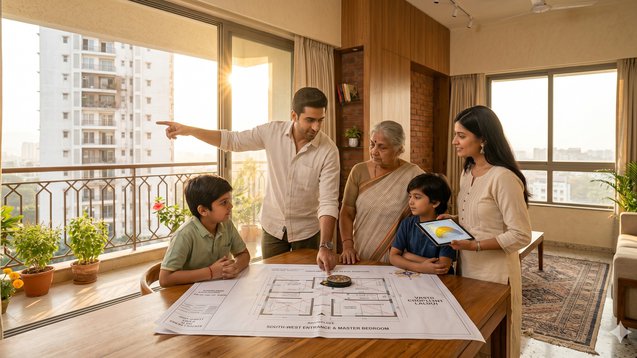
Walking into a new property launch reveals an unusual observation to visitors. People in contemporary buildings which include glass exterior walls and intelligent home technology and high-quality facilities still discuss Vastu between different building elements. The situation generates an essential inquiry. The significance of Vastu remains valid because construction technology development together with efficient urban design layout systems stands fundamental to modern building design. The situation requires examination because people use design elements and psychological principles together with buyer patterns and actual market circumstances. Vastu influences purchasing choices for Indian customers who search for Vastu-friendly features in all property types from Tier 1 city apartments to Tier 2 market residential areas to Tier 3 town independent houses. Vastu-friendly features together with location details and building amenities receive regular emphasis on Property Aaj (https://www.propertyaaj.com) because that is how Vastu-friendly features exist on the platform. People should investigate Vastu because it remains important to modern residential design while buyers need to learn how to read Vastu.
Vastu Is No Longer About Blind Belief It’s About Balance
The main development in Vastu's current understanding has occurred through its shift from strict regulations toward achieving better functional equilibrium. People back then thought all directions and room arrangements and building components needed to be designed according to specific rules. The present world no longer operates under that outdated mindset. Modern buyers prefer homes with balanced design instead of pursuing perfect Vastu compliance. The principles of Vastu design share their origins with basic design principles that everybody understands. Open spaces allow better airflow Proper sunlight improves comfort Organised layouts enhance usability The traditional terminology used in this field blends with architectural practices which architects consider effective. Vastu maintains its ongoing importance because it functions as a guiding system rather than serving as a mandatory rulebook.
Buyer Psychology Still Drives Demand
Real estate extends beyond its physical properties because it revolves around human interactions. The way people make purchasing choices depends on their individual beliefs which create their comfort zones and their particular preferences. In India a substantial part of the population prefers to buy homes which follow Vastu principles because it provides them mental comfort and positive energy. The current discussion exists to determine whether the belief holds scientific value or not. The essential point shows that it creates an impact on market demand. The entire real estate industry depends on demand because it determines property prices and resale values and project design decisions. The continuing importance of Vastu exists because it serves as the main reason for its practice. The developers understand how customers think so they modify their business strategies to meet this understanding.
Developers Respond to Market Expectations
The builders would not mention Vastu because buyers show no interest in it. The builders use Vastu because it helps them sell their properties. Developers who work on projects in Tier 2 and Tier 3 cities create building designs that follow basic Vastu principles. Builders in Tier 1 cities which have space constraints attempt to implement partial Vastu solutions whenever they can. The requirements of this project include. The preferred entrance directions need to be followed for door alignment. The design needs to avoid any critical design disagreements. The design needs to show particular units as "Vastu-friendly" spaces. The Property Aaj website (https://www.propertyaaj.com) displays Vastu as a selling point because buyers see it as an important feature even though it does not require mandatory display.
Vastu Influences Resale Value and Liquidity
The most tangible benefit of Vastu remains its ability to increase property value through resale. The system only has restricted effects in Tier 1 cities because buyers place greater importance on their actual location and available transportation options and their standard of living amenities. Vastu standards will determine the sales speed of properties in Tier 2 and Tier 3 markets. A Vastu-friendly home may: The Vastu-friendly home will attract more buyers The Vastu-friendly home will achieve faster sales The Vastu-friendly home will experience less negotiation pressure The extended time required to sell properties with significant Vastu issues will affect traditional markets because of their specific buyer needs. The investment value of Vastu needs consideration because you have personal doubts about its effectiveness.
Modern Homes Still Benefit from Vastu Principles
The core principles of Vastu demonstrate their capacity to enhance living environments after people remove their personal beliefs. The design of homes which provide optimal sunlight exposure and proper ventilation reportedly creates better comfort and health benefits for occupants. People can perform their daily tasks more efficiently when spaces are designed for optimal use. The balanced design of spaces creates an atmosphere which permits people to move through the area without obstruction. The concept exists as a traditional belief system which functions as a fundamental component of design practice. Urban environments with their restricted space make these elements essential for modern apartment design. A well-planned home that follows basic Vastu logic often feels more functional. Vastu design principles multiply through their presence in multiple design disciplines.
Tier-Wise Perspective: Why It Matters Differently Across India
The importance of Vastu varies depending on where you’re buying property. People who buy properties in Mumbai, Delhi and Bengaluru choose their locations. People prioritize their daily needs above everything else because they have to deal with lengthy travel times and expensive housing. People consider Vastu as a factor but it does not usually determine their decision to purchase a property. Buyers in Tier 2 cities search for properties that provide essential functions and traditional characteristics. The power of Vastu to affect decision-making reaches its highest point in this location. Vastu functions as a crucial factor in decision-making for people who live in Tier 3 towns. Many buyers prefer homes that align with traditional guidelines, and this can directly impact demand and pricing. Understanding this variation is important, especially if you’re buying for resale or investment.
Vastu as a Confidence Factor
People who purchase homes make their decisions based on both financial factors and emotional considerations. People desire their living areas to provide them with security and comfort and positive feelings. Vastu delivers Vastu assurance to many people who need it. People first choose their home based on two factors. People will keep their homes even when they experience a decrease in value because they need to protect their investment. The psychological security people experience through this process affects their buying choices and their lasting contentment and their assessment of the property's worth. People establish their understanding of reality through their perceptions which then shape their actual experiences.
The Risk of Ignoring Vastu Completely
The Vastu guidelines do not require complete adherence but their complete abandonment will restrict your choices in particular markets. The property market in Tier 3 towns presents resale difficulties for buyers who purchase properties with significant Vastu problems. The property in question has good attributes yet buyers in these markets will not proceed with the purchase. The presence of small problems does not justify rejecting properties. Your understanding of market expectations will enable you to make more effective decisions.
What Smart Buyers Do Today
The current buyers of today have developed an approach which emphasizes complete equilibrium. The buyers of today show partial adherence to Vastu, but they maintain a balanced approach that lets them observe Vastu principles. The company focuses on three elements which include layout design and building site selection and building functional capacity. The team checks for critical Vastu violations while they conduct their research. The team works to solve their problems by choosing to assess only important matters. The approach helps them discover properties which fulfill their operational needs while remaining appealing to the market. Buyers use Property Aaj (https://www.propertyaaj.com) as a tool to assess various properties through their evaluation of actual physical elements instead of common misconceptions.
Conclusion: Vastu Still Matters But Not the Way It Used To
The Vastu Shastra system maintains relevance within current residential architectural practices because its principles continue to guide modern building design. The current situation requires designers to handle three vital elements, which include traditional design methods and contemporary public perception and actual building requirements. Vastu Shastra's system, which developers use as an additional element, assists property market operations. The system impacts buyer trust while it affects property resale value in specific locations through its connection to standard architectural methods. The system impacts buyer trust while it affects property resale value in specific locations through its connection to standard architectural methods. A residence situated in a prime location and constructed with exceptional design elements, which includes efficient transportation links and comprehensive facilities, will outperform any property that meets Vastu standards yet exists in an inferior geographic area. Your buying process needs you to create a balanced approach. Your choice of Vastu needs to be part of your decision process because it should not determine your complete selection. Your daily activities and the financial results of your investments should determine your primary areas of interest. A good home exists beyond rigid regulations because its value depends on how well it meets your specific needs.
FAQs
1. Is Vastu still important in modern apartments?
Yes, but mainly as a preference. Buyers search for basic Vastu alignment which they consider essential to their needs.
2. Do builders follow Vastu in new projects?
Many builders use partial Vastu principles because they want to satisfy their buyers' needs.
3. Does Vastu affect resale value?
The answer depends on Tier 2 and Tier 3 cities which see stronger buyer preferences.
4. Should I prioritize Vastu over location?
No, location and connectivity should always come first.
5. Can a non-Vastu home still be a good investment?
Yes, if it has strong fundamentals like good location and design.
6. Where can I compare Vastu-friendly properties?
You can explore Property Aaj (https://www.propertyaaj.com) to discover and evaluate appropriate Vastu-friendly properties.
Read more about property matters with our specialists and browse the latest property listings on Property Aaj. Download the app from the Play Store and App Store now for easy buying, selling, and renting!