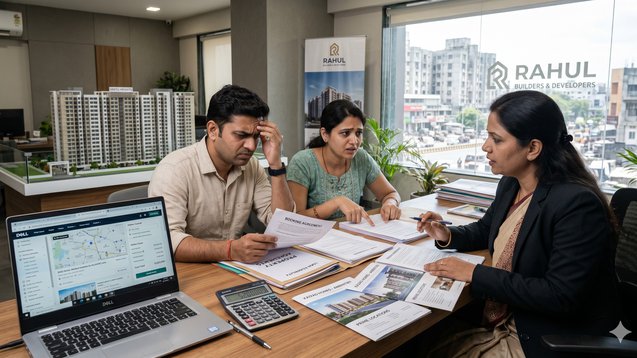
Common Mistakes First-Time Property Buyers Make
The experience of purchasing your first home brings you two opposing feelings which create a situation of both happiness and anxiety. For many Indians, it’s not just a financial decision it’s emotional, cultural, and often tied to long-term security. The process becomes difficult to handle because people have different needs which need to be fulfilled when they search for a small apartment in a Tier 1 city or a plotted development in Nashik or a low-cost house in a Tier 3 town. The challenge? Most first-time buyers step into the market with limited experience but high expectations. People make decisions based on what they hear from others, their gut feelings, and their partial knowledge of information. The real estate market in the country shows two extreme price points and two extreme infrastructure levels and two extreme legal standards and two extreme financing methods which make small mistakes result in permanent mistakes. I’ve seen buyers rush decisions because “prices will rise,” ignore hidden costs, or choose the wrong location simply because it looked attractive during a site visit. These cases happen all the time because they exist as common situations. This guide breaks down the most frequent mistakes first-time property buyers make across India and, more importantly, how to avoid them. The information presents practical investment guidance from a person who has witnessed both successful investment decisions and poor investment choices in actual situations.
Not Setting a Clear Budget for Your Home Purchase
One of the mistakes people make when they buy a home for the first time is getting confused about what they can afford and what they are eligible for. Just because a bank is willing to give you a loan does not mean you should take it. In cities like Mumbai or Bengaluru the cost of properties is already very high. People who want to buy a home often spend more money than they can afford to get a better location. Then they have money problems later on. In cities like Nashik or the outskirts of Pune people want to buy bigger homes because they think they can afford them but they do not think about all the other costs they will have to pay. A smart home buyer sets a budget that includes the money they will pay each month, the cost of taking care of the property, taxes, insurance and money they will need in the future. Your monthly payment should not be more than 30 to 35 percent of the money you make each month. You can use websites like Property Aaj to compare homes in price ranges and cities and get a better idea of what you can really afford. You can visit Property Aaj at https://www.propertyaaj.com. Remember, buying a home should make your life better, not make you worry about money all the time. A home should be a thing, for you, not a financial burden.
Neglecting Location Basics for Quick Profits
“Location, location, location” may sound like an over-used phrase, but it still represents the most important aspect of real estate success. First-time real estate buyers become overwhelmed with great pricing and/or new developments when they don’t realize how these factors will affect long-term liveability. For example: An inexpensive apartment located in a faraway suburb of Delhi NCR can look very appealing until you consider that there is poor connectivity and virtually no infrastructure to support it, which will affect future demand from renters and decrease resale values. On the other hand, Tier 2 cities such as Nashik can be a great middle ground with moderate pricing, improving infrastructure, and developing job centers. However, it is essential to evaluate each micro-location when selecting an investment within any of these cities. For example, there may be developments in proximity to future highways or industrial developments that could outperform similar developments in less enduring locations. To find out if you will have the right investment, ask yourself:
Is there good road access to the project?
Are there schools, hospitals, and stores nearby?
Are there plans for future improvements?
Analysis tools available at Property Aaj ( www.propertyaaj.com ) provide trend data for specific locations instead of relying solely on what builders tell you.
Overlooking Hidden Costs Beyond Property Price
Many buyers focus only on the base price and forget the additional costs which increase their total investment cost between 8 to 12 percent and sometimes more. The following costs exist:
Stamp duty which differs between states
Registration charges
GST which applies to under-construction properties
Maintenance deposits
Parking charges
Interior setup costs
In states like Maharashtra, stamp duty and registration costs together create a major financial burden. In Tier 1 cities, parking fees reach unexpected levels whereas Tier 3 cities experience additional costs because of their limited infrastructure. Your budget of ₹50 lakh will lead to actual expenses of about ₹55 to 57 lakh. The financial gap between two amounts causes a serious impact on your monetary situation. A practical approach is to calculate the "all-in cost" before making a commitment. Structured property listings on Property Aaj (https://www.propertyaaj.com) offer buyers a way to discover their true property costs.
Skipping The Legal Part When Buying A House
This is a mistake that can cause a lot of trouble. When people buy a house for the time they often think that if the project looks good or is advertised a lot then it must be okay legally.. That is not always true. Some important things to check are:
The title to the house is clear
The project is registered with RERA
The building plans are approved
There is a certificate that says people can live in the house for houses that are already built
RERA has helped make things more transparent over India but how well it is enforced and how much people know about it varies from state to state. Big cities have rules but smaller cities may still have some problems. You should never just take someone's word for it. If you need to, you should hire a lawyer to help you. It is a price to pay compared to the risk of buying a house that someone else claims is theirs.
Choosing Emotion Over Practicality
Emotions can play a significant role while acquiring your first property. Yet, many buyers who purchase a property emotionally do not account for practicality in this decision-making process. For instance; a person may purchase a beautifully designed condo very far from work, underestimating the amount of stress on their daily commute. Or, they may purchase a luxury development with all of the amenities, although they do not use them, simply because the development “feels like a luxury.” In the case of Tier 1 markets, the property purchased may create long commutes to and from work. Conversely, Tier 2 and Tier 3 markets may require you to purchase an undeveloped area for your first property; or some other form of property that is highly impractical or not conducive for most forms of asset appreciation. Use a combination of practicality and emotion in your decision-making.
Consider the amount of time that you are commuting to work?
Will your circumstances change in 5-10 years?
Will the property that you purchased support your current or future lifestyle?
The home should look and feel right for you, and should serve a purpose in your daily living.
Ignoring what might happen if you sell or rent your place later on
A lot of people who are buying a home for the time think that they are only buying for themselves and not as an investment. That is a point. But things do not always stay the same. You might get a job somewhere else or you might have a bigger family or you might need some extra money and that could mean you have to sell your home or rent it out. In cities a lot of people want to rent homes but the money you can make from renting is not that great because the homes cost so much. In cities like Nashik you might be able to make a bit more money from renting especially if your home is near a factory or a school. Before you buy a home you should think about these things:
Is the neighbourhood a place to live?
Are there people renting homes in the buildings nearby?
How much have home prices gone up in the past?
A home that is an investment will give you more options later on. This means that a good home is one that will make you money or be easy to sell or rent. So when you buy a home you should think about how the property will do financially because that gives you flexibility later on with your property.
Not Comparing Multiple Options
When people buy something they like they often do not look at choices. This is really surprising to me. Some people will buy a house they like without thinking about houses. This is especially true when someone tells them they have to buy it or they will miss out on the house. Other people just listen to what one real estate agent tells them. The thing is, looking at four or five houses really helps you understand things like
Price variations
What people think of the builder
How well the house is built
Where the house is located
Websites like Property Aaj make it easy to compare houses. You can look at houses in cities and with different prices and layouts without having to go see them in person at first. If you look at houses you will be better at making a decision about Property Aaj and other properties. When you compare options, like the houses you find on Property Aaj you will make a choice about Property Aaj.
Underestimating Loan Terms and Interest Rates
Home loans are long-term commitments often spanning 20–30 years. Yet many first-time buyers don’t fully understand how interest rates affect their payments. The total interest paid throughout the loan period depends on even minor rate changes which amount to 0.5 percent. In India, floating interest rates are common. The increase in interest rates results in higher EMIs. This can affect your monthly budget. The analysis must include two additional factors:
Prepayment penalties
Loan tenure flexibility
Fixed vs floating rates
Select a lender who provides less loan money because it matches your current financial position better than the bank which offers you the largest loan amount.
When You Are Buying A House Do Not Ignore The Builder Reputation And Track Record
The house may seem great when you see it on paper but the builder track record will tell you what is really going on. One big problem in real estate is that people do not get their houses on time. In cities like Mumbai or Delhi the reason for the delay is often because the builder is waiting for the government to approve something or they do not have enough money. In cities the builder may just have a hard time getting everything done. You should check a things about the builder, such, as:
What they have built before
If they finished their projects on time
What the people who bought from them before think about them
How well the houses are made
If you take the time to do this research it can save you from being really frustrated for a time.
Ignoring Liveability/Lifestyle Factors
A square foot is not only a square foot; it is the quality of life you experience daily. New buyers often overlook the following items:
Air flow and daylight
Noise
Water availability
Parking availability
Safety/Security
In Metropolises, land is restricted;
Therefore, several of these factors are compromised. There are also gaps in infra-structure within small towns that will have an adverse affect on your comfort. Evaluate the property more than once, preferably at different times of the day. Talk to current home owners if you have the chance. These few steps have been shown to provide more insight than anything that is printed in a brochure.
Conclusion
Buying your property is a big deal. It is something that you need to think about carefully and be very patient. People usually make mistakes when they buy a property because they do not know what they are doing or they are in a hurry. You will find that the same things are important when you buy a property anywhere in India whether it is a city like Mumbai or a smaller city like Nashik. You need to think about how much money you have to spend, look at different locations, check that everything is okay with the law and think about what you want in the long term. Do not let how you feel or the need to hurry up make your decision for you. Instead look at the facts, compare options and ask people who know what they are talking about. There are websites like Property Aaj that can help you with this. You can visit their website at https://www.propertyaaj.com. They make it easier for you to look at properties and feel good about what you are doing. At the end of the day making a decision about a property is not just about feeling happy with it. A good property decision is one that's good for your money, practical and legal, for a long time. Buying your property is a big deal and Property Aaj can help you with that.
FAQs
1. What is the mistake people make when buying a home for the first time, in India?
The biggest mistake is spending more than they can afford. Many people borrow as much as they can but they do not think about whether they can really pay it back over a long time. This can cause a lot of stress later.
2. How important is it to check if a property is registered with RERA when buying a house?
It is very important to check RERA registration. This is because it makes sure the project is approved by the law and gives information about when it will be done. Always check the RERA details before you invest your money.
3. Should I buy a house that is still being built or one that is already done?
Houses that are still being built are usually cheaper.. There is a risk that they might not be finished on time. Houses that are already done are more expensive.. You can move in right away and you do not have to pay GST.
4. Is location more important than property size?
Yes, in cases location is more important than property size. I think a smaller home in an area that is close to everything is usually better than a big home that is far away from things. A smaller home in a connected and developed area often does better when it comes to how much it is worth and how nice it is to live in compared to a bigger home in a remote location.
5. How can I check a builder’s credibility?
To check if a builder is good you should look at the projects they did before when they finished them, what people say about them online and if they had any problems. You can also go see the projects they finished to get an idea of how well they build things.
6. Can I rely on platforms for property search?
Yes you can use platforms to find a property. Websites like Property Aaj (https://www.propertyaaj.com) have lists of properties that're easy to look at and compare and they also have information about the area, which makes it easier to find what you want.
Read more about property matters with our specialists and browse the latest property listings on Property Aaj. Download the app from the Play Store and App Store now for easy buying, selling, and renting!