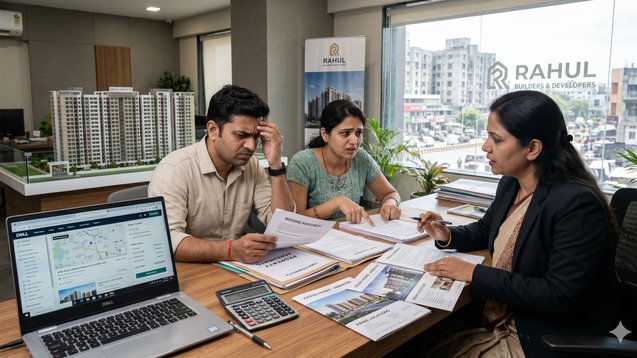
How to Check Property Documents Before Buying in India
Purchasing real estate in India is one of the largest financial decisions for many. The decision goes beyond the location or a price negotiation; the overall legality of the item purchased is also as important. Most first-time homebuyers focus their attention on visible items such as building quality, features and resale ability. However, the underlying disruptive factors lie within the paperwork measurement. Document management represents one of the largest sources of disputes in the acquired residences located in Tier 1 markets such as Mumbai and Bengaluru; Tier 2 locations such as Nashik and Indore; and Tier 3 cities; these disputes generally stem from issues related to documentation errors or questionable ownership based on Documentation approval. All that is required to avoid potential impacts and issues associated with the purchase is to have an understanding of any/each item being signed prior to the signing. The objective of this guide will be to provide you with checklists and step-by-step requirements that you should review prior to completing the real property acquisition, regardless of your geographic region in India (i.e. flat, plot or villa).
Why Property Document Verification Is Non-Negotiable
The obvious question needs an answer to explain its importance. In India property ownership requires more than possession and payment because it requires owners to establish their rights through a complete legal document set. The ownership of your property depends on the strength of every document in the ownership chain. The high property values in Tier 1 cities create a situation where criminals use fake ownership documents and build unauthorized structures to conduct fraudulent transactions. The unregistered land issue and agricultural zoning problems and family property disputes create different risks for Tier 2 and Tier 3 cities. You discover an excellent real estate deal in a developing area where the price seems fair and the builder guarantees fast property delivery. You skip detailed verification to save time. You learn after twelve months that the land never received authorization for residential development. What now? Platforms like Property Aaj use their educational resources to help users make informed purchase decisions. The process of conducting due diligence today will protect you from future stressful situations because it enables you to identify potential risks.
Title Deed: The Foundation of Ownership
The Title Deed serves as the essential document which establishes ownership rights for all property transactions. The document establishes who holds legal ownership of the property and their authority to transfer ownership rights. The Title Deed requires assessment through two specific elements which include clarity and continuity. The seller’s name must match exactly with government records. The document requires clarification of all matching elements which include both major and minor differences. Legal professionals in Tier 1 cities handle title verification because property ownership records present complicated challenges. In Tier 2 and Tier 3 areas, you may find properties passed down through generations making it essential to confirm inheritance records. The title should be examined to determine whether it exists as "freehold" property or "leasehold" property. Freehold properties give you complete ownership while leasehold properties come with time-bound rights. A clean title establishes your legal rights to property ownership and determines your home loan eligibility. Banks will reject applications if there’s any ambiguity.
Encumbrance Certificate: Checking For Liabilities
The Encumbrance Certificate tells you if the property has any financial or legal problems. It is like a background check for the property. The Encumbrance Certificate lists all the transactions related to the property for a number of years usually between 10 and 30 years. If the property was used to get a loan or was part of a dispute it will be shown here. In cities Encumbrance Certificates are usually available online and easy to get. But in towns you may still have to look at manual records so it is a good idea to check with the local authorities. You want to see "Nil Encumbrance" because it means the property does not have any loans or legal claims against it. If you skip this step you might get into trouble. You do not want to take over someone's unpaid loan or be part of a court case that is still going on.
RERA Registration: New Project Must Have It
RERA Registration is very important for the purchase of a property in construction. The introduction of the Real Estate (Regulation & Development) Act has improved transparency in the real estate industry; however, the regulations governing this industry may differ slightly from state to state. Maharashtra, for example, has its own regulations under Maharajah and is considered one of the more proactive regulators in this country. A property registered with RERA will allow you and other homebuyers to have the following advantages:
Project disclosure by the builder of the home being built
Defined timelines for completion of home
Proper usage of funds
In general, if the property is located in a tier 1 city and is developed by a reputable developer, the developer has followed the guidelines of the RERA. The tier 2 and tier 3 markets still have unregistered developments, especially smaller developments. Always confirm that the project being developed has been registered under RERA on its official web site and that there is a comparison between the actual size of the unit, approvals in place for the development, and the amenities being promised will be available when the project is completed. Several reports of registered developers have been generated through Property Aaj, which will help you immensely with your search for a property.
Approved Building Plan and Layout
Would you buy a car without checking if it’s road-legal? The same logic applies to property. The approved building plan verifies that all construction work follows the established municipal regulations. The regulations include height restrictions and floor area ratio (FAR) and land usage requirements. The cities of Delhi and Mumbai experience frequent plan deviations because their available space does not permit proper building execution. Unauthorized building extensions and layout modifications occur with higher frequency in smaller cities. Always ask for:
Approved layout plan
Building plan sanction
Completion certificate (for ready properties)
The actual construction needs to match the approved plan because any major differences between the two will result in penalties and demolition notices. This process becomes essential because you intend to sell your property in the future.
Sale Agreement: Don't Just Look at the Price
When buying a property most people just glance at the Sale Agreement and focus on the price and how they will pay. That is a mistake. The Sale Agreement is a document that covers everything about the sale. When you will get the property, what happens if there is a delay, what the property will be like and what both you and the seller must do. In cities these agreements are usually detailed and follow a standard format. In cities some parts of the agreement might not be clear or might be written loosely. Here are some important things to look at closely:
When you will get the property
What is included in the carpet area
What happens if you want to cancel the sale
What you will pay for maintenance
If something in the agreement is not clear don't be afraid to ask questions or talk to a lawyer. It is better to take extra time and money now than to regret it later.
Land Use and Zoning Clearance:
Not All Lands are Appropriated for Residential Use, thus There is a Need for Zoning Laws. In India, land is divided into four main categories: Agricultural, Residential, Commercial and Industrial; if someone buys an Agricultural property and doesn't go through the process of Changing/Converting it to a Residential property, this can lead to significant legal problems later. This is prevalent in growing Tier 2 and Tier 3 cities; this happens often because the Developer sells a plot of land even though they haven't yet finished the required Procedure for Converting it to a Residential Unit. Before entering a contract of Sale for a home, check to see if No Agricultural (NA) status has been assigned or if any approvals from the Local Authorities have been obtained, you must also check for Zoning Certificates; as a general rule, Urban Areas are better controlled, therefore if you are looking to build in Semi-urban or Rural Areas, you are strongly encouraged to exercise greater caution than you would do in Urban areas.
Property Tax Receipts and Utility Bills
These papers may appear small. They tell us a lot about the property's situation. The latest property tax receipts show that all fees have been paid. If taxes are not paid you will have to pay them after you buy the property. Utility bills for things like electricity and water help us check a things, such as
the amount of water and electricity that is actually used
who owns the property
if there are any bills
In big cities, like Tier 1 cities these records are usually available online.. In smaller towns people may still use paper copies. Always make sure these documents have the seller's name on them. If there is any mismatch you should look into it. Property Tax Receipts and Utility Bills are very important so you should check them carefully.
Home Loan Approval and Bank Verification
People who buy homes have a way to check if a property is good. They see if big banks say it is okay. Banks do a lot of work to make sure a property is legal and safe before they say it is okay, for a loan. If a property is already approved by a bank that means it is probably a choice. Do not just think that because a bank says it is okay it is perfect. Bank approval is helpful. It is not the only thing to think about. In cities most good projects are approved by banks. In cities it might be harder to find projects that banks have approved. If you are getting a loan to buy a home your bank will still check everything carefully. Even if you are paying all cash it is still a good idea to do the same kind of checks that a bank would do.
Should You Hire A Lawyer for Property Transactions?
Absolutely! Without the assistance of a lawyer, you could face unforeseen risks regarding the condition of the property or way of purchasing it because laws are complex and unique from state to state. Even though legal fees may be high in metropolitan areas, compared to the overall purchasing price for most properties these are very low cost. For this reason, hiring a lawyer in smaller centers is even more important because of the lack of standardized documentation. You can think of hiring a lawyer as an insurance policy for your investment. While online resources like Property Aaj do provide potential buyers with guidance to purchasing a verified property, having an expert and independent legal opinion will further protect the buyer when entering into real estate transactions.
Conclusion: How can you be an intelligent buyer?
By being an intelligent buyer. When buying real estate in India, you're not just buying a new house for yourself - you're investing your hard-earned money into something that you hope to own and enjoy for many years. Documents are not just pieces of paper, they are what show your ownership of the home you are buying (which gives you security) as well as provide you with peace of mind (you have legally owned this property). No matter if you are purchasing a high-end apartment in a city, a lower priced apartment in a Tier 2 location, or a ground in a Tier 3 area, you should always follow the same principles: check all items thoroughly. If something does not seem clear, do not be afraid to ask the seller. Finally, do not be pressured into signing anything until you are completely satisfied with everything. It might take you a little longer to buy the property than you'd like, but once it is done correctly, you will be much happier with your real estate investment as you will no longer have any doubts about whether or not the property you purchased was really worth your money. If you are currently looking through the listings of verified properties and would like to have a less stressful buying process, then websites like Property Aaj can assist you with making smart purchases. If you take the time to properly check out your new property before you buy it, then what you are really doing is buying the peace of mind that will last for many years to come.
FAQs
1. How many years of property documents should I check before buying?
You should check ownership records that date back to 20 to 30 years according to ideal practice. This process verifies that no secret ownership claims or legal conflicts exist. The process of establishing ownership history becomes essential for properties situated in Tier 2 and Tier 3 cities which have been standing for extended periods of time.
2. Is RERA registration mandatory for all properties?
RERA functions as a regulatory framework which applies to construction projects that exceed designated thresholds. RERA registration becomes unnecessary for properties that are ready to be occupied. The RERA information still serves as a valuable resource to establish the reliability of builders.
3. Can I verify property documents online in India?
Yes I can verify property documents online in India. Many states in India offer access to property records like Encumbrance Certificates and land records and RERA details. However in some towns in India I still need to verify property documents manually.
4. What happens if a property has an encumbrance?
If a property has an encumbrance it means that the property has a liability or a legal liability. I should avoid buying a property with an encumbrance unless the issue with the property is resolved and the property is officially cleared.
5. Do I need a lawyer if I am buying from a builder?
When I am buying from a builder I should still get a lawyer. This is because a lawyer can check all the documents and make sure everything is okay. This way I can avoid any problems that I do not see coming.
6. How does document verification differ across cities?
In cities everything is very organized and done on computers.. In smaller cities things are not always the same. In these cities document verification may be a bit more complicated. I may need to check everything myself and talk to local people to make sure everything is fine.