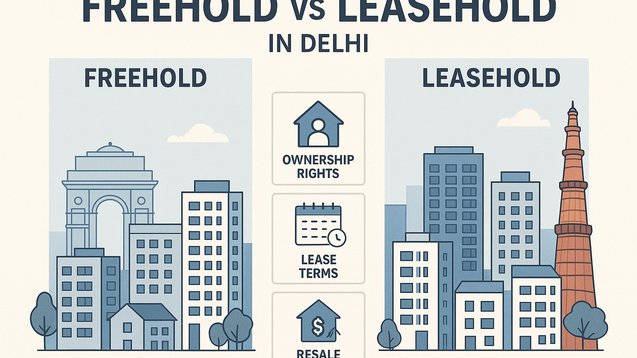
Introduction:
Understanding Property Ownership in Delhi
If you’re planning to buy property in Delhi, one of the most important decisions you’ll face is whether to go for a freehold or a leasehold property. While the location, price, and builder reputation are often top concerns for buyers, overlooking the type of property ownership can lead to serious issues later—especially when it comes to resale, home loans, or renovation.
In Delhi, both types of ownership exist across different localities. Areas like South Extension, Karol Bagh, and Vasant Kunj have a mix of both, while places like Dwarka and Rohini have traditionally seen a dominance of leasehold properties due to DDA's involvement.
This blog will help you understand the key differences between freehold and leasehold, what each means for you as a buyer, and how to choose the right one based on your needs and budget.
What is a Freehold Property?
A freehold property means complete ownership of the property and the land on which it stands. Once purchased, you have full rights to sell, transfer, or modify the property (subject to local laws).
Key Features of Freehold Properties:
The buyer owns both the land and the structure.
No annual ground rent or lease fees.
Easier to sell, rent, or mortgage.
Higher resale value due to ownership freedom.
Property registration is done with full title transfer.
Popular Freehold Areas in Delhi:
Lajpat Nagar
Janakpuri
South Extension
Saket
Vasant Kunj (some parts)
Karol Bagh
Freehold properties are often seen as more secure, long-term investments, especially in premium residential areas.
What is a Leasehold Property?
A leasehold property means that the buyer has rights to use the property for a fixed period, typically 30 to 99 years, but doesn’t own the land. The ownership of the land remains with the lessor—usually a government agency like the DDA or L&DO.
Key Features of Leasehold Properties:
Ownership is limited to the duration of the lease.
Ground rent may be payable annually or in lump sum.
Major renovations need permission from the land authority.
Converting to freehold may be possible (but involves paperwork and charges).
Selling or mortgaging is more difficult than freehold.
Common Leasehold Areas in Delhi:
Dwarka
Rohini
Mayur Vihar
Paschim Vihar
Patparganj
Dilshad Garden
Leasehold properties often come under DDA-built flats or cooperative group housing societies.
Major Differences: Freehold vs Leasehold
Understanding these differences is crucial before you finalize a deal.
Pros and Cons of Freehold Property
Pros:
Full legal ownership and control
No renewal hassles
Higher market value
Easily transferable and loanable
Cons:
More expensive
Higher property tax in some cases
Pros and Cons of Leasehold Property
Pros:
More affordable
Ideal for middle-income buyers
Available in many organized colonies
Cons:
Limited rights
Difficult to sell or renovate
Requires conversion for full benefits
Should You Convert Leasehold to Freehold?
Yes—if you're living in a leasehold property and plan to stay long-term or sell it in the future, converting it to freehold is strongly recommended.
Why convert?
Increases market value
Allows structural modifications
Easier to take home loans
Provides ownership security
How to Convert?
Apply to the relevant authority (DDA, L&DO, etc.)
Submit proof of ownership
Pay conversion charges
Get a conveyance deed registered in your name
The process can take weeks to months, depending on documentation and backlog.
Bank Loans: Which is Easier to Finance?
Most banks and NBFCs prefer freehold properties because they offer better collateral value and fewer risks. While loans for leasehold properties are not impossible, they typically require:
Longer processing time
Higher scrutiny of documents
Higher interest rates or collateral in some cases
If you're planning to buy with a loan, go for freehold or a property that's already in the process of conversion.
Investment Viewpoint: Which Is Better?
If you're looking for long-term investment and future appreciation, freehold is the clear winner.
If you want a budget-friendly flat in an established area and plan to convert later, leasehold might work, provided you’re comfortable with the legal complexities.
Buyers in places like Dwarka and Rohini often buy leasehold flats with the intention of converting them later as the area matures and value increases.
Buyer Checklist Before Choosing Between Freehold and Leasehold
Check property title and ownership status
Verify with DDA or L&DO if leasehold is eligible for conversion
Estimate conversion cost if applicable
Ensure no legal disputes or unpaid dues
Check bank loan eligibility in advance
Talk to a real estate lawyer before signing anything
Conclusion: Making the Right Choice for Your Future
Choosing between freehold and leasehold isn't just a legal or financial decision—it's also about peace of mind. While freehold properties offer complete freedom and long-term benefits, leasehold options can still be worthwhile if you're strategic and well-informed.
Whether you're eyeing a builder floor in Karol Bagh or a DDA flat in Dwarka, understanding your property’s legal ownership status is just as important as price or location.
Think long-term, do your research, and always involve a trusted advisor before making the final call.
Frequently Asked Questions (FAQs)
1. Is freehold better than leasehold in Delhi?
Generally, yes. Freehold properties are more flexible and valuable, though leasehold may be suitable for budget-conscious buyers.
2. Can leasehold property be converted to freehold?
Yes. Most DDA or L&DO leasehold properties can be converted by paying a fee and submitting documents.
3. Can I get a loan on leasehold property in Delhi?
You can, but it’s harder and may require additional paperwork or co-borrower support.
4. Which areas in Delhi have more freehold options?
Karol Bagh, South Extension, Janakpuri, and parts of Vasant Kunj and Saket are known for freehold availability.
5. Do leasehold properties appreciate in value?
Yes, but at a slower rate compared to freehold. Value increases significantly post conversion.
6. Are DDA flats leasehold or freehold?
Most original DDA flats are leasehold, but many have been converted to freehold by owners over the years.
Read more about property matters with our specialists and browse the latest property listings on Property Aaj. Download the app from the Play Store and App Store now for easy buying, selling, and renting!