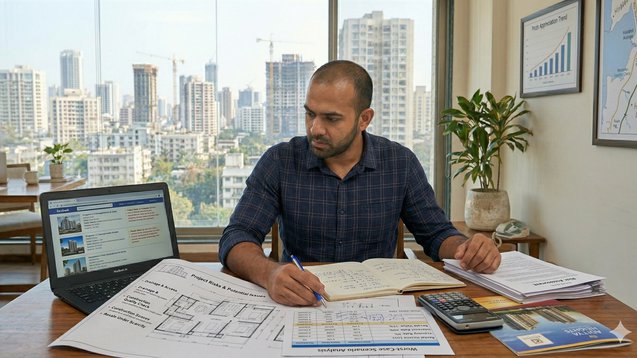
Choosing Property Based on Worst-Case Scenarios
Introduction: Smart Property Buyers Think Beyond the Best Case
People who assess properties begin their evaluation by picturing the most favourable result. Prices rise steadily. Infrastructure develops quickly. Rental income increases every year. The neighbourhood becomes a premium locality. But experienced real estate investors often think very differently.
They ask a much tougher question: What if things don’t go as planned?
Regional property markets throughout India operate according to different market patterns because of the country's extensive geographical and cultural diversity. A high-rise apartment in Mumbai, a plotted development in Indore, or a residential project in Coimbatore may all promise excellent growth but external factors like infrastructure delays, economic shifts, or oversupply can change the outcome. Seasoned buyers use worst-case scenario evaluations because they need to assess property value. The property will remain valuable for them according to their evaluation which includes growth projections and rental demand and resale time periods. Real estate research platforms like Property Aaj (https://www.propertyaaj.com) help buyers analyse market conditions, compare projects, and understand demand trends before making major financial commitments. People who evaluate worst-case scenarios demonstrate a tendency toward pessimism. The process requires preparation and it needs realistic evaluation and financial control which successful property buyers use as tools to differentiate themselves from their competitors who make hasty choices.
Why Worst-Case Thinking Is Important in Real Estate
The nature of real estate investment operates as a commitment that spans multiple decades. Home loans in India typically last between 20 to 25 years which leads most buyers to depend on their consistent earnings and rental revenue for EMI payment management. The property markets display unpredictable behaviour. Infrastructure projects experience delays that extend beyond their estimated completion times. The economic downturn will lead to decreased demand for rental properties. The introduction of excessive new developments in particular micro-markets results in temporary market oversupply conditions. Multiple residential projects launched at the same time across several developing corridors in Bengaluru and Hyderabad. The market maintained its upward trend throughout the entire period while the demand for resale and rental properties experienced short-term fluctuations. The financial burden executives faced emerged when they based their assessment on the best-case scenario. Investors who anticipated lower property value growth and postponed their expected rental income achieved better investment outcomes. Worst-case thinking enables buyers to evaluate practical questions about their situation.
Can I afford the EMI if rental income doesn’t arrive immediately?
Will this location remain lovable even if infrastructure takes time to develop?
Is the builder financially stable enough to complete the project?
The process of answering these questions helps people build financial protection.
Understanding Worst-Case Scenarios in Tier 1 Cities
The cities of Mumbai Delhi NCR and Bengaluru do not experience total property value collapses as their worst possible outcome. The cities maintain strong demand because of available jobs and incoming residents. However, buyers still face certain risks. The expensive properties force people to pay higher monthly loan payments. The financial burden increases when a person experiences employment loss or when there is a decrease in rental demand. An example exists when an investor purchases an apartment close to an upcoming IT corridor in Bengaluru because they expect high rental demand. The office hub will cause rental income to arrive later than expected because companies take time to develop and implement their hybrid work systems. The existing inventory acts as an additional element. Existing construction projects in some metropolitan areas create new housing developments which will take several years to complete before property values start rising. Buyers can assess supply levels for different projects by using Property Aaj (https://www.propertyaaj.com) which shows them all available resources in micro-markets that already have excessive development. People in Tier 1 cities who engage in worst-case thinking about their property need to pay attention to how their assets will perform during specific time periods and how liquid their assets will be and whether they possess enough financial strength.
Risks in Tier 2 Property Markets
The real estate market in Tier 2 cities which includes Ahmedabad Lucknow Kochi Indore and Jaipur has experienced significant growth during the past few years. The combination of better infrastructure and growing industrial sectors and reduced property costs has created a situation where many buyers are entering the market. Metropolitan cities have different market dynamics than these markets which operate in their own distinct way. The Tier 2 cities experience localized demand patterns which show different buying behaviour across different parts of the city. Certain areas may experience rapid growth due to infrastructure or commercial activity, while others develop more slowly. A residential project needs future infrastructure development which includes highways and metro lines to succeed because it sits outside the core city area. The resale market will remain inactive for several years because the project development will face construction delays. The rental market in Tier Two cities shows different market patterns than the rental market in major metropolitan areas. Investors should not consider investments as poor choices because they need to maintain financial control over their properties during times when property values increase at a slower rate.
Worst-Case Scenarios in Tier 3 and Emerging Cities
The declining prices and better infrastructure development of Tier 3 cities and emerging towns in India have turned them into attractive real estate investment destinations. The markets need to be monitored with greater care than normal. Local economic conditions determine property demand in smaller cities. The rental market will experience moderate growth because job opportunities are restricted. The majority of buyers who purchase plotted developments in Tier 3 markets anticipate that their investments will increase in value over time. People who invest in land will find that their assets perform better than required for major city properties which have lower selling capacity. The worst-case scenario requires that resale must proceed through extended time frames and price negotiations. Emerging market investors need to assess:
Local employment drivers
Infrastructure timelines
Population growth trends
Land-use regulations
Property Aaj (https://www.propertyaaj.com) offers users valuable information about emerging property markets which enables them to research different projects before making purchasing decisions.
Financial Planning for Unexpected Situations
Property buyers make their most significant mistake when they believe that property buying processes will follow their expected path. The world operates with unpredictable patterns which differ from the established order of things. Financial stability experiences disruption through job transitions, health crises, relocation requirements, and economic downturns. Smart buyers therefore test their property decisions against possible disruptions. If rental income experiences a one-year delay which happens after your property purchase, will you experience monetary difficulties when paying your EMI?
Your financial savings should cover property costs for the entire duration until resale because you plan to hold the property until then. Financial planners suggest that people should maintain an emergency savings fund which covers six to twelve months of their EMIs before they proceed with property purchases. The investment buffer protects against sudden emergencies which could potentially transform an investment opportunity into a financial burden. People use worst-case thinking for two purposes: they prepare themselves for financial emergencies while maintaining their ability to adapt to changing situations.
Evaluating the Builder’s Reliability
The evaluation of worst-case scenarios depends on the builder's capacity to deliver reliable construction work. The Indian real estate market still faces construction delays because of incomplete regulatory reforms which RERA has introduced in certain areas. When financing problems or labour shortages or approval delays happen, regulated settings still experience work delays. A project that promises possession in three years may realistically take longer. This is why buyers should always evaluate the developer’s past projects.
Have they delivered on time?
Are existing residents satisfied?
Is the project properly registered under RERA?
Using property platforms like Property Aaj (https://www.propertyaaj.com) enables buyers to examine various projects while verifying developer backgrounds which helps them choose their purchases. The existence of a reliable building record reduces construction risks to their most extreme level.
Location Matters Even in the Worst Case
Real estate experts consider location to be the most critical element of property evaluation because this fact becomes especially clear when they analyse extreme situations. The value of a property remains constant throughout market declines when it exists within a neighbourhood that provides both strong transportation links and established residential areas. Remote and speculative properties experience higher levels of risk compared to their established counterparts. Investing in property close to functional metro stations and established business districts provides much better investment security than investing in projects that depend on future infrastructure development. Established areas maintain their power to attract residents and tenants and property buyers even during the most challenging situations. The experienced investors choose to invest in liveable neighbourhoods because they understand that these areas provide better value than speculative growth stories.
Balancing Optimism with Practical Thinking
Real estate investment requires investors to maintain positive expectations throughout their investment period. Indian property markets have shown consistent growth and stability throughout their history which extends to cities that experience economic development. Worst-case thinking serves as a decision-making tool that helps people make balanced choices between different options. Buyers assess the property value based on its potential growth while they examine its value during less favourable market conditions. An apartment that offers both adequate rental income and future value growth provides investors with better security than an investor who buys without proper research. Optimism and realism create a balanced approach which enables buyers to proceed with their purchase.
Conclusion: The Presence of Prepared Buyers Results in Superior Property Selection.
The process of buying property involves more than simple financial transactions. The process connects to personal aspirations and family security and the need for permanent financial solutions. The emotional bond leads buyers to search for their optimal result which they believe will deliver the best outcome. Investors who make intelligent investment decisions always start by asking their most crucial inquiry which involves understanding the results of their project execution when they face unexpected situations. Property ownership assessment through worst-case scenarios leads to sustainable decision-making which results in practical and financially protected outcomes. Buyers can achieve reduced uncertainty about their future purchase by studying location fundamentals and builder reliability and rental potential and market demand. Property Aaj (https://www.propertyaaj.com) functions as a research platform which enables property seekers to evaluate different projects while analysing market conditions to make choices based on factual information instead of marketing claims. Property investment success depends on making accurate predictions about upcoming trends. The process involves selecting properties which maintain their value through all future changes that will occur.
FAQs
1. What does worst-case scenario analysis mean in real estate?
Worst-case scenario analysis assesses property investment performance under conditions of declining market conditions. Buyers evaluate potential outcomes which include delayed property value increases and reduced rental interest and extended time periods needed to sell properties in order to achieve financial security.
2. Are worst-case scenarios common in the Indian property market?
The occurrence of extreme scenarios does not happen frequently yet. The property market experiences temporary fluctuations from property market conditions which result from infrastructure project delays and oversupply issues in specific locations and economic downturns. Buyers need to prepare for these scenarios because they help buyers protect themselves from financial difficulties.
3. What methods can buyers use to protect themselves against their most dangerous property risks?
Buyers should research builder credibility, choose established locations, maintain financial reserves for EMIs, and compare multiple projects before investing. The use of trustworthy property research platforms enables users to achieve better risk reduction results.
4. Is investing in Tier 2 or Tier 3 cities riskier than Tier 1 cities?
The answer is no because both Tier 2 and Tier 3 cities present lower initial costs while showing strong potential growth. The rental market demand and resale asset liquidity will differ according to local infrastructure development and economic growth patterns that buyers need to assess.
5. Why is location essential for worst-case scenario assessments?
Properties in well-connected and established locations tend to retain demand even during slower market phases. The marketability of properties in prime locations remains intact because their prime locations continuously attract tenants and buyers.
6. How long should buyers be prepared to hold a property investment?
Real estate should typically be viewed as a long-term investment, which lasts from five to ten years and extends beyond that duration. The designated time period enables buyers to wait through short-term market shifts while they obtain long-term market value increase benefits.