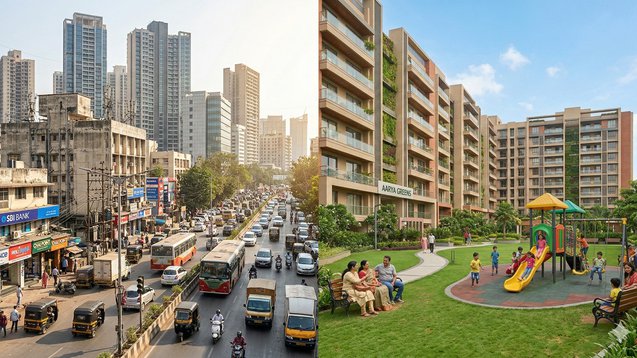
Introduction
Every growing family eventually faces this question: Should we stay close to the city center or move to the suburbs? City life offers three major benefits which include better access to all essential facilities and shorter travel times and immediate entry to workplaces and medical centers and entertainment venues. Suburbs deliver to residents multiple advantages which include increased living area and improved air quality and reduced noise pollution and enhanced economic value. The situation requires multiple solutions because no single approach works for all. The right choice depends on your children’s age, work location, financial comfort, lifestyle preferences, and long-term plans. What feels perfect for one family may feel restrictive for another. The guide will assist you in making a decision about your home search between central apartments and suburban gated communities because you are currently comparing these two types of residences.
Space and Home Size: What Do You Get?
The main factor which separates urban areas from suburban neighborhoods exists in their spatial dimensions. The cost of real estate per square foot is usually much higher in urban downtowns than in suburban areas. Being in metro downtowns may mean:
people can find smaller rental and sales units than what suburbs provide
people have access to fewer or completely absent green areas in downtown
People have access to fewer outdoor balcony spaces in downtown areas than in suburban areas. Suburban areas provide their residents with:
Suburban areas provide their residents with larger usable living areas
downtown areas have fewer 3 bedroom and 3 bathroom unit options than suburban areas
people who live in suburban areas have better access to outdoor spaces which they can use for running and playing
Your home benefits from better airflow and daylight because your home has better ventilation solutions. The extra space in your home enables your family with kids to manage daily activities because the additional space serves as a study area and a play area and a storage area. The suburbs provide more affordable options for people who need extra space because they feel confined in their downtown apartment.
Safety and Environment for Children
High levels of pedestrian traffic characterise urban areas. Increased vehicular traffic creates problems as do higher levels of noise and air pollution; all these combined create an electric feeling that working adults often appreciate; however, children may not find this environment to be conducive to their enjoyment of life. Whereas similar living environments exist in the suburbs, they tend to be more low-key than those found in urban settings. These include:
1) Much quieter residential street systems,
2) Gated communities,
3) Less vehicular traffic within those communities,
4) Cleaner environments.
Suburban families with children often have more opportunity to engage in outdoor activity. As a result, parents have more opportunities to relax in controlled residential communities.
When considering whether or not a community is safe for children, one must look carefully at each community being analysed. The degree of safety in suburban communities varies significantly; in fact, many cities have very dangerous areas. In order to make safe decisions regarding community selection, research into neighbourhoods in regard to safety is imperative.
School Access and Educational Facilities
Family decisions depend on education as their main deciding factor. The city centers of urban areas provide established educational institutions that operate within walking distance of most citizens. The initial school travel distance for newly developed suburbs will extend longer than required for established suburbs. The educational infrastructure of suburban regions is expanding rapidly because new schools and educational institutions are constructing their facilities in these areas. Determine the daily distance that children will travel to their destinations. The question of school bus access points requires an evaluation of its usability.
The location has multiple backup solutions which customers can utilize. People who face extended travel distances can choose to live in areas with superior living conditions.
Work Commute and Daily Routine
The final choice between options usually depends on this particular element. City center residents experience two main benefits which include: The first benefit is shorter office travel time and the second benefit is better access to public transportation systems. Their daily activities require less time. Suburban households experience two main disadvantages which include: The first disadvantage requires residents to drive for longer distances while the second disadvantage requires residents to use their own cars for transportation. Drivers experience more road congestion during peak traffic periods. Your work allows you to perform remote tasks which makes your job location requirements less essential. Travelling saved time should be valued as much as the peaceful environment of arriving home. The first step to establish your daily travel time limits requires you to make actual calculations of your travel needs.
Lifestyle and Social Exposure
City centers provide six different types of establishments which include restaurants, malls and cultural events and hospitals and entertainment options. The suburbs provide two main features which include community focused living and green spaces that include parks and walking tracks and they provide access to local markets and residents can enjoy peaceful nights. Young families with small kids do not consider weekend parties as an important activity because they prefer safe spaces that include playgrounds and parks. Teenagers, however, may appreciate easier access to urban activities as they grow older. Consider long-term lifestyle changes.
Cost of Living and Financial Comfort
The costs of city center properties exceed their value because property prices in those areas are higher than other locations. The expenses for upkeep and parking facilities will increase together with the maintenance expenses. Suburban properties often provide: Larger homes at lower cost per square foot Better amenities within residential complexes More budget flexibility. The process requires you to examine hidden costs, which include Fuel or transport costs Time spent commuting Vehicle maintenance. A person achieves financial comfort when they understand their daily expenses beyond the initial payment for their property.
Community Living and Social Bonding
The gates which protect the suburban communities through their entrance points make it impossible for outsiders to enter which makes the community residents grow closer to each other. The neighborhood becomes active when children participate in outdoor games. The parents of the neighborhood members develop social bonds while they take their evening walks. The neighborhood hosts various festivals which its members celebrate. People who live in city center apartments face challenges because their busy life patterns prevent them from making social contacts in their limited shared spaces. Suburbs provide community connections which help children develop social skills because residents engage with each other in their community activities.
Future Growth and Property Appreciation
The developing corridors of suburbs provide better prospects for property appreciation because their infrastructure development remains ongoing. The combination of metro systems and highway networks together with commercial districts creates sustained demand growth for suburban areas throughout the years. The property values of city center buildings show stability yet their current market value exists at an elevated level. The property value growth for this asset occurs at a gradual pace which allows for slow yet persistent increases. People who want to maintain their current way of life while making investments for the future need to consider this element.
Health and Quality of Life
The well-being of families gets affected by three specific factors which include noise pollution and traffic stress and crowded environments. Suburban areas provide residents with three main advantages which include cleaner air and reduced noise levels and access to parks and green spaces. Suburban areas provide residents with two main benefits which include cleaner air and reduced noise levels. The suburban lifestyle allows people to enjoy peaceful evenings while city life provides them with easy access to essential services. Your answer to the question about your preferred location for mental relaxation will determine your answer to the following inquiry.
When City Centers Make More Sense
City centers become the perfect choice when both parents must travel their demanding office work to their daily job locations. The schools operate under established educational systems which provide educational resources for students who live in the area. The critical need for hospitals together with emergency service access needs to be fulfilled. The urban environment offers you energetic city life together with easy access to all urban amenities. The process of getting to work becomes less stressful when your workplace exists near your home.
When Suburbs Are Better for Families
Suburbs provide ideal living conditions for people who need larger homes and families with children who require safe outdoor spaces and residents who want to experience their home environment in peace and need to travel to work places when they want to and people who want to establish their permanent way of living. The suburban environment serves as a suitable choice for families who want to build their future together because it provides them with essential comforts and a balanced way of life.
Conclusion
The decision between suburbs and city centers requires evaluation of different factors. The decision rests on your family's current stage of development. People who need to travel to work daily should choose city life because it provides them with quick access to urban amenities. People who value extensive space and quiet surroundings and communal relationships and permanent residence will find suburbs to be their best option. People should create a mental picture of their entire day before making a choice. People should visualize their school morning activities and their office work schedule and their evening time and their weekend activities. The location that supports your family’s rhythm without constant stress is the one you should choose.
FAQs
1. Do suburbs provide safer environments for children compared to city centers?
Gated communities provide better security than all other areas but actual safety varies between communities.
2. Do suburban homes provide better cost efficiency to buyers than urban properties?
The same budget provides more residential area in suburban areas than it does in urban centers.
3. Does suburban commuting create excessive stress for people who travel between their homes and work?
The level of stress depends on two factors which are distance and traffic conditions.
4. Do suburban areas provide sufficient access to educational institutions?
The suburbs now include many schools which have good reputations yet students need to budget time for their travel to these institutions.
5. Do properties in city centers experience faster value appreciation compared to other locations?
City properties maintain their value through stable market conditions although they currently reach high price levels. The suburbs present better opportunities for growth during development than the established urban areas.
6. What is the most important factor in this decision?
The most important factor to evaluate is how daily commutes affect family comfort throughout their entire life.
Read more about property matters with our specialists and browse the latest property listings on Property Aaj. Download the app from the Play Store and App Store now for easy buying, selling, and renting!