Introduction
The Indian real estate and hospitality sector is transforming. Emerging lifestyles, work styles, and mobility from urban to suburban and rural regions has resulted in increasing demand for co-living spaces, particularly by millennials, students, and young professionals. It is notable that many hotels across India, including those in Maharashtra’s high-growth cities (Mumbai, Pune, Thane, Nagpur, Nashik), are seeking a new identity through a rebranding, or renovation, to co-living spaces.
Hotels that once catered to short-term stays by tourists are quickly transitioning to accommodate long-term stay for professional workers. Why the shift to co-living? And what does this mean to real estate? Let’s examine the discourses surrounding the idea of co-living.
Understanding Co-Living Spaces
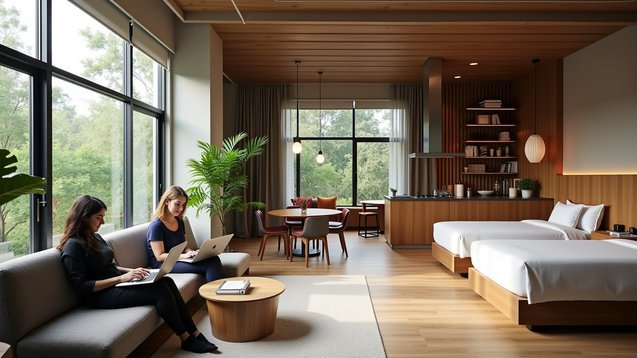
Co-living is an innovative type of accommodation where residents share kitchens, lounges, and workspaces, but each person benefits from their own private bedroom. As opposed to traditional paying guest (PG) establishments, co-living is professionally managed, furnished, and community focused.
Co-living has the following key advantages:
Flexible rent terms
Furnished, ready to live-in units
Maintenance and utilities jointly managed
Community events and networking
The co-living model is unsurprisingly gaining traction in metros and tier-2 cities across Maharashtra, as young professionals are searching for an affordable yet comfortable place to live.
Why Hotels Are Converting Into Co-Living Spaces
Decline in Traditional Hotel Occupancy
The pandemic drastically reduced business and leisure travel. Even post-recovery, many hotels have struggled with consistently low occupancy. Converting into co-living ensures steady monthly rentals instead of unpredictable bookings.Rise of the Gig Economy and Remote Work
With IT hubs in Pune (Hinjewadi, Kharadi, Baner) and Mumbai (Powai, Andheri, BKC), professionals need flexible housing near workplaces. Hotels already built in prime areas can easily be adapted into co-living spaces.Better Utilization of Infrastructure
Hotels already have key amenities like housekeeping, laundry, and kitchens. These can be repurposed into shared utilities for long-term tenants.Higher Yield for Owners
Instead of relying on seasonal tourism, hotel owners can achieve higher and more stable rental yields by targeting co-living tenants.Appealing to Millennials
Younger renters prefer community living with amenities like Wi-Fi, gyms, and coworking zones, which hotels can offer with minor adjustments.
Examples Across Maharashtra
Mumbai
Areas like Bandra, Powai, Navi Mumbai have seen older boutique hotels converted into co-living setups.
Demand comes from corporate employees and expats seeking flexible stays.
Pune
In IT-heavy zones like Hinjewadi and Kharadi, business hotels are being restructured into affordable co-living facilities for young tech professionals.
Nagpur
With MIHAN (Multi-modal International Cargo Hub) creating jobs, mid-sized hotels near Civil Lines and Sitabuldi are shifting to long-term living models.
Nashik
Hotels near College Road and Gangapur Road, which once catered to weekend tourists, now attract students and professionals as co-living residents.
Thane and Navi Mumbai
Affordable living demand near Mumbai’s corporate hubs is fueling hotel-to-co-living conversions.
Benefits for Residents
Affordability: Cheaper than renting a flat individually in expensive areas like Mumbai’s Bandra or Pune’s Koregaon Park.
Convenience: Ready-to-move-in units with furniture, Wi-Fi, and housekeeping.
Community Living: Networking opportunities, events, and social spaces.
Flexibility: Short-term leases suit professionals on projects or students.
Impact on Real Estate Market
Reviving Idle Hotel Properties
Older or struggling hotels now find a new lease of life through steady income.Increased Rental Options in Prime Areas
Localities that were once too expensive now have more accessible living choices.Boost for Investors
Investors see hotel-to-co-living conversions as a profitable asset class with high rental yields.Changing Urban Housing Dynamics
The rise of co-living is reshaping demand for traditional PGs and rental apartments.
Challenges in Conversions
Zoning and Licensing: Hotels need permissions to switch operations.
Tenant Turnover: Shorter leases mean frequent tenant management.
Cultural Acceptance: Some still view co-living as “fancy PGs” rather than mainstream housing.
Upfront Renovation Costs: Modifying hotel layouts into long-term housing requires investment.
How Property Aaj Supports This Transition
Platforms like Property Aaj (https://www.propertyaaj.com) make it easier for property seekers and investors to explore such evolving housing options. From listing converted hotels as co-living spaces to offering market insights on ROI and rental trends, Property Aaj ensures transparency and accessibility.
For developers and investors, the platform provides valuable tools to evaluate demand hotspots in Mumbai, Pune, Nagpur, and beyond.
The Future of Hotels as Co-Living Spaces
Mainstreaming a Housing Model for Accommodating Living
Co-living spaces will evolve into mainstream modes of accommodation for many young renters.Expanded Conversions in Tier-2 Cities
As demand rises for students and professionals, co-living conversions of hotels into living spaces will take place in the tier-2 cities in India such as Nagpur, Nashik, and Aurangabad.Technology Integration
The next phase of co-living is smart applications for payments of guests. You will be able to control and reserve your attached facility with smart applications.Sustainability Focus
As hotels convert into co-living spaces, they will incorporate some form of new eco-friendly offerings. Hotels could offer solar panels, and rainwater or greywater recycling (water recycling or water treatment) as offerings to the tenant.
Conclusion
The hotel conversion into co-living spaces is not a fad, it is a solution to housing issues. For hotel owners, it is a way to keep the income secured. For the tenant, it is affordable accommodation for flexible accommodations for a sense of community in a prime yet flexible location. For real estate investors, a co-living facility allows real estate investors to maximize their acquisition into a new-to-high-yield asset class.
With the Tier-1 and Tier-2 cities in Maharashtra continuing to rise and the evolution of urban attraction in the area, co-living spaces will redefine urban housing. With platforms such as Property Aaj (www.propertyaaj.com), they provide the marketplace to bridge the gap for seekers and providers. Real estate is evolving into a flexible and opportunity-based evolution.
FAQs
Why are hotels converting into co-living spaces?
Hotels are converting due to decreasing occupancy, co-living demand increase, and the need for steady rental income.Are co-living spaces cheaper than renting an apartment?
Yes, co-living usually offers 20-30% less rent as it includes utilities, furniture, and amenities.Which cities in Maharashtra are leading in hotel-to-co-living conversions?
Mumbai, Pune, Thane, Nagpur, and Nashik.What amenities do co-living spaces provide?
These generally include Wi-Fi, housekeeping, shared kitchens, gyms, and networking events.Are co-living spaces only suitable for students?
No. Its popularity also stems from the strong interest as it is good for young professionals, digital-nomads, and expatriates.How can Property Aaj help find co-living spaces?
Including verified listings of co-living spaces and market insights tailored for informed decision-making.Read more about property matters with our specialists and browse the latest property listings on Property Aaj. Download the app from the Play Store and App Store now for easy buying, selling, and renting!