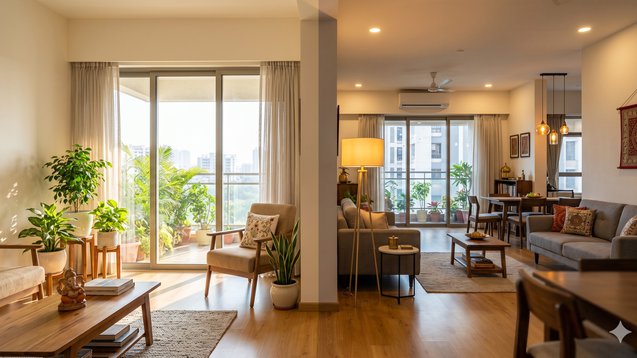
Natural Light vs Artificial Light in Vastu
Introduction:
When you enter two different houses, one of which has natural sunlight and the other uses artificial light, you will experience an immediate change in atmosphere. One feels fresh, lively, and energizing. The other might look modern and well-designed, but something feels slightly off. The element which creates that effect has existed in Vastu Shastra principles for multiple centuries. The present real estate market in Indian cities considers lighting as an essential factor which determines property value because it functions as a design component. All types of properties, from compact 1 BHK units in Mumbai to spacious Pune flats and independent homes in Indore and Lucknow, require appropriate natural and artificial light distribution to maintain occupant comfort and health while preserving property value. The Property Aaj website (https://www.propertyaaj.com) contains listings which use the terms "well-lit," "airy," and "sun-facing" with high frequency. Buyers are paying attention and rightly so.
What is Vaastu's perspective about natural light and artificial light?
Is one always better than the other, or is there a balance to aim for?
The explanation will use concrete examples from actual situations.
Understanding Natural Light in Vastu
Natural light serves as the main source of positive energy according to Vastu Shastra because sunlight functions as its primary source. The existence of brightness serves as proof of life energy. The morning sunlight which emerges from the eastern sky brings people both mental clarity and growth and vitality. The Vastu system recommends that people should establish windows and balconies and open spaces which face east and north. The present day situation exists as we see it today. The residents of Bangalore and Delhi face difficulties in obtaining natural light because high-rise buildings dominate their Tier 1 cities. The fixed building layouts create challenges because buildings stand too close to each other. The inhabitants of Tier 2 and Tier 3 cities maintain more freedom than their counterparts in Tier 1 cities. The residents of less populated areas experience better sunlight access because their homes consist of independent houses and low-rise apartments. The natural light requirement for Vastu purposes functions as a structural advantage which changes according to your residential location.
Artificial Light in Modern Home, A Necessity, Not a Replacement
The existence of artificial lighting represents an essential requirement for every home. From evening routines to late-night work, artificial light is essential. The Vastu system does not reject artificial lighting. The system sees artificial light as an alternative to natural light sources. Sunlight provides biological and environmental advantages which artificial lighting systems do not deliver. The system fails to enhance your body clock system and it does not improve indoor air quality. The system creates positive energy for a space when used correctly. Soft bedroom lighting produces a peaceful environment while stronger white lights in kitchens and work areas enable better sight and concentration. Artificial light becomes essential in urban apartments which receive limited natural light. You need to focus on how to operate it instead of measuring its total quantity.
Natural Light vs Artificial Light The Core Difference
The next part shows an interesting development. Natural light shows dynamic properties because its brightness level undergoes changes throughout various times of day. The changing light conditions throughout the day create an environment that matches the natural patterns of human activity. Artificial light, on the other hand, is static. The system maintains its current state until you choose to change it. Vastu principles state that natural light enables better energy movement while artificial light provides practical usage support. You should understand this concept by viewing natural light as your main illumination source while artificial light serves as your secondary illumination system. The first case shows that people use artificial light only when necessary to protect their eyes from bright sunlight. The first case shows that people use artificial light only when necessary to protect their eyes from bright sunlight. Artificial lighting systems attempt to replace natural light in spaces that lack sunlight, but they can never achieve complete success.
Effects on Health and Daily Life
We need to discuss how real-world situations produce their effects. Natural light creates a better mood which leads to increased work performance while people experience better sleep patterns. The system helps people to require less artificial light which results in better indoor light conditions. People face eye strain and headaches and sleep disturbances because of artificial light which lacks proper design. Natural sunlight decreases moisture levels and prevents meld development in places with high humidity such as Mumbai and Chennai. Interior spaces require natural light to function properly for professionals who work at home. People who work in spaces with natural light from windows achieve better results than those who work in spaces with continuous artificial light. The main factor driving buyers to select properties through Property Aaj (https://www.propertyaaj.com) is their need for natural light during the property selection process.
Role in Property Value and Buyer Psychology
The way lighting illuminates a property determines its overall visual appearance. A home with natural sunlight creates a spacious and clean atmosphere which invites people to enter the space. The 1 BHK apartment becomes spacious when it receives sufficient sunlight. The demand for this product increases while its market value improves in Tier 1 cities. Builders impose higher prices for apartments that have sun-facing windows and corner locations. The Tier 2 market demonstrates slight price variations but buyers show distinct changes in their purchasing behaviour. People now possess better knowledge about their needs which reduces their willingness to accept anything less than complete comfort. Artificial lighting can enhance interiors during site visits, but experienced buyers look beyond that. Their questions include:
Does this flat get sunlight in the morning?
Will nearby construction block light in the future?
These questions directly affect decision-making.
Lighting in Different Property Types
Different property types have different lighting patterns. Houses which independent people build in Tier 2 and Tier 3 cities provide residents with superior natural light access. Designers can create openings through which they can develop skylights and courtyard spaces. Metro cities create apartment residents who depend on their building orientation. Higher floors generally get better light. Smart planning establishes requirements for studio apartments and compact homes. A window which faces the correct direction provides a significant light advantage. Developers of luxury apartments design their buildings with larger windows and balconies to create maximum natural light. This situation does not always apply to budget housing. People need to see how lighting works before they decide to buy products.
The Right Method to Balance Natural Light with Artificial Light Sources.
So, what’s the ideal solution? Not choosing one over the other-but balancing both. Natural light needs to be maximized through window access which should remain free of any obstacles. Windows should remain clear while light curtains need to be used instead of heavy curtains. The space requires proper artificial lighting which should be designed through careful planning. The space needs three types of lighting: ambient light, task light, and accent light which together create the desired atmosphere. For example:
Kitchens require bright lighting while
Bedrooms need soft lighting and
Study areas should have focused lighting,
The balanced approach achieves optimal results by following Vastu principles which match current requirements of modern living.
Common Lighting Errors That First-Time Homebuyers Make
During Property Showings. Home visitors tend to depend too much on artificial lights when they inspect properties. Builders use bright lights to create a better appearance in their construction work. The second error people make involves them failing to recognize how light behaves in different directions. The bright flat that exists from afternoon hours loses all its brightness during morning time. Buyers also overlook surrounding structures. Future construction can block natural light completely. The design error shows itself through the use of heavy curtains combined with dark colours and clutter which restrict light from entering the room. Your path to an intelligent decision starts when you select properties from Property Aaj at httpswwwpropertyaajcom which you must visit to examine their lights throughout all times of the day.
Energy Efficiency and Cost Considerations
The presence of natural light during daytime hours leads to decreased electricity consumption. The process of decreasing expenses will continue to happen through time. People in cities with expensive power rates receive a beneficial advantage from this situation. Excessive westward sunlight entry into buildings creates indoor heat problems which forces more frequent air conditioning use. The wasteful operation of artificial lights results in higher electricity costs for buildings. Smart planning functions as the optimal solution to the problem. Energy-efficient LED lights should be used together with natural ventilation and shading techniques to create a comfortable indoor environment.
Lighting Trends in Modern Indian Real Estate
Developers today have better knowledge about how their customers prefer different types of lighting. Developers in Tier 1 cities design their projects to include larger windows and wider building distances and effective site design. The design of Tier 2 city projects benefits from superior land availability which enables developers to create open spaces and improve daylight access. Affordable housing projects are advancing their development in this area. The demand for this transformation comes from buyers who ask appropriate questions to make their decisions. The website Property Aaj (https://www.propertyaaj.com) enables users to find essential details about building design by showing them information about ventilation and sunlight exposure.
Conclusion
Natural light and artificial light exist as collaborative partners instead of competing against each other. But the hierarchy matters. Natural light comes first. It establishes the energy and health and overall living experience of your home. Artificial light supports it, fills the gaps, and enhances functionality. Vastu Shastra requires practitioners to find equilibrium between opposing forces. Modern real estate development now uses balance as a critical element in property evaluation. Homebuyers in metro areas and developing Tier 2 cities should recognize lighting as a main element of their properties. The system serves as one of the few components which will remain fixed throughout the property life. People should take their time to observe their surroundings while they ask questions and check out different properties throughout the day. The right lighting system improves your home environment while enhancing your daily life experiences.
FAQs
1. Does Vastu consider natural light to have greater significance than artificial light?
Yes, natural light is considered more important as it provides positive energy which benefits human health. The artificial light system needs to function as a backup to natural light sources.
2. Can artificial lighting substitute for natural sunlight?
The system enhances visibility and aesthetic appeal, yet it fails to deliver the health benefits and energy-boosting effects found in natural sunlight. The system functions best when used as an additional component.
3. Which direction provides the best natural light in India?
East-facing homes receive gentle morning sunlight and are considered ideal. North-facing homes also provide consistent daylight without excessive heat.
4. Does lighting affect property resale value?
The presence of good lighting in homes increases their appeal to both buyers and tenants according to research findings. Properties with poor lighting sell at lower prices and take longer to sell than their better-lit counterparts.
5. How can I improve lighting in a dark home?
Mirrors and light-coloured walls and sheer curtains will create better illumination. The system requires both artificial lighting and window space to achieve maximum light output from windows.
6. Are higher floors better for natural light?
The answer to this question is yes. Higher floors face fewer obstructions and receive better sunlight compared to lower floors, especially in dense urban areas.