Introduction
Water serves as the fundamental requirement which every household requires yet Indian property buyers show insufficient ability to assess water resources before making their home purchases. Daily water supply becomes unreliable, which results in a complete loss of value for an attractive apartment that offers high resale value and shows first-class amenities. Water availability has emerged as the most important factor in real estate property selection which affects Bengaluru's tanker water system and Delhi NCR's groundwater depletion and coastal cities' saline water problems and Tier 2 and Tier 3 towns' seasonal water shortages. Water security will become the main factor which determines property value and market demand and residential sustainability according to future projections, although buyers presently underestimate its importance. Homebuyers should consider water availability as their main factor when they visit Property Aaj (https://www.propertyaaj.com) for their home search. We need to explore the correct evaluation method, which we will use for your purchasing decision.
Understand the Primary Water Source
The first question to ask is simple: where does the water come from? In Tier 1 cities like Mumbai, Chennai, and Delhi NCR five different water sources supply water through municipal pipelines and borewells and tankers and their combined use of all three systems. In Bengaluru, many apartment complexes rely heavily on private tankers due to groundwater depletion. Municipal supply exists in Tier 2 cities, but it operates under limited hours. People in Tier 3 towns mainly depend on borewell systems for their water supply. Municipal supply provides better water service than borewells which operate less than full time. Borewell operation depends on groundwater availability which decreases as time passes. The need for tanker services results in higher monthly expenses and makes it difficult to plan during busy summer periods. Always ask:
- Is water available daily?
- How many hours?
- Is society dependent on tankers?
- What is the average monthly tanker expense?
People demonstrate both comfort and affordable living through their water access to reliable water sources.
Check Groundwater Levels and Sustainability
Groundwater resources throughout India face increasing challenges which lead to a deteriorating situation. The excessive extraction of water in Tier 1 cities results in significant decreases of water table levels throughout numerous regions. The residential zones that expand in Tier 2 cities depend on borewell systems which lack essential long-term recharge planning. The groundwater levels in Tier 3 towns remain stable but upcoming development projects threaten this stability. Project stakeholders need to confirm the existence and depth specifications of all borewell installations. The presence of deeper borewells points to a situation where water tables have reached lower levels. The society needs to check whether it has installed rainwater harvesting systems which can help recharge underground water resources. Sustainable water management practices serve as primary evidence which shows that developers complete their projects according to responsible development standards. A property which currently has stable water resources will experience water shortages in the future because it lacks a plan to maintain water resources.
Assess Water Quality
The presence of something requires additional elements to achieve its full effect. The assessment of quality requires a rigorous evaluation process. The presence of saline intrusion in coastal Tier 1 cities results in negative impacts on borewell water quality in Chennai and Mumbai. The presence of high Total Dissolved Solids (TDS) levels occurs in certain areas of Delhi NCR. The presence of iron contamination through natural sources or human activities affects water supply in Tier 2 and Tier 3 towns according to their specific locations. The inquiry should focus on whether the community implements filtration systems or operates water treatment facilities. The assessment needs to determine whether residents use multiple reverse osmosis systems in their homes. The assessment needs to request a recent water quality test report from the water testing facility. The presence of substandard water quality results in increased destruction of appliances and plumbing systems and elevated health threats. The presence of clean water results in diminished secret expenses which continue for an extended period.
Observe Storage Infrastructure
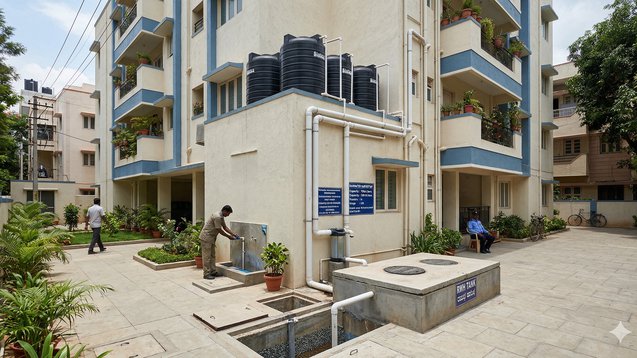
The ability to deliver products consistently depends on the available storage space for storage. The standard design in Tier 1 high-rise apartments includes both overhead tanks and underground sumps. Residents will experience pressure problems during peak usage times when storage capacity fails to meet their requirements. The smaller storage systems in Tier 2 mid-rise projects face challenges because of summer conditions. Individual tanks with limited backup capacity serve Tier 3 homes for their water needs. Request information about the number of days the building can maintain storage capacity without receiving new water supplies. The presence of sufficient storage capacity protects daily activities from interruption during tanker delays or municipal water supply outages. Water pressure is another important factor. Low pressure conditions create problems for showers and washing machines which decreases overall user convenience. The infrastructure strength holds equal importance to the water source requirements.
Evaluate Seasonal Water Stress
Many areas appear fine during the monsoon but struggle in summer. The tanker service in Tier 1 cities experiences its highest demand period from March to June. The peak summer period in Tier 2 cities leads to reduced supply hours. The complete drying of borewells occurs in Tier 3 towns during extreme summer conditions. Speak to existing residents about summer conditions specifically. Request information about the society's operations during water shortages. Is water rationed? Are extra charges collected? Summer conditions remain hidden from monsoon visits. Smart buyers make plans to handle the worst possible seasonal conditions.
Check Rainwater Harvesting Systems
Rainwater harvesting functions as both an environmental system and a water conservation procedure. In Tier 1 cities, municipal authorities require all large buildings to install rainwater harvesting systems. The implementation process varies between Tier 2 cities and Tier 3 cities. The system requires proper maintenance because it enables groundwater recharge while decreasing the need for tanker water supply. Find out if the rainwater harvesting system works or exists only to meet legal requirements. The maintenance standard determines how well the system operates. The sustaining activities of projects provide better long-lasting water resources than non-sustainable work. Environmental protection through responsible actions safeguards the value of properties.
Impact on Maintenance Costs
Water scarcity increases monthly expenses. The maintenance expenses for properties that depend on tanker water supply in Tier 1 cities experience significant cost increases during the summer period. The supply disruption in Tier 2 cities requires extra pumping and storage capacity to connect additional areas. The private borewell system in Tier 3 homes leads to repair expenses when pumps need fixing. Before booking on Property Aaj (https://www.propertyaaj.com), compare maintenance charges across similar properties. The increased expenses show how much the system depends on tanker water delivery. The total investment return decreases when a property has low acquisition costs but high ongoing water costs. The total expenses should include future costs besides the initial payment.
Resale Value and Rental Demand
Water-secure properties are more attractive to buyers and tenants. Renters in Tier 1 cities show active interest in knowing about water supply reliability. In Tier 2 markets, buyers increasingly prioritize water sustainability because they are becoming more aware of its importance. The urbanization process in Tier 3 towns will create similar developments which current cities experience. The property which experiences water shortages will face difficulties during resale and negotiation processes. Water stability creates trust which leads to increased demand. Strong infrastructure development in homes creates higher value which develops over time.
Conclusion
Property selection should focus on water availability because it represents the most intelligent choice for Indian buyers who wish to make permanent decisions. The evaluation of tanker dependency and groundwater levels and treatment systems requires detailed inspection within Tier 1 cities. In Tier 2 cities, assess municipal supply consistency and seasonal stress. In Tier 3 towns, assessment needs to confirm borewell sustainability and planning processes. The process involves researching the water source and testing its quality while inspecting storage infrastructure and interviewing residents about their summer experiences. The Property Aaj website (https://www.propertyaaj.com) provides options for comparison which users should analyze in order to choose between immediate financial benefits and permanent security. A home without reliable water service cannot be considered a complete residence. The acquisition of secure water service today will result in future comfort and stability which will enhance property value.
FAQs
1. Is municipal water better than borewell water?
The answer is yes because the municipal water supply system operates under stricter government rules. The water supply system of each city shows different levels of dependability.
2. How can I check if a property depends on tankers?
The society management should be contacted for information while the monthly maintenance costs should be examined to determine tanker expenses.
3. Does rainwater harvesting really help?
The system provides benefits because proper maintenance leads to increased groundwater recharge while reducing the need for water tankers.
4. Should I test water quality before buying?
The answer is yes because high TDS levels and water contamination lead to increased health risks and more maintenance requirements.
5. Is water shortage common in Tier 1 cities?
The answer is yes because water shortages occur in specific areas during the summer months.
6. Does water availability affect resale value?
The answer is yes because reliable water sources lead to higher property demand through increased buyer trust.
Read more about property matters with our specialists and browse the latest property listings on Property Aaj. Download the app from the Play Store and App Store now for easy buying, selling, and renting!