Can You Buy Property Without a Home Loan?
Introduction:
Indian homeownership patterns show that most people need to obtain a home loan before they can purchase a house. People typically follow this pathway which requires them to select a property and take care of the down payment while the bank provides funding for everything else. The question needs to be answered:
Do you need a home loan to purchase a house?
The question asks whether it is possible to acquire property without using a home loan. You can acquire a property without a loan. The situation people face today requires them to choose between two options which each present different benefits. The current market shows that many Indian home buyers prefer to avoid using loans. Some people choose to remain without debt. Some people want to keep their savings and handle their expenses through their control of cash. The concept of purchasing property without a loan exists as a common practice which current investors in Mumbai and land buyers in Tier 3 towns prove. The method requires people to understand its complicated nature beyond what it appears to be. The method presents its own benefits and dangers which require people to decide between two actual conditions that exist in three types of urban areas. The guide presents all the information which you need to learn. The process helps you to find out if home loan elimination works for you through Property Aaj listings which you can use to analyse your decision.
Can You Legally Buy Real Estate Without Taking a Loan?
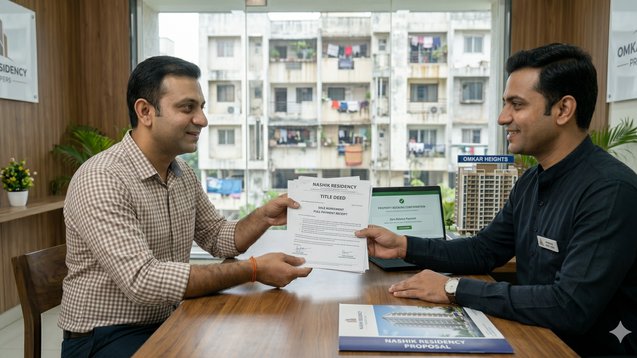
First off, in India, you can buy real estate through an outright cash payment to the seller, as there is no law in India that requires you to get a loan for an outright property sale purchase. Mortgage loans are just a way of getting the necessary money for a property purchase and are not required by law to buy this property as cash; if you have the cash, you can buy the property with cash. An all-cash sale is when you pay the seller the full price in cash or through bank transfer; although cash does not actually change hands, transactions are done by money being transferred from one bank to another due to legal/tax regulations. In Tier-1 cities such as Mumbai and Delhi, there are many instances of high-net-worth individuals completing all-cash transactions of real estate properties, while there are even more instances of cash property purchases that occur in Tier-2 and 3 cities for real estate property such as land or single family homes where mortgages are not widely used. However, whether or not you get a mortgage loan, there are still legal due diligence that must be followed, such as:
Property Registration as required under law;
Payment of any applicable stamp tax to the seller as required;
Compliance with The Real Estate (Regulation and Development) Act [2016] (RERA) for projects subject to RERA; and
Payment of income taxes as required under Indian laws.
Therefore, while it is not required to get a mortgage loan, it is necessary that you still follow the laws as set forth above before acquiring real estate.
Who Typically Buys Property Without a Loan?
This method is not selected by all people. The people who choose this path tend to enter specific groups. The first group consists of financially capable buyers who include business owners NRIs and people with large bank balances. Their decision to avoid interest payments leads them to choose this approach. Conservative investors make up the next group because they avoid taking on any debt obligations. These people prefer to acquire full ownership of their assets instead of using debt because they believe this method will help them build wealth at a slower pace. Buyers in Tier 2 and Tier 3 cities use their saved money and their family resources to purchase real estate. A family from Nagpur can gather their financial resources to buy a land parcel without needing bank assistance. Another category is senior buyers or retirees. They use their previous property sales to finance their entire home purchase. Some young buyers in Tier 1 cities are discovering this option because they work in well-paying IT and finance fields.
Advantages of Buying Property Without a Home Loan
People experience psychological relief when they own their home free from any financial obligations. The biggest advantage of this situation exists because people do not have to deal with payment obligations. You don’t have to worry about paying charges every month because you don’t have to deal with changing interest rates or permanent financial obligations. The situation creates multiple paths to financial independence which maintains its value throughout times of economic unpredictability. The primary advantage of the situation results in decreased total expenses. Home loans in India typically run for 15–25 years. The total interest payments throughout this time period will reach approximately double your original loan amount. The saving becomes more important in Tier 1 cities because people take out larger loans. The relative advantage continues to exist in Tier 2 and Tier 3 cities which have smaller loan amounts. You also gain stronger negotiation power. Sellers often prefer buyers who can pay upfront which may help you secure a better deal. When you use Property Aaj (https://www.propertyaaj.com) to search for properties this advantage provides you with a competitive benefit in the market.
The Greatest Trade-Off Between Two Options: Liquidity Risk
The discussion will continue to the contrary side which exists. Your liquidity decreases when you spend all your savings to purchase real estate. A person who invests ₹80 lakh into real estate will lose access to his funds because real estate functions as a non-liquid investment. The emergency funds which need to be reached for immediate needs or for other investments cannot be retrieved without difficulty. In Tier 1 cities, where property prices are high, this can be a serious concern. The financial pressure in Tier 2 and Tier 3 cities remains lower, yet people still need to maintain their liquidity position. A practical approach calls for you to save only part of your total savings. You should keep both an emergency fund and a separate investment reserve. People who experience debt freedom find joy, yet they suffer when their cash balance runs out.
Opportunity Cost: Are You Missing Better Investments?
The situation becomes intriguing because it contains philosophical elements. When you buy property outright, you’re tying up a large amount of capital in one asset. The money should earn better returns through other investment opportunities which exist. The following examples demonstrate the concept:
Equity markets
Mutual funds
Business investments
Property appreciation in Tier 1 cities becomes essential for investors who want to achieve their capital investment targets. Tier 2 cities exhibit stronger real estate growth which causes property values to gain a slight advantage over other investment options. Property ownership becomes more affordable in Tier 3 cities which enables buyers to purchase homes yet different neighbourhoods experience various appreciation rates. The actual inquiry demands you to answer: What is your financial aspiration? People who need stable financial results should avoid taking loans. People who want to create wealth should consider using loans to help them achieve their goals.
Tax Benefits You Lose Without a Home Loan
Here’s something many buyers overlook. Homeowners who obtain home loans can access tax benefits which the law provides through Sections 80C and 24(b). These deductions enable you to decrease your taxable income by a significant amount. You lose the following deductions when you do not take out a loan:
Principal repayment deductions
Interest deductions
Additional benefits for first-time buyers
In Tier 1 cities, where loan amounts are high, these tax savings can be substantial. In smaller cities, the benefit is lower but still relevant. Your interest savings result in tax loss. The situation does not result in a complete loss but you must consider both sides of the situation before making your decision.
Tier-Wise Perspective: Does Buying Without Loan Make Sense Everywhere?
The high property prices in Tier 1 cities which include Mumbai Bangalore and Delhi make outright purchases difficult. Most buyers rely on loans, unless they have significant financial backing. The situation in Tier 2 cities which include Pune, Ahmedabad and Jaipur shows a more equal distribution. Some buyers choose to self-fund their purchases while they manage to handle the existing property prices. In Tier 3 cities, buying without a loan is quite common. Families can use their savings to buy homes because property values are low. Different appreciation trends exist between various markets. Tier 1 cities provide stable conditions while Tier 2 cities present growth opportunities and Tier 3 cities deliver low-cost options. Your financing decision should align with these dynamics.
Alternative Strategies: Partial Loan + Partial Payment
You can choose between two options without needing to select one option exclusively. Many intelligent buyers choose a hybrid payment method which includes making a substantial upfront payment and financing the remaining amount with a smaller loan. You receive the following benefits:
You pay reduced monthly instalments
You gain certain tax advantages
You achieve improved control over your financial resources
You can make a payment of ₹50 lakh together with a loan of ₹30 lakh instead of making an ₹80 lakh payment.
This strategy has become more popular among buyers who research options on Property Aaj (https://www.propertyaaj.com) because Tier 2 cities need flexible solutions.
Loan-Free Documentation and Due Diligence:
When applying for a home loan, banks carry out legal checks on property. For loan-free buyers, you may have to do your own legal checks for the property, which will include: Title Checks:
Checking RERA registration if it's a new registered project.
Checks encumbrance certificate through sub-register.
The reputation of the builder or developer.
The further you go from tier 1 cities, like tier 2 and tier 3 cities, lower the ability for you to do due diligence, so much more effort is necessary. Don’t forget this step, and consider hiring a lawyer if necessary. Save on interest but the property has legal issues.
When Does Buying Without a Loan Make Sense?
So when should you actually think about this option? It makes sense if:
You have money that you do not need for emergencies.
You like having your finances stable of growing fast.
You want to stay from owing money for a long time.
You are buying in a place where it's not clear if the value will go up.
It may not make sense if:
You are using all your savings.
You have ways to invest your money that are better.
You need help with taxes.
You want to keep your money easy to access.
In the end it is a choice. There is no one right or wrong answer, for everyone.
Conclusion
Homebuyers can purchase properties without financial assistance from home loans because this approach creates an effective path to homeownership when pursued with intentionality. You achieve complete property ownership from the first day of purchase while the system eliminates your requirement to pay monthly EMIs and protects you from accumulating interest expenses throughout your ownership period. The system provides multiple advantages to users but creates specific limitations regarding asset accessibility and taxation advantages and potential business losses which users must evaluate before proceeding. The most appropriate method for approaching real estate investment in India requires a thorough assessment of your financial situation together with your city tier classification and your planned future objectives. The most intelligent buyers make purchasing decisions based on their own needs rather than following existing market trends. The process requires them to assess different options and select which alternative delivers optimal results. You should explore your options on Property Aaj (https://www.propertyaaj.com) while maintaining this specific viewpoint. The purpose of our organization extends beyond property acquisition because we aim to accomplish our goal through intelligent property purchasing.
FAQs
1. Is it safe to buy property without a home loan in India?
The process remains safe according to established legal requirements which need title verification and RERA checks and registration to proceed. You need to conduct all necessary checks because the process requires your complete oversight without any bank assistance.
2. Can I negotiate a better price if I pay without a loan?
Sellers prefer customers who make direct payments because this payment method allows you to negotiate more effectively. This approach proves valuable when dealing with both competitive markets and properties that will be resold.
3. Do I need to pay full cash for the property?
The system accepts payments through bank transfers and official payment methods. The term "cash purchase" indicates that you will pay for your purchase without using a loan but it does not require you to make your payment in physical cash.
4. What are the disadvantages of buying property without a loan?
The primary disadvantages include decreased cash availability and the forfeiture of tax advantages and failure to capitalize on investment prospects. Improper financial planning can lead to severe financial difficulties for you.
5. Can I take a loan later after buying property?
Yes, You can take a loan against your property later if you need to. The terms and interest rates for this kind of loan may be different from the loan you took to buy your property.
6. Is it better to take a loan instead of paying the full amount for my property?
Taking a small loan can be a good idea. It helps you keep some money in your pocket. You can also get some tax benefits. This way you do not have to spend all your money, which can be a big relief. For people taking a small loan is a good way to balance things out when they are buying a property.