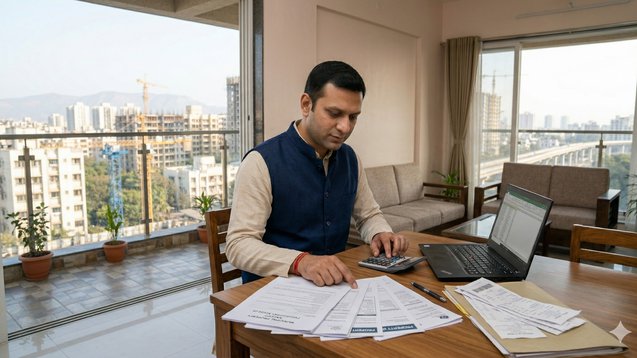
Choosing Property With Lower Property Tax Burden
The main financial aspects which people consider when purchasing Indian real estate include property price and home loan EMI and stamp duty and registration fees. Those are heavy upfront costs. The thing that people fail to notice now is the property tax expense which they need to pay. The initial value does not seem important. A few thousand rupees a year? The amount does not create any urgent problems. The property tax charge in Tier 1 cities which you pay every year will build up to a major cost after 10 to 20 years. The recurring annual property tax for multiple investment properties which you purchase will decrease your total investment returns. Property tax structures vary across Indian states and municipalities. The tax structure for a flat in Mumbai differs from the tax structure for a flat of the same size which exists in Indore or Mysuru. The property tax rate within a single city varies according to the property's zone classification and the property's age and its current usage and its total carpet area. The property selection process needs to create tax costs which remain under control while allowing property value increases. The buying process needs to analyse different city tiers from Tier 1 to Tier 3 using Tenant selection criteria which establish the best buyer approach.
The calculation method of property tax in India
This depends on local municipal corporations because they create property tax assessments. Cities use different calculation methods which rely on these primary assessment factors:
Location zone (prime vs peripheral)
Property size (carpet/built-up area)
Usage (residential vs commercial)
Construction type
Age of property
The municipal bodies of Mumbai, Bengaluru and Delhi use capital value systems which operate through unit area value methods to assess property values in their areas. Prime zones carry higher tax rates. The general property tax rates in Tier 2 cities like Jaipur and Surat and Kochi are lower but the cities will experience reclassification because of their fast urban development. The property tax rates in Tier 3 towns remain low for most properties but their assessments will rise when infrastructure development occurs. Before finalizing a property you shortlist on Property Aaj, always ask the seller or builder for the latest property tax receipt. That document reveals the real annual burden.
Location Zone Classification Makes a Big Difference
Two properties just 3–4 kilometres away from each other exhibit different property tax assessments. Municipal corporations in Tier 1 cities create three different zone classifications which include premium zones and mid zones and developing zones. The better infrastructure and civic services of premium zones lead to higher tax rates which create financial benefits for those areas. The central business districts and established posh neighbourhoods impose higher annual taxes on their properties. The emerging peripheral areas of cities which implement lower tax slabs across their new zones spread out from their central business district. The same zoning principles which exist in Tier 2 cities operate in that area but actual tax amounts result in lower rates. Residents of Tier 3 cities experience major tax differences between downtown core areas and their emerging rural areas. Properties located at the edge of a city which have strong transit connections provide tax benefits to owners who want to minimize their operational costs while preserving their value. Balance is essential. Organizations must maintain demand for their services because low tax rates should not cause them to lose all their customers.
Older Properties Often Carry Lower Tax Assessments
Property age impacts home value for buyers who do not know this fact. Several cities assess older buildings at lower capital values than they do for newly constructed luxury buildings. That leads to reduced property tax obligations. Redevelopment projects in Tier 1 cities face higher initial tax assessments because of their upgraded features and increased property value standards. The tax assessment for older standalone buildings in central areas of Tier 2 and Tier 3 cities exceeds that of new gated townships. But you should exercise caution because. The expenses for maintaining older structures will exceed the money saved from reduced taxes. The comparison of listings on Property Aaj requires more than just examining price per square foot. Property owners should request separate information about their annual property tax and maintenance expenses. People value ongoing expenses more than they value their initial excitement.
The presence of luxury amenities results in increased taxation expenses according to property value assessments.
Premium projects with clubhouses and swimming pools and landscaped gardens and advanced infrastructure face higher tax costs because their assets receive premium property value assessments. The annual municipal assessments for ultra-luxury projects in Tier 1 cities exceed those of standard municipal assessments. The property assessments in Tier 2 cities apply elevated valuation standards to high-end integrated townships. The tax burden in Tier 3 towns remains lower because residents use luxury amenities less frequently. The decision to buy a property for investment or rental yield requires assessment of whether costly amenities provide value that exceeds their tax and maintenance expenses. The presence of mid-segment projects becomes more valuable when they have better locations than their competitors because they provide customers with affordable options that require lower investment. The importance of lifestyle choices exists alongside the need to control spending through recurring expenses.
The tax system gets major funding differences between residential and commercial property usage.
The commercial property tax rates throughout India exceed the residential tax rates by a significant amount. Municipal authorities will impose different tax rates on mixed-use developments and properties which can later transition into office and retail spaces. The commercial tax rates in Tier 1 cities reach up to three times the residential tax rates which apply in prime areas. Tier 2 cities experience rising commercial demand which causes an increase in tax obligations through that growth. The residential property tax burden will remain lower for you when you maintain a residential classification except when commercial properties provide sufficient income to cover extra costs. Before investors choose to invest in commercial properties they must determine their actual post-tax net yield from rental income.
The tax benefits of Peripheral Growth Corridors provide financial advantages to businesses.
Emerging micro-markets often come with lower tax rates because they fall under developing zones. The outer ring road areas of Pune and Hyderabad and Ahmedabad experience lower municipal assessments at their first stage. The immediate price growth leads to appreciation of their value. Tax revisions proceed at a slower pace than the immediate pricing changes. The new industrial corridors or IT parks which develop at Tier 2 city outskirts will create future value growth without imposing high taxes at present. The growth of Tier 3 cities starts from their outer boundaries because residents develop tax rates that begin at low levels. The process of reassessment occurs at regular intervals. The gradual tax increase happens when an area progresses through various development stages. The early introduction of a product provides you with several years during which you will pay reduced taxes.
Property tax needs to be compared with rental yield.
Investors require net income as their primary measurement. Your effective yield decreases when annual property tax takes away most of your rental income. Rental yields in Tier 1 cities range between 2 to 4 percent. The high property tax which results from prime zoning will decrease net returns even more. Tier 2 cities offer better yields which create less tax impact because they require lower purchase prices. Rental demand in Tier 3 towns remains limited although low property tax maintains rental profit margins. You should compare estimated annual rent against the total of annual property tax and maintenance expenses when examining rental-friendly properties on Property Aaj. The gross rent appears attractive. The actual financial situation becomes clear through net income.
State-Wise Tax Trends State-Wise Tax Revisions must be checked.
The municipal corporations update their property tax systems through their scheduled property tax system updates. Some states implement gradual increases; others revise rates after infrastructure upgrades or valuation surveys. The digitization process has increased transparency for government operations in Maharashtra and Karnataka. The other states will make updates at less frequent times but those updates will bring more significant changes when they do occur. The historical tax changes which have taken place in that city during the past 5 to 7 years should be checked before making a purchase.
Has tax doubled recently?
Are new revisions expected?
Smart buyers think beyond the current tax amount because they make future trend predictions. The current tax amount does not satisfy their needs. The current tax amount does not satisfy their needs. The current tax amount does not satisfy their needs.
Balance Tax Savings With Appreciation Potential
Choosing property with lower property tax burden doesn’t mean choosing stagnant areas. The financial results of your investment will decrease when you select a location for purchase based on its low tax rates but its property value and rental market fail to show any growth. The organization works toward achieving its mission through two main objectives which include maintaining a moderate tax rate while achieving high business expansion and maintaining consistent customer requirements. The Tier 1 cities provide protection to residents but their central areas demand higher tax payments. The Tier 2 cities provide residents with equal development opportunities while maintaining moderate tax rates. The Tier 3 cities impose the smallest tax burden yet businesses must conduct thorough demand assessments. Use platforms like Property Aaj to compare pricing across city tiers and weigh tax impact logically. Your financial evaluation should extend beyond the yearly tax assessment to include all ownership expenses.
Legal Documentation and Accurate Assessment Records
The property tax must be verified for its current status at all times. Unpaid dues create complications for property resale because they remain outstanding. Pending municipal dues must be settled before property transfer in multiple cities. The latest tax receipt and assessment order must be requested together with the occupancy certificate. The property classification must be checked to ensure it matches the actual usage. RERA has improved project transparency, but municipal tax records remain separate. You need to confirm compliance because you should not make assumptions about it. A clean tax history makes future resale smoother.
Conclusion: Smart Buyers Think Beyond the Purchase Price.
The property tax assessment appears as a minor expense today. The property tax assessment develops into a consistent financial burden throughout time. Property selection requires knowledge of various factors which include zoning classifications and construction age and amenity valuation and location category. Cities in Tier 1 require businesses to perform more detailed assessments because their real estate assets hold greater value. Tier 2 cities provide equal business prospects together with their reasonable taxation system. Tier 3 towns offer businesses budget-friendly solutions but they need to evaluate their expansion plans. Your property evaluation requires you to examine multiple financial factors which include price, EMI, annual tax receipts, maintenance charges, and future taxation risks. The Property Aaj website enables users to make informed decisions through their listing exploration, zone comparison, and long-term cost research. A property that is affordable to buy but expensive to hold may not be the smartest choice. Plan your activities with intelligent strategies. Make regular savings throughout your financial journey. Make your investments according to your strategic investment approach.
FAQs
Do Tier 1 cities have extremely high property tax rates?
The property tax rates increase because assessment systems use capital value and premium zoning classifications. The property tax rates of different localities depend on their particular assessment systems and the size of their properties.
Do new luxury projects attract higher property tax?
Municipal assessment increases because better infrastructure and higher capital value create an increase in property tax. The buyer needs to check the most recent tax receipt before making a purchase.
Can my property tax go up after I buy the property?
Yes. The municipal corporations change tax structures from time to time. Things like upgrades to infrastructure and changes to zone classifications can also affect tax rates.
Is property tax lower in cities that're in Tier 3?
Usually yes.. I also need to think about how much the property might appreciate in value and if there's a good demand for rentals. Just having a low tax doesn't mean I'll get a return on my investment.
Does the age of a property reduce the tax burden on a property?
In cities the age of a property is a big factor. Older properties are often given values, which means you pay lower property tax on the property. However the older a property is the more you will have to spend on maintenance for the property.
How can you verify the property tax records for a property?
You should ask for the tax receipt from the municipal office and check the website of the municipal corporation for the assessment details of the property before you complete the transaction for the property.