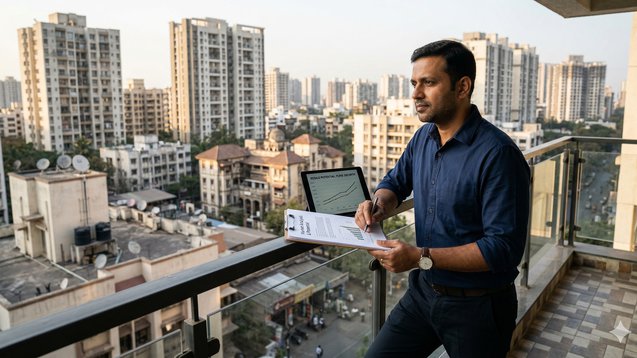
Choosing Property With Strong Resale Potential
People decide to buy property in India because of emotional reasons but also because of practical requirements. People make their permanent home purchasing decisions as their life circumstances bring job moves and their children need educational support and their business requirements change and their financial situation undergoes major changes. Eventually people begin to consider resale value. I have observed that buyers in Mumbai sell their properties within three years after they move to another country. I have met families in Indore who made upgrades into better homes after their income increased. I have talked to investors in Hyderabad who used property acquisitions to make strategic investments that they sold after five years. The common thread? They didn’t buy randomly. They bought with resale potential in mind. The strong resale potential of a property exists through specific choices. Developers need to select optimal locations which create suitable building designs while maintaining their credibility and developing necessary infrastructure until market conditions reach proper levels. The market conditions of Tier 1 cities like Bengaluru and Delhi NCR create different operational needs for businesses than those which exist in Tier 2 cities like Jaipur and Coimbatore and Tier 3 cities which have their own specific supply-demand patterns. The platform Property Aaj enables buyers to conduct price comparisons. Buyers who make intelligent choices perform additional work because they need to analyse exit value before they make their first entry. We will explain the process of selecting Indian properties through which you can find investment opportunities that will value your property at resale time.
The location of a property matters more than its connection
To city names because micro-markets have greater importance in India. Bengaluru Whitefield properties show different performance results than comparable properties which exist on the city outskirts with limited access. The resale value of properties in Mumbai depends on their distance to both railway stations and metro lines. The educational hubs and upcoming commercial corridors in Tier 2 cities such as Nagpur and Kochi create strong appreciation for nearby areas. The resale value of properties in Tier 3 cities depends primarily on their access to central districts and availability of essential public services. Buyers prefer areas close to main markets, hospitals, and schools rather than far-flung townships.
Think about these questions:
Does the infrastructure exist at present or does it exist as a future project?
Does the site contain multiple routes for entering?
Will the system for public transportation see improvements in the future?
The properties that exist in vital micro-markets maintain continuous interest from prospective buyers. The market demand for your product establishes its selling price at the time of your business transaction while your emotional attachment to the product you bought affects that price.
Infrastructure Growth and Government Projects
Resale potential depends on the active development of infrastructure. The expansion of metro rail systems in Pune and Hyderabad and Delhi NCR has created new opportunities for property development in specific transit corridors. The construction of new highways and ring roads and airport expansions in Tier 2 cities will create major shifts in local market prices. The buyer who purchased a property five years ago near the upcoming IT corridor in Ahmedabad has seen their investment multiply in value. The need for housing arises from the presence of employment centers. The development of industrial zones and smart city projects by the government will create new housing demand in Tier 3 towns. The implementation of such projects will require more time to complete than their metropolitan counterparts. You need to assess whether infrastructure projects have both funding support and actual project progress. The website Property Aaj provides project information tracking yet researchers must conduct their own field research. The construction of infrastructure projects which people can see establishes greater trustworthiness than official announcements which exist only on documents.
Builder Reputation and Construction Quality
The identity of the project builder determines the resale value of the project. Reputed developers in Tier 1 cities receive higher resale premiums because buyers believe in their ability to construct durable buildings and provide necessary building maintenance. A branded developer project in Gurugram or Mumbai will sell faster than a lesser-known builder project in the same location. Builder reputation exists in Tier 2 and Tier 3 cities but its importance varies between localities. A trusted regional developer in Lucknow or Mysuru will achieve better resale results than a new entrant who provides substantial price reductions. Quality impacts resale because visible wear and tear reduces buyer confidence. The presence of leakage problems combined with substandard finishing and ineffective community management decreases property worth. Existing residents can provide information about the building's maintenance procedures. Review older projects that the same builder has constructed. Buyers who want to resell their property need confirmation that they will not experience any dangers.
The market shows a preference for specific configuration sizes.
Different configurations have different resale values. In Tier 1 cities, 2BHK apartments often have the strongest resale demand due to their affordable price and their ability to be rented out. The value of large 4BHK luxury units might increase over time but the number of potential buyers will be limited. In Tier 2 cities, 3BHK units are increasingly popular among growing families upgrading from smaller homes. In Tier 3 towns, spacious homes still attract buyers who prioritize size over luxury amenities. Architects should create conventional designs that meet their design requirements. For instance, studio apartments show strong performance in IT-driven micro-markets yet they face challenges in other locations. The www.propertyaaj.com website shows you which configuration types appear most frequently in your selected area for you to explore. The market demand patterns show which resale values will emerge in the future. You should adopt your future buyer's perspective about your home configuration. Does the configuration meet the requirements of an average family?
Customers need to follow proper pricing practices to prevent paying excessive amounts
When they first enter a market, your resale potential depends on the price you pay at the beginning of the transaction. Buyers in active Tier 1 markets tend to pay excessive amounts during their highest demand periods. The market needs to reach its stable state before customers can sell their products at prices that need to be adjusted. Tier 2 cities experience pricing increases that develop through time. The value of an asset increases more when people purchase it at its actual market price. In Tier 3 cities, real estate agents use overpriced properties to block sales because they need to make sales to a limited number of customers. The evaluation requires you to study projects that match your criteria within a distance of 3 to 5 kilometres. The evaluation needs to show the effective price which applies to each carpet area. The states of Maharashtra and Karnataka each have their own stamp duty system which creates different effects on the total acquisition expenses. Home loan interest rates also influence resale liquidity. When interest rates increase, buyers have less financial capacity. Entry at reasonable prices will safeguard your investment for future selling. Investors create their profits through their initial buying decisions rather than through their final selling activities.
Measurement of Rental Demand and Yield Indicators
Strong rental demand supports resale. IT-driven rental markets of Hyderabad Pune and Bengaluru produce constant rental demand. Investors purchase properties in these zones because rental occupancy stays above normal levels. Research shows that rental demand in Coimbatore and Chandigarh countrywide reaches its highest point. Proximity to universities, industrial parks or hospitals matters. Rental demand in Tier 3 towns shows limited growth potential. Properties near government offices or educational institutions perform better. Why does rental matter for resale? Because future buyers evaluate rental yield before purchase. Investors show interest in properties that provide consistent rental income. Before buying, check:
Current rental rates
Vacancy levels
Tenant profile stability
Rental-backed properties typically resell faster.
The amenities require evaluation against their practical application.
The value of luxurious amenities attracts customers. However resale value depends on the actual practical functions of the property.
In Tier 1 cities, amenities like gym, clubhouse, and security are almost expected. Yet extremely high maintenance costs create obstacles for buyers who want to resell their properties.
In Tier 2 cities, buyers value parking availability, lift reliability, and water supply consistency more than extravagant features.
In Tier 3 cities, local buyers who follow conservative spending patterns will not pay more for high-end amenities.
The mid-range apartment complex with proper maintenance performs better at resale than the high-end apartment complex which suffers from management deficiencies. The evaluation process needs to assess how sustainable maintenance will function over time. The existing residents need to provide information about their monthly expenses. Resale buyers think long term. The same future perspective should apply to your business decisions.
Legal Clarity and RERA Compliance
The transparency of legal information affects the difficulty of reselling property. Post-RERA, buyers across India are more cautious. RERA enforcement in Maharashtra and Karnataka operates at a higher level than other states. The speed and accuracy of enforcement activities differ between various regions. Ensure:
The title must be clear
All building plans need approval
No active legal cases should exist
The occupancy certificate must be present
Properties with clean documentation resell faster. Buyers prefer minimal legal risk. The total investment cost shows a slight change due to stamp duty differences between states yet proper documentation remains essential for maintaining resale value. Using reliable listing platforms like Property Aaj enables you to efficiently compare confirmed projects while checking their compliance status. Legal clarity establishes buyer confidence, which leads to resale transactions.
Future Supply and Market Saturation
Oversupply brings down resale value. Certain micro-markets in NCR and Mumbai suburbs experience temporary resale price drops because buyers choose new inventory over existing stock which developers launched during that time. Tier 2 cities have better control over their supply situation. The resale market will face competition from developer inventory when multiple large townships enter the market simultaneously. Tier 3 cities experience limited supply which creates resale opportunities when there is sufficient demand. The study requires examination of pipeline projects. The presence of hundreds of identical units in the area will result in increased resale competition. Scarcity of resources maintains product value. Excess supply decreases negotiation power of all parties involved.
The study of buyer behaviour and emotional marketing strategies
This examines how people buy products. The financial aspect of real estate markets exists alongside the emotional aspect. Properties that offer optimal sunlight and open space and quiet environments and attractive natural features make better resale prospects. In Tier 1 cities, even partial skyline views can enhance buyer perception. In Tier 2 cities, community feel and safety are major emotional triggers. In Tier 3 towns, proximity to family networks often influences buyer decisions. Small factors matter:
Corner flats
Higher floors with ventilation
Vaastu-compliant layouts (important in many Indian markets)
Your five year future as a seller starts today. Would a buyer feel emotionally comfortable here?
Emotional comfort often seals deals.
Plan Your Exit Before You Enter
When you are looking for a property in India you should not just follow what is popular. You need to think about the basics, such as where the property's located, how good the infrastructure is, if the builder is trustworthy, what kind of homes people want, if you can get a steady rent, if everything is legal and if the price is right. In cities it is a good idea to pick a small area that is going to do well. In cities you should look for areas that are growing in a balanced way. In smaller towns you should look for places that are close to the center and do not have a lot of other properties like them. You can use websites like <a href="https://www.propertyaaj.com">Property Aaj</a> to learn about projects, see what is happening in the market and make a list of the ones you like.. You should also visit the properties, talk to people who live there and get a feel for the area. Making money from an estate takes time. If you buy a property that people who want to live and investors both like it will be easier to sell later. So buy a property in a way today and you will be able to sell it with confidence tomorrow.
FAQs
Is resale potential more important for investors than end-users?
Not necessarily. Even end-users may need to relocate due to job changes or personal reasons. The ability to sell at a high price protects financial resources and decreases tension throughout the selling process.
Do Tier 2 cities offer better appreciation than Tier 1 cities?
Tier 2 cities provide quicker percentage increases through their developing areas while Tier 1 cities deliver better marketability and stable rental demand. Both have advantages depending on entry price and micro-location.
How does RERA affect the resale value of a property?
RERA makes things more transparent. Buyers feel more confident. When a project is properly registered and has all the approvals and occupancy certificates it usually sells faster and for a better price.
Should I care more about how rent I can get or how much the property will be worth later?
You should really try to find a balance between the two. If there are a lot of people who want to rent a property that helps when you want to sell it.. When new roads and buildings are being built that makes the property more valuable, over time. If you do not think about both of these things you might not get as much money back as you could.
Does the age of a property really bring down its resale value?
The age of a property can be a problem when you want to sell it. If you take good care of an old property and it is in a good location it can still sell well. On the other hand if an old property is not maintained properly or has old amenities people may not want to buy it.
How long do I need to own a property to get a price when I sell it?
If you own a property in India for 5 to 7 years you may get a price when you sell it. This is because in parts of India it takes around 5 to 7 years for new roads and other infrastructure to be built and for the property market to go up and down a few times which can increase the value of a property.