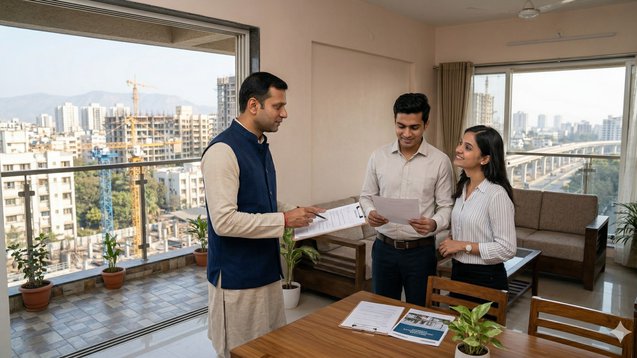
Selecting Homes That Are Easy to Rent Later
In India not every house you purchase will stay your primary residence for all time. Career paths undergo transformation. Urban environments experience transformation. Family units experience expansion. You might choose to lease your property instead of selling it. Most homeowners discover this fact when they try to rent their property because some properties prove difficult to rent out. I have observed attractive and spacious apartments in Tier 2 cities remain empty for extended periods. I have witnessed small 2BHK units in Bengaluru secure renters within seven days. The difference between the two outcomes occurred because I made a selection decision. Indian rental markets demonstrate distinct rental patterns throughout Tier 1, Tier 2, and Tier 3 urban areas. In Indian metropolitan areas like Mumbai and Pune and Hyderabad, residents continuously move because of employment changes and business relocations. In Indore and Kochi demand exists but only specific areas receive it. Rental demand in Tier 3 towns shows significant variation based on specific locations. Homebuyers should evaluate whether their purchased property will generate future rental demand. Buyers use the platform at Property Aaj to check various property prices and available facilities. The process of assessing rental suitability requires multiple evaluation steps which exist beyond initial analysis. We will demonstrate to you which housing selection methods function best for maintaining rental property status throughout different Indian regions.
The requirement for housing needs to be near employment centers which people will not accept.
The demand for rental properties enters a direct correlation with the availability of job opportunities. In Bengaluru, properties located near IT corridors which include Outer Ring Road and Whitefield experience constant tenant demand. In Hyderabad, financial district proximity increases occupancy rates. In Mumbai, demand remains high for locations which provide access to both business districts and railway networks. Rental demand in Tier 2 cities arises from three main areas which include industrial sites, educational facilities and government buildings. In Tier 3 towns, areas close to district courts, colleges, or local commercial markets perform better. A 2BHK 15 km away from major employment centers might look affordable. But if commuting is painful, tenants won’t choose it. The process of evaluating listings on Property Aaj requires users to check for nearby employment hubs. Tenants will face difficulties when no jobs exist in their vicinity.
Configuration Matters More Than Size
The rental market in India shows that 2BHK units represent the ideal rental option. The 1BHK unit shows strong performance in IT areas of Tier 1 cities but it restricts the family tenant base. The large 4BHK units attract only a limited audience which results in extended vacancy periods. The 2BHK unit and compact 3BHK unit serve as the primary choice for residents in Tier 2 cities. The residents of Tier 3 towns search for budget-friendly 2BHK apartments which they can find close to central business districts. The presence of excessive layout customization leads to decreased rental attractiveness. Tenants prefer to have rectangular rooms which provide sufficient storage space and standard kitchen designs. Ask yourself: Would a working couple or small family find this layout comfortable? The rental-friendly properties provide a combination of budget-friendly prices and practical features.
Public Transport Access and Tenants prioritize convenience.
Rental prices in Mumbai go up when properties are near railway stations. In Delhi NCR buildings with metro stations nearby have occupancy. In Pune and Ahmedabad people want access to highways and bus services. Tier 2 cities are growing their metro systems. Adding new bus routes. Investing in areas near transport hubs can help with long-term rental demand. In Tier 3 cities being close to roads and city centers matters more to tenants than fancy gated communities.
When doing your research try to do it during times.
Walk around the area to see the traffic conditions.
For tenants convenience is often more important than luxury.
They have to choose between convenience and luxury.
Furnishing Level and Tenant Expectations
Which type of space do you need: fully furnished or semi-furnished or bare shell? IT professionals and transferable employees value ready-to-move homes. The demand for semi-furnished homes which include wardrobes and modular kitchens and basic fittings exists in Tier 1 cities. In Tier 2 cities, semi-furnished units are gaining popularity. Basic unfurnished homes remain the top choice for many tenants in Tier 3 towns who want to keep their expenses low. You should only invest money into interior design when your goal is to attract high-end tenants. The cost of high-end customizations will not generate enough rental income to cover their expenses. The most effective solution requires simple finishes which combine durability with neutral design elements. Practicality serves as the primary factor that determines rental success while design flair plays a secondary role.
Society Maintenance and Security
Safety and cleanliness serve as primary requirements for tenants. The rental market performance of gated communities with security systems, elevators, power backup systems, and dependable water supply systems proves better in Tier 1 and Tier 2 cities. Basic infrastructure reliability holds greater value than luxury amenities for people living in Tier 3 towns. The requirement for high maintenance charges creates a barrier that prevents tenants from renting. Premium residential projects in Mumbai and Gurugram face resistance because their society fees reach extremely high levels. Residents who currently live in the community should provide information about how well maintenance management operates. The rental value of a property decreases when the maintenance of its community facilities fails to meet proper standards.
Rental Yield and Price-to-Rent Ratio.
Smart investors calculate rental yield before buying. Rental yields in Tier 1 cities typically range from 2 to 4 percent according to property location. Property prices in Tier 2 cities enable landlords to achieve slightly better rental returns. Rental returns in Tier 3 towns depend on the level of demand present in the area. The property price needs to stay below the maximum rent the tenant can pay because high property prices create a long recovery time. The annual yield calculation requires you to analyse the flat's costs and rental prices from local housing markets The annual yield calculation requires you to analyse the flat's costs and rental prices from local housing markets. When you visit Property Aaj to search for properties, you should evaluate the property prices against the rental properties available in the same micro-market. Numbers tell you if rental performance is realistic.
Future Infrastructure and Growth Impact
Rental demand grows alongside infrastructure development. Metro expansions and IT park developments drive tenant movements in Tier 1 cities. New commercial corridors create additional rental opportunities in Tier 2 cities. Rental markets in Tier 3 towns will expand near upcoming government facilities and industrial development projects. Investing before infrastructure development finishes will increase future rental income from the property. The first step involves selecting areas which developers have already proven. Real population growth creates actual need for rental space beyond expected future development.
Legal Compliance and Tenant Confidence
Tenants today are more aware than ever. The presence of RERA compliance and occupancy certificate availability and proper documentation establishes tenant trust. The states of Maharashtra and Karnataka demonstrate that RERA implementation increases compliance requirements which subsequently boosts organizational credibility. In cities that require strict registration of rental agreements the need for legal clarity becomes more essential. Corporate tenants will be discouraged from renting properties that have ongoing disputes or missing documentation. The process of renting and property management becomes simpler when a property has no legal issues.
Micro-Market Supply and Competition
The availability of 10 identical flats for rent in your building results in increased competition. Certain corridors in Tier 1 cities experience temporary rental rate reductions because of oversupply conditions. The rental market in Tier 2 cities experiences initial flooding when new large townships appear. Tier 3 towns usually have limited organized housing supply which results in decreased competition for well-located apartments. Study vacancy levels before buying. Rental-friendly markets maintain their demand-supply balance at healthy levels.
Buyer Psychology: Appeal to the Mass Market
Mainstream segments drive the rental demand for their properties. Niche customers rent extremely luxury homes which serve their needs. The ultra-small studio apartments exist for use by a specific group of people. Working professionals and small families and students all seek 2BHK units which exist in many cities through their mid-segment properties. People value spaces which have neutral interior design and sufficient air circulation and proper natural light and clean outdoor space. If you’re unsure about demand patterns, review active rental listings and trends on Property Aaj to understand what’s moving quickly. The greater your tenant pool, the simpler your process of renting property.
Conclusion: Think Like a Tenant Before You Buy
Home buyers who want to find properties that maintain their rental value must develop a system that works better than their individual tastes. The following questions need to be assessed using practical application:
Would I choose this home if I were a tenant?
Is it easy for people to travel between locations?
Is the arrangement of the space suitable for distribution purposes?
Does the rental price of the property match the current market conditions?
Does the organization maintain its facilities in proper condition?
The Tier 1 cities provide constant rental activity but require intelligent selection of specific micro-market areas. The Tier 2 cities provide advantages for businesses that establish operations close to their upcoming development zones. The Tier 3 towns require businesses to focus on two vital aspects which include their central location and their closely populated areas. Homes that enable rental income protection provide you with two benefits which include protection against tenant loss and maintenance of financial freedom throughout your life. The market data needs to be examined while you compare property listings and assess demand trends on Property Aaj site before making your final decision. Digital research needs to be combined with actual site inspections. Make your purchase decision today which will help you confidently rent your property tomorrow.
FAQs
Is buying purely for rental income a good idea in India?
Rental income success depends on both city selection and property price assessment. The Tier 1 cities offer rental yields which show consistent performance despite their low return values. The Tier 2 cities provide rental yields which exceed the returns of Tier 1 cities. The investor should assess both yield potential and future value increase before making an investment decision.
Do furnished homes provide simpler rental processes?
Semi-furnished properties serve as the most common rental choice in the majority of Tier 1 cities. The specific tenant groups who need fully furnished homes will rent these properties but the landlords must spend more money to maintain them.
How important is it to be close to metro or railway stations when it comes to homes?
It is very important in cities like metro cities. Being close to metro or railway stations directly affects how many people want to rent a home and how much they are willing to pay. In cities it is more about being close to the main road and being in the center of the city.
Do bigger homes take a time to rent out?
The answer is generally yes. This is because bigger homes with four bedrooms only appeal to a group of people who are looking to rent a home. Homes with two or three bedrooms are usually rented out faster because more people are looking for homes of that size.
Should I buy in a developing area for future rental demand?
The investment will prove profitable when both infrastructure development and employment growth show evidence of progress. The speculative areas without actual demand will experience extended periods of property vacancy.
Does society maintenance affect rental success?
The answer is yes because tenants choose to live in communities that maintain cleanliness and security while providing proper management. The decline of property maintenance directly leads to decreased tenant interest and reduction of rental price potential.