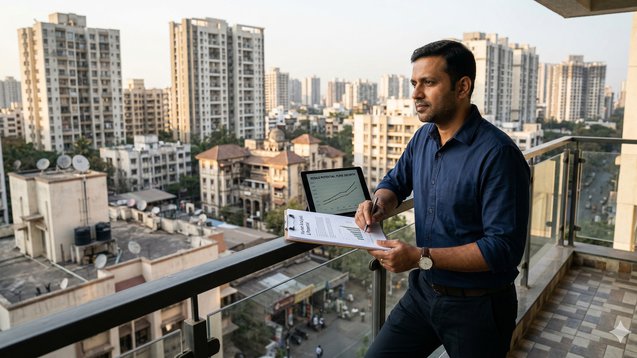
How to Pick a Location That Will Appreciate
If you ask any experienced property investor in India what matters most, the answer is almost automatic: location. But here’s the problem most buyers misunderstand what “good location” really means. A prime address in South Mumbai or Central Delhi is already expensive. Yes, it’s stable. Yes, it’s prestigious. But will it appreciate sharply from here? That’s a different question. On the other hand, an emerging micro-market on the outskirts of Pune, Jaipur, or even a growing Tier 3 town might not look glamorous today. There may be construction dust, half-built roads, and empty plots. But five years later? That same location could become the next hotspot. Appreciation is not about buying where everything is already perfect. It’s about identifying where growth is heading. Across Tier 1, Tier 2, and Tier 3 cities in India, patterns differ but the principles remain surprisingly consistent. If you learn to read infrastructure signals, demand drivers, supply patterns, and pricing psychology correctly, you can dramatically improve your long-term returns. The website Property Aaj allows buyers to compare properties between different cities. The process of selecting an investment location which will increase in value needs more thorough evaluation than simply examining property listings. The situation requires us to explain it through practical demonstration.
Understand the Difference Between Prime and Growth Locations
Prime locations are established. Growth locations are evolving. In Mumbai, Bandar is prime. In Bengaluru, Indiranagar is prime. In Hyderabad, Banjara Hills is prime. Prices are already high, and appreciation tends to be steady but moderate. Now compare that with emerging corridors like areas around upcoming metro lines or IT extensions. These may offer stronger percentage growth because they are still developing. The main parts of Tier 2 cities Coimbatore and Lucknow show constant development. The outer ring road regions together with the new IT parks establish these areas as new economic development centers. In Tier 3 cities, appreciation usually happens when commercial or industrial hubs expand. If your goal is capital growth, ask:
Is the area already saturated?
Or is it at an early expansion stage?
Prime offers safety. Growth offers upside.
Infrastructure remains the primary factor that drives value appreciation throughout India.
The development of metro lines and expressways and ring roads and airports and IT parks and industrial corridors leads to significant changes in land valuation throughout the region. The metro system expansion in Pune and Ahmedabad has resulted in increased property values for areas close to the metro stations. The problem exists since not all announcements lead to immediate execution. The execution of major infrastructure projects in Tier 1 cities faces higher chances of completion although unexpected delays may occur. The development process in Tier 2 and Tier 3 cities requires more time after officials announce projects.
Active construction on-site
Budget allocation confirmation
Government approvals
Connectivity improvement timelines
Through Property Aaj research, you should examine areas around existing infrastructure and areas with only proposed infrastructure developments. Press conferences do not create value for assets because execution of projects leads to appreciation.
Track Employment Hubs and Economic Drivers
The property value increases in areas where job opportunities expand. The regions of Bengaluru which surround tech parks maintain their demand because of existing interest. Financial districts in Hyderabad create both rental and resale value increases. The corporate hubs in NCR areas enable faster asset transactions. The IT parks and industrial zones in Indore and other Tier 2 cities create new housing requirements. The primary centers of development in Tier 3 towns center on government facilities, educational institutions and manufacturing plants. The strong rental demand serves as a major indicator for property value increases. The continuous occupation of rental units will lead to buyer interest. Ask:
Are new companies opening nearby?
Is there visible commercial activity?
Are coworking spaces expanding?
When employment grows, housing demand follows naturally. The housing demand in employment centers will increase when people start working there.
Daily Convenience Assessment requires evaluation of Connectivity between two locations.
The value of Connectivity exceeds all aspects of luxury. The value of properties in Mumbai increases when they are located near train stations and metro lines. The Outer Ring Road in Bengaluru serves as an important access point for residents. Highway access and city center proximity both improve resale value in Jaipur and Surat. In Tier 3 cities, properties that exist near main markets and hospitals and schools experience faster appreciation compared to properties in remote areas. The travel time estimates from buyers remain beyond their actual understanding. The daily commute to work becomes severe when someone must travel 20 kilometres to reach an affordable property that requires him to work. Location appreciation depends on diminished travel stress levels which people experience. Observe traffic patterns. Visit during peak hours. Public transport availability needs to be checked. Convenience drives buyer psychology. And buyer psychology drives appreciation.
Study Price Trends and Entry Timing
Your entry point to investment determines your appreciation value. Future growth potential decreases when a micro-market reaches 40 to 50 percent growth after three years. The rapid growth phase of some corridors starts during infrastructure development and then enters a stable period throughout Tier 1 cities. The price increase rate in Tier 2 cities proceeds through a period of slow growth which later develops into permanent market advancement. The developing corridor offers potential for substantial profits through an early investment. The growth pattern in Tier 3 towns remains constant until major infrastructure projects or commercial development initiatives take place. Historical price trends should be examined for a minimum of five years. The micro-market listing patterns can be studied through platforms such as Property Aaj. The optimal buying period occurs during early development stages instead of peak market excitement.
Assess Supply Levels and Future Launches
Excess supply will result in decreased market value. The presence of multiple properties in certain NCR micro-markets has resulted in reduced resale activity because buyers now have excessive choices. Areas with restricted supply perform better in maintaining their market value. The market in Tier 2 cities experiences appreciation because developers provide only high-quality projects. The multiple property launches in Tier 3 cities create short-term demand reductions for the market. Check:
Number of upcoming projects
Developer land banks
Construction pace
The presence of limited resources drives business expansion while excessive stock leads to market bargaining power. The property value of a location maintains sustained growth when its supply and demand reach equilibrium.
Legal Clarity and RERA Transparency
The process of property value appreciation depends on legal stability which makes this relationship between legal elements and property value appreciation process of property value to appreciation relationship. The post-RERA period has resulted in buyers choosing to purchase projects which provide them with complete transparency about their operations. The states of Maharashtra and Karnataka and Telangana maintain RERA systems which operate at a higher level of performance compared to their other states. Some states experience slow process times which create challenges for buyers who require immediate assistance. The presence of multiple RERA-compliant projects with proper documentation in a location results in improved buyer trust. Trust increases transaction volumes. The increase in transaction volumes leads to price appreciation. The different state stamp duty rates together with registration fees create an impact on how investors assess potential returns. The establishment of clean documentation together with clear regulatory frameworks creates stability which lasts for a long period.
Observe Social Infrastructure Growth
The importance of schools and hospitals and malls and entertainment zones exceeds your current understanding. Integrated townships in Tier 1 cities which include retail and healthcare services within a 3 to 5-kilometer distance achieve high performance. The establishment of reputed schools in Tier 2 cities leads to increased housing demand. In Tier 3 cities, the establishment of new multi-specialty hospitals together with educational campuses results in significant land value increases for surrounding areas. Homebuyers purchase more than residential property; they acquire the complete package of their preferred lifestyle and its associated benefits. The area needs examination which requires counting grocery stores while observing foot traffic and commercial boards. The presence of lively environments indicates that demand for products will increase.
Buyer Sentiment and Market Momentum
The psychological aspect of appreciation leads to its development. When a location gains a “buzz factor,” prices typically rise at an increased pace. For example, once a micro-market gets recognized as the “next IT corridor” or “future metro zone,” buyer interest increases rapidly. In Tier 1 cities, media coverage and broker activity amplify sentiment quickly. In Tier 2 and Tier 3 cities, word-of-mouth and local investor groups drive momentum.
The system needs to monitor
The increase in listing volume
The developers' current marketing activities
The volume of social media conversations
The ongoing discussions within the investor community
Positive sentiment supports liquidity. The presence of liquidity allows for price increases. But be cautious of short-term hype without infrastructure backing.
The system evaluates risk and reward according to the city's tier level.
Tier 1 cities offer investors reduced risk though they achieve moderate market development. The infrastructure development and employment center growth of Tier 2 cities create a risk-reward balance that investors can assess. The development of Tier 3 cities presents investors with greater growth opportunities yet comes with increased uncertainty about project schedules and market demand. Your investment horizon matters. A 3-year investor may prefer Tier 1 stability. A 7–10 year investor might explore emerging Tier 2 corridors. The research tools and verified listings on Property Aaj enable you to compare city growth zones in an efficient manner. Your financial capability and your ability to wait for results should guide your decision-making process.
Conclusion: Think 5–10 Years Ahead
The selection of an investment site in India requires assessment of future property value trends. People need to examine present conditions through at least three different assessment methods. They should commence their study with infrastructure development progress and employment increase patterns and market conditions and historical pricing data and community growth patterns and buyer behaviour analysis. Tier 1 cities provide their investors with dependable property value growth and high market activity. The Tier 2 market operates through multiple emerging business expansion paths. Investors who study Tier 3 towns must increase their research efforts but they will find track record results which deliver unexpected positive outcomes. Real estate appreciation is rarely accidental. Investors achieve property value increase by conducting thorough research and maintaining their investments for extended periods. Before finalizing, spend time studying micro-markets on Property Aaj, compare similar zones, and physically visit shortlisted areas. The best locations often look “unfinished” when you buy them. The process of expansion exists because of this particular mechanism.
FAQs
How long does it usually take for a location to appreciate significantly?
The majority of Indian cities experience actual value growth after 5 to 7 years because infrastructure development and employment opportunities become established. The market provides short-term gains which will occur but their exact timing remains unpredictable.
Do Tier 2 cities show higher appreciation rates compared to Tier 1 cities?
Emerging corridors in Tier 2 cities provide greater percentage growth opportunities, while Tier 1 cities deliver better rental stability and property liquidity. Your risk appetite and time horizon will determine your investment decision.
Should I put my money into properties near metro projects?
Metro connectivity really helps property values go up. It's not the only thing that matters. Where people work, highways, schools and businesses also make a difference in how property prices change.
How can I make sure the infrastructure will actually get built?
Check if the government is setting aside money for it, see if there's construction happening at the site and look at the project's official schedule. Don't just believe ads or announcements.
Does rental demand guarantee that the value of a property will go up?
No it does not guarantee it. When there is a lot of rental demand it means that people really want to live in that area, which helps the value of the property go up over time and makes it easier to sell.
Is buying a house in an area that is not developed yet too risky?
It really depends on how research you do. If you find out that they are going to build roads and other important things in that area and you can see that more jobs are coming, then buying a house there early can be an idea and you can make a lot of money.. If you just guess and do not do your research then you might lose money.