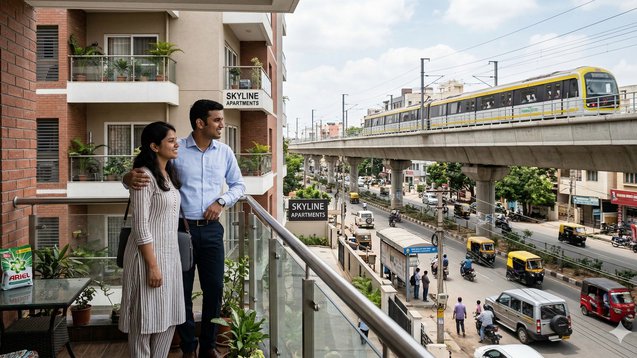
Is Living Near Metro Stations Worth It?
Homebuyers in India used to determine property value based on three elements which included price and carpet area and the builder's market standing. Presently people discuss different issues. People ask one main question which is "How far is the metro station?"
Metro systems in Tier 1 cities including Delhi and Mumbai and Bengaluru and Hyderabad have created new patterns of residential demand. The expanding metro networks are causing noticeable changes in buyer preferences in Tier 2 cities which include Lucknow and Kochi and Jaipur and Nagpur. The upcoming connectivity improvements in several Tier 3 cities have already started to impact real estate prices. People value living close to a metro station because they see it as an added benefit. Developers use it as a promotional tactic to explain their elevated prices. The answer requires more than just one word response. Your personal needs and your financial situation and your future ambitions and your local circumstances will determine your decision. People decide to invest in real estate based on various reasons which include rental income potential and property value growth and their need to access public transportation and their concern about residential area disturbances. If you are considering buying a property in India and wondering whether metro connectivity should influence your decision, this detailed guide from Property Aja (https://www.propertyaaj.com) will help you evaluate it logically and practically. Let us analyse the matter through its components.
The property market shows a direct connection to metro system changes which affect its demand.
The metro rail system operates as a transportation system which creates new micro-markets throughout the area. Residents in Tier 1 cities experience traffic congestion as their main transportation problem. Road travel for a distance of 12 kilometres requires a time range between 60 to 90 minutes. The same distance by metro might take 25 minutes. People who save time through this method experience a major advantage in their daily activities. The metro system brought new residential development to Dwarka, Noida Sector 62, and Vaishali in Delhi-NCR. The Mumbai Metro Line extensions have created new residential demand across Andheri East, Goregaon, and Thane. The impact of the situation becomes stronger in smaller cities because their population base is less than Tier 2 cities. The launch of Lucknow Metro led to more residential development in areas close to its stations. The presence of metro stations made distant areas more attractive to potential buyers who had previously avoided those regions. Metro systems create a connection with a place which people find more difficult to traverse but actual distance remains unchanged. People now feel closer to their location because the distance has been reduced to 18 kilometres. The psychological shift creates direct impacts which determine property values and property market activity.
Price Premium: How Much Extra Are You Paying?
Let us first examine the actual expenses which we need to consider. Properties which lie between 500 meters and 1 kilometre from metro stations achieve a property value increase which varies from 5 percent to 20 percent based on the specific city and micro-location.
The Tier 1 cities show this connection to elevated public transportation costs throughout their metropolitan areas. The premium exists as a major cost because people need to find land in areas which have restricted space. People show higher interest in renting properties because they expect to receive better returns from their investments. The first group of premium customers exists who will benefit from their investments before all main facilities become operational.
In Tier 3 cities:
People purchase properties because they anticipate future metro lines to be built in their area. The possibility of project delays creates higher risk for investors. Is the premium justified? The answer is yes when active linkages exist between operational services. People need to verify project schedules and RERA registration information before they decide to make additional payments. Metro service interruptions will decrease the value of properties during their initial period.
Rental Demand and Yield Advantage
The importance of metro access increases when you buy property for investment purposes. Young professionals and students and working couples choose their travel method based on which option provides quicker access to their workplace. The rental market in Pune and Hyderabad and Bengaluru uses 'walking distance from metro' as a common rental listing feature. Properties located close to metro stations show three main advantages which include. Properties near the station attract tenants at higher speeds. The properties experience shorter periods when they remain unoccupied. The rental prices of the properties increase by 5 to 10 percent. The trend is becoming more pronounced in Tier 2 cities. Government employees and private sector workers show a growing preference for homes which provide metro access. The website Property Aaj (https://www.propertyaaj.com) shows that rental search filters usually include connectivity-based preferences as their main filtering option. Investors who need to earn consistent rental income through their investments find that metro station access reduces their investment risks.
Daily Convenience: Time Is Money
We need to evaluate our situation beyond its financial outcomes. Daily commuting brings people 1.5 hours of saved time which amounts to 45 hours of saved time. The saved time equals almost two complete days. Daily commuting in metro cities creates stress which harms both physical and mental health. Metro connectivity provides users with predictable travel conditions because it eliminates traffic delays and fuel cost uncertainties and parking difficulties. Metro access enables working professionals to establish better work-life balance in both Bengaluru IT corridors and Gurgaon corporate centres.
The advantage depends on three factors which are:
Distance from station (walking vs feeder transport)
Peak-hour crowd levels
Last-mile connectivity
A property 1 km away with proper footpaths may be more practical than one 300 meters away but across a busy highway. Convenience consists of two elements: people need to reach their destinations at short distances and they need to access their destinations.
Noise, Crowding, and Liveability Concerns
The negative aspects of the situation need to be examined. People who live adjacent to elevated metro lines experience two consequences which include. The area experiences train noise which occurs at regular time intervals. The area experiences increased pedestrian activity because of elevated metro lines. The area experiences greater commercial activity because of the more commercial space which exists there. Street vendors and traffic congestion and crowds create problems for metro stations in busy Tier 1 zones. People who want a peaceful residential space should select properties which are 600 to 800 meters away instead of choosing homes which are nearby. The problems which exist in Tier 2 cities show lower severity because the cities have decreased population density. The key is site visits. The claim of "metro-facing apartments" which brochures make requires investigation through actual apartment viewings.
Capital Appreciation Potential
Historical evidence shows that metro connectivity is linked to property value growth, which occurs in two distinct stages.
Phase 1: Announcement Stage
Prices rise due to speculation.
Phase 2: Operational Stage
The market stabilizes, which increases long-term value growth.
Early investors in metro corridors in cities such as Hyderabad and Chennai enjoyed substantial benefits after the system began operating.
Property value growth depends on three main factors:
Overall city growth
Employment hubs
Infrastructure integration
The value of real estate in Tier 3 cities with proposed metro systems will experience slower growth because of their restricted economic development. Real estate development depends on both employment growth and infrastructure development.
Impact on Buyer Psychology
Homebuyer knowledge in India has increased according to present research. Younger buyers compare their commuting distance with their available clubhouse facilities. Working couples calculate their daily travel time to determine their budget limits. Metro access has become an essential requirement for Tier 1 cities. The presence of metro stations in Tier 2 cities creates a valuable status symbol. People who reside near metro stations demonstrate their connection to contemporary city life. Homebuyers show more interest in this particular feature according to research that tracks parents' buying patterns for their children who work in metropolitan areas. At Property Aja (https://www.propertyaaj.com), buyer inquiries frequently reflect this shift in mindset. The need for connectivity has evolved into a vital component of strategic planning.
Stamp Duty, RERA and Legal Considerations
The different stamp duty rates across various states maintain their existence independent of metro proximity to legal areas. The higher circle rates that exist close to metro corridors lead to increased registration expenses. The possibility of commercial conversion will influence how valuation will be determined. RERA compliance remains critical, especially in under-construction projects near proposed stations The RERA enforcement system in Maharashtra, Telangana and Uttar Pradesh has established better buyer trust for projects located close to metro stations. The following information needs verification Land title clarity Development approvals Actual distance from metro not marketing claims. Legal diligence matters more when paying premium prices.
The comparison between Tier 1 cities and Tier 2 cities and Tier 3 cities shows which option provides the best value.
Tier 1 Cities:
Cities need to maintain access to nearby metropolitan areas.
The area has a strong market for both rentals and property sales.
Most situations require the customer to pay extra for premium products.
Tier 2 Cities:
The property represents a solid investment when the metropolitan area starts operating or reaches its building phase.
The market presents equal value for all rental properties.
The area experiences an increasing demand for rental properties.
Tier 3 Cities:
The area presents dangerous conditions because only proposed subway systems exist.
The process involves predicting future property value increases.
First you need to assess permanent city development which will take place throughout time.
The three tiers exhibit distinct operational patterns. The Indian real estate market requires specific decisions because general rules do not apply.
Who Should Prioritize Metro Proximity?
You should strongly consider metro proximity if:
You work in central business districts.
You plan to rent out property.
You don’t own a personal vehicle.
You value time efficiency.
You live in high-traffic Tier 1 cities.
It may not be essential if:
You work remotely.
Your workplace is within 5–6 km.
You prefer quieter suburban environments.
You own multiple vehicles and parking isn’t a problem.
Buying a home is personal. Metro connectivity should support your lifestyle—not dictate it.
Conclusion: Is It Worth It?
The answer to the question about living near metro stations needs to be answered. The combination of convenience and rental demand and long-term value growth mostly applies to all Tier 1 cities and expanding Tier 2 cities. Proximity to the location does not guarantee success. The assessment needs to include testing results of sound levels and examining the number of people present and studying the effectiveness of connections to nearby locations and verifying the reliability of the project. A property 800 meters from a well-functioning metro station may be smarter than one directly above it. Your decision needs to combine both logical financial reasoning and your personal lifestyle needs. The development of urban areas in India will lead to enhanced connectivity which will drive increased real estate property value. Before making a decision, explore verified listings and market insights on Property Aja (https://www.propertyaaj.com) to compare options across cities. Make a wise choice about your options. You should use smart methods to reach your destination. You should think carefully about your investment choices.
FAQs
Do properties near metro stations always appreciate faster?
The appreciation process requires three elements which include employment growth and city development and infrastructure development. The absence of guaranteed returns means that metro connectivity increases potential investment value without providing certainty about financial outcomes.
Is it better to buy during the metro announcement phase?
The buying process requires people to make an early purchase because it provides them with a price benefit yet contains dangers when project completion faces delays. The construction schedule and RERA registration status must be confirmed before making investment decisions.
Does metro proximity increase rental income significantly?
In Tier 1 cities, yes. Rentals can be 5–10% higher compared to non-connected areas. In Tier 2 cities, the gap is emerging gradually.Are metro-adjacent properties noisy?
The tracks become dangerous when people move towards their elevated sections. The site needs to be visited during its operating times so that the official noise measurements can be taken.Is living 1 kilometre from metro system access points good for public transportation links?
The answer is yes when safe walking paths and reliable feeder transport services exist. People need better access to their destinations than the actual distance between locations to reach their destinations.
Should families prioritize metro connectivity?
Daily work or college commuting makes metro access essential for families. The people who live here will find better comfort in residential neighbourhoods that are located farther from this area.
Read more about property matters with our specialists and browse the latest property listings on Property Aaj. Download the app from the Play Store and App Store now for easy buying, selling, and renting!