High-Rise vs Low-Rise Apartments: What’s Better for Professionals?
Introduction
Which type of apartment buildings better suit working professionals: high-rise buildings or low-rise buildings? The current time requires Indian working professionals to establish their residences as more than sleeping quarters. The space serves multiple purposes which include conducting business telephone conversations and welcoming co-workers and resting after extended travel and designing future professional paths. People need to select between high-rise and low-rise apartments because their decision impacts various aspects of their life which include their ability to move about their surroundings and their future worth and their everyday happiness. The majority of residents in Mumbai, Bengaluru, Delhi NCR and Hyderabad now choose high-rise apartments as their primary living option in major urban centres. The two building styles operate in equal strength throughout Tier 2 cities which include Pune and Ahmedabad and Jaipur and Lucknow. The majority of building projects in Tier 3 cities continue to use low-rise construction and independent floor designs although there has been a gradual rise in vertical development projects. The answer to this question requires you to consider your professional development stage and your current financial status and your relationship requirements and your daily travel needs and your future asset management strategies. The experienced real estate advisor will explain the information to us using chai as his demonstration tool.
Basic Difference Understanding
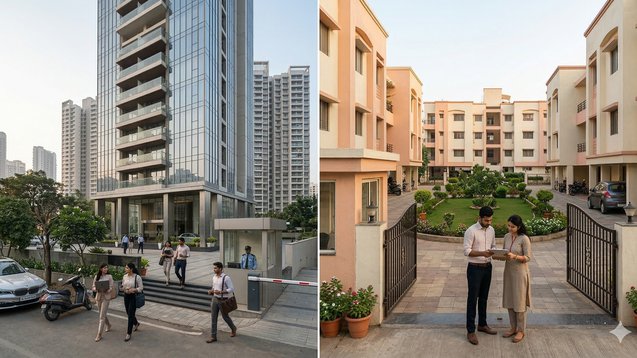
A high-rise apartment in India typically refers to buildings which have at least 12 floors and which reach heights of 30 to 50 floors in metropolitan areas. The proposed projects provide multiple facilities which include elevators and power backup systems and clubhouse areas and swimming pools and gyms and co-working spaces and advanced security systems. Low-rise apartments exist as buildings which have three to five floors. The buildings can exist as independent structures or they can function as part of gated residential communities. Low-rise living in Tier 2 and Tier 3 cities consists of builder floors which provide limited amenities but enable residents to have more personal space and privacy in small residential communities. High-rise buildings dominate central business districts in Tier 1 cities because developers need to build upward when land costs increase. Developers maximize their building volume through vertical construction. The availability of land in Tier 2 and Tier 3 cities enables developers to create horizontal building expansions which make low-rise apartments the most common building type and result in lower costs for residents. The actual question which professionals need to answer focuses on functional requirements instead of height specifications. The property must provide essential support for your professional duties and personal life.
High-Rise Apartments: The Appeal of Vertical Living
Young professionals who work at corporate hubs find high-rise apartments to provide the most convenient living options. Imagine living 15 minutes from your office in a well-connected area of Bengaluru’s ORR or Mumbai’s Powai. Your daily activities will undergo a transformation because of your proximity to work.
Tier 1 cities offer high-rise buildings which contain built-in facilities that include gym spaces, swimming pools, community centres, business lounges, and spaces for conducting meetings. For someone working long hours, this is valuable. The facility provides all necessary resources for members to maintain their physical health and build social connections.
Networking becomes simpler because of this development. High-rise buildings which maintain their appeal to IT professionals, consultants, start-up founders, and senior executives. Professionals establish connections through informal discussions which occur in elevators and common lounge areas. Investment experts consider high-rise buildings located in central urban micro-markets to experience high demand from renters. Tenants who work at their jobs during the day prefer to have access to modern building features and secure environments. The website Property Aja (https://www.propertyaaj.com) demonstrates that rental income from high-demand business areas exceeds rental income from older low-rise buildings. High maintenance fees present a challenge to customers. The total monthly expenses include costs for power backup systems, elevator services, security measures, and building facilities. The professionals need to create their financial plans according to actual expenses.
Low-Rise Apartments: Privacy and Practicality
Residents of low-rise apartments experience their comfort through different methods. The establishment creates a community atmosphere through its design which includes fewer residents and fewer floors and shorter elevator wait times. Many professionals in Tier 2 cities such as Indore and Coimbatore and Bhubaneswar choose to live in low-rise apartments because they provide quick access to commercial areas. The properties offer more spacious designs which require less maintenance compared to high-rise buildings that exist in metropolitan areas. Families with mid-career professionals should choose low-rise living because it provides them with a more peaceful and stable environment. The internal roads in the area provide safe spaces for children to play. Low-rise buildings provide easier access for elderly parents who need to navigate the building when elevators stop functioning. The situation includes a psychological aspect. People have different preferences about living 25 floors above ground. Professionals who work in the field prefer balconies that allow them to observe street activity instead of viewing distant city skylines. The value of low-rise apartments in emerging Tier 2 and Tier 3 cities will increase with time when the properties exist near future infrastructure developments. Infrastructure announcements affect property values in neighbourhoods according to research tools and listings available on Property Aja at (https://www.propertyaaj.com).
Cost Comparison Across Tier 1, 2, and 3 Cities
The price of high-rise apartments in Tier 1 cities rises because developers build their properties on valuable land which provides superior amenities. The central area has few available low-rise buildings which are most often found in older architectural styles. The price difference between high-rise and low-rise buildings in Tier 2 cities remains smaller than in other locations. Developers are introducing mid-rise towers with modern facilities at competitive rates. Professionals here think about value for money which differs from their evaluation of lifestyle benefits. The majority of affordable housing options in Tier 3 cities exist as low-rise buildings. The area sees new high-rise developments which only exist in small areas that surround highways and newly developed commercial districts. Each state establishes its own stamp duty and registration fees. The states of Maharashtra, Karnataka, Uttar Pradesh, and Tamil Nadu establish their unique registration fee structures. RERA enforcement requires different standards for project registration processes which affect project transparency. All professionals must check project approvals through their process whether they purchase high-rise or low-rise properties.
Rental Trends and Mobility
Young professionals who expect to change jobs frequently need to have flexible work arrangements. The rental turnover rate at high-rise apartments located in IT corridors and business districts occurs at a higher speed. You will find it easier to rent your property when you move to a new location. Bachelors and nuclear families in Tier 1 cities show strong demand for high-rise rental properties. The rental occupancy rate in Tier 2 cities remains stable for low-rise apartments located near universities and hospitals and government offices. A software engineer working in Hyderabad's Financial District will find it easier to rent a high-rise building to other IT professionals. A government worker living in a Tier 2 city will choose a low-rise apartment that provides easy access to administrative offices for his core needs. Knowing your career movement patterns needs to be established before you make decisions.
People Who Work From Home Need To Consider Their Work Needs And Their Life Needs.
The post-pandemic era has changed property preferences because people now prefer work-from-home and hybrid work options. Professionals prefer high-rise apartments because these buildings offer superior clubhouse co-working spaces and reliable power backup systems. Large complexes experience noise problems because their dense occupancy creates high noise levels. The less busy areas of cities provide residents with more peaceful environments than low-rise apartments. People who need to make virtual meetings and client calls should assess their acoustic environment. Peak hours should be used to assess the property's performance. People can browse verified listings and virtual tours on Property Aja (https://www.propertyaaj.com) to compare different floor plans and carpet areas and home office layouts.
Long-Term Appreciation and Investment Value
High-rise apartments in established metro micro-markets of cities gain advantages from their brand recognition and ongoing infrastructure development which includes metro lines and flyovers and business parks. The area shows potential for strong appreciation yet price fluctuations will increase because of the excessive supply situation. The urban development process will lead to ongoing property value increases for low-rise buildings in Tier 2 and Tier 3 cities. The announcement of new highways and airports and industrial corridors leads to gradual value increases for residential areas that exist in proximity to these developments. Home loan trends also matter. RERA-registered high-rise projects from reputed developers receive financing approval from banks because they consider these projects safe. Low-rise independent floors require land ownership documents and building permission documents to obtain financing from banks. Professionals should evaluate not just current pricing but future resale demand.
Security and Community
High-rise apartments usually offer advanced security systems CCTV gated access intercom facilities and biometric entry in some premium projects. The system provides security to professionals who travel frequently. Low-rise apartments can also be secure if part of gated communities. The security systems of standalone low-rise buildings have restrictions on their protective capabilities. Community experience differs too. High-rise living can feel more anonymous due to larger resident numbers. Low-rise societies often create closer relationships among their residents. High-rise communities in urban areas provide networking and social exposure opportunities to people who value these activities. The low-rise environment offers you a better living experience if you want to live in a peaceful area with consistent daily routines.
Maintenance and Operational Costs
The maintenance expenses for high-rise buildings exceed their standard rates because they require funding to operate elevators and generators and maintain landscaping and clubhouse areas and pay employee wages. The total cost develops into a major monthly financial obligation that accumulates over time. Gated townships charge moderate maintenance fees while low-rise apartments maintain lower upkeep expenses. As a professional, factor these recurring costs into your budget. The lower EMI rate of vertical towers becomes cancelled by their expensive maintenance costs.
Balancing Career Goals with Property Choice
There is no universal answer.
A 28-year-old start-up employee in Gurugram may prefer a high-rise apartment close to co-working spaces and nightlife. A 40-year-old mid-level manager with two school-going children living in a Tier 2 city prefers to live in low-rise buildings which provide him with more comfortable space. Your property needs to match your present work situation and your upcoming professional objectives. Use trusted real estate platforms like Property Aja (https://www.propertyaaj.com) to compare projects across cities and understand market trends before making a decision.
The conclusion requires you to select the option which best facilitates your career development.
The comparison between high-rise and low-rise buildings does not determine which option is better. The selection process requires you to choose the option which best matches your career development needs. High-rise apartments provide residents with essential urban access, modern building features, and high-demand rental properties which create substantial value for residents who live in Tier 1 urban areas. The residents of low-rise apartments can enjoy their personal space while spending less money on upkeep and experiencing the friendly atmosphere of their neighbourhood, which makes this housing option better for people who live in Tier 2 and Tier 3 cities. Aesthetic value requires you to think about more than surface appearance. You need to assess three main factors which include network building possibilities, required home office space, future investment performance, and your financial capacity. Your smart property choice requires only providing housing. Your choice helps you reach your future goals.
FAQs
Do high-rise apartments provide better rental income for Indian investors?
Working professionals show greater rental interest in Tier 1 cities through high-rise apartments which developers construct close to business hubs. Tier 2 cities show that well-placed low-rise apartments generate constant rental income through market demand.
Do low-rise apartments appreciate less than high-rise properties?
Not necessarily. Location and infrastructure development and market demand determine appreciation value. The value of low-rise apartments in prime areas of developing Tier 2 and Tier 3 cities will increase consistently throughout time.
Are the costs of taking care of high-rise buildings high?
Yes they usually are. High-rise apartments have things like elevators and security staff and places for people to hang out and special systems to keep the power on which makes the costs of taking care of the building higher than for many low-rise buildings.
Which kind of apartment is safer for families with people?
Low-rise apartments might seem safer for people because it is easier for them to get around and they do not have to rely on elevators as much. However new high-rise buildings with systems to keep the power on and security can also be very safe for families, with older people.
Which type of apartment resale shows more convenience for resale?
Resale value for high-rise apartments in major metropolitan areas remains strong because of high demand. The pace of property resales depends on location because certain regions experience oversupply problems.
Which factors should professionals use to choose between high-rise and low-rise buildings?
People should evaluate their needs through six factors, which include their work travel patterns, financial resources, building upkeep expenses, chances for upcoming job changes, household requirements, and their financial objectives. The decision-making process requires people to visit properties in person while they evaluate actual verified property listings.
Read more about property matters with our specialists and browse the latest property listings on Property Aaj. Download the app from the Play Store and App Store now for easy buying, selling, and renting!
.