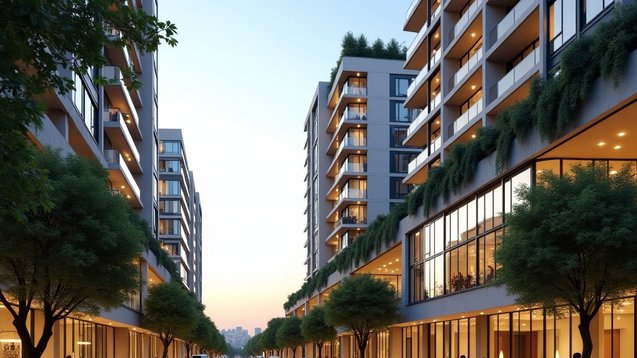
Once a peaceful center for education, Pune is now home to one of the fastest-growing real estate markets in India. The city has grown quickly, with IT parks in Hinjewadi and Kharadi, industrial belts in Pimpri-Chinchwad and Talegaon, and expansive townships spread throughout suburbs like Wagholi and Ravet.
However, the rapid expansion of real estate has outpaced the construction of infrastructure. Water scarcity, poor waste management, clogged roads, and inadequate public transportation have become obstacles to sustainable urban living.
Property Aaj provides verified listings, locality-specific updates, and insights to assist purchasers assessing long-term investments in making well-informed real estate selections.
The Real Estate Boom in Pune
IT Expansion: The demand has increased due to Hinjewadi Phases 1-3, Kharadi IT Park, and Magarpatta.
Developers such as Kolte Patil, VTP, and Godrej are constructing large integrated projects in townships and gated communities.
Suburban Growth: Because land prices have dropped, places like Wagholi, Ravet, Moshi, and Charholi have become popular.
Growing Interest from Investors: For NRIs and investors seeking long-term returns, Pune is one of the best cities in India.
However, as projects proliferate, the delivery of infrastructure falls behind the dates of possession.
Key Infrastructure Gaps in Pune
1. Connectivity & Transportation
Traffic Jams: During rush hour, roads such as Baner Road, Nagar Road, and Sinhagad Road are congested.
Delayed Metro Expansion: The Pune Metro is currently only partially operating, and Hinjewadi and Wagholi will not be fully covered.
Ring Road Delays: Work is currently ongoing on the long-promised Ring Road, which is essential for decongestion.
2. Management & Supply of Water
Water shortages are a common problem in rapidly expanding communities like Wagholi and Undri.
Residents' living expenses are raised by a heavy reliance on tanker water.
The situation is made worse by the absence of sophisticated water recycling equipment.
3. Sanitation & Waste Disposal
Even though Pune produces more than 2,000 tonnes of rubbish per day, waste disposal and segregation are still ineffective.
The quality of life in suburban regions is negatively impacted by overflowing landfills and inadequate sewage systems.
4. Infrastructure for Healthcare and Education
Pune's outskirts fall behind, while the city's central area is home to many of the city's best schools and hospitals.
Families who relocate to reasonably priced townships frequently find it difficult to get to reputable hospitals and schools.
5. Public Transportation Reliance on private vehicles is necessitated by the limited bus lines in areas such as Ravet, Charholi, and Wagholi.
Public transportation utilization is discouraged by a lack of last-mile connectivity.
Why the Gap Exists
Quicker Real Estate Development versus Slow Policy Implementation
Developers complete projects more quickly than the government builds new public infrastructure.
Unplanned Urbanization
Without corresponding investments in public facilities, roads, or sewage, the suburbs grew.
Delays in the Bureaucracy
Funding and land acquisition challenges were encountered by projects such as the Ring Road and Metro.
Pune's population has grown to an estimated 7.4 million people by 2024, placing a pressure on the city's infrastructure.
Impact on Homebuyers & Investors
Higher Living Costs: Monthly expenses are raised by tanker water and private garbage collection.
Traffic Stress: It takes a lot longer than expected to commute from the suburbs to IT parks.
Decreased ROI: In underserved suburbs, investors see slower appreciation.
Problems with Quality of Life: Long-term residents are turned off by a lack of amenities.
What’s Being Done to Bridge the Gap
Pune Metro Expansion: In the upcoming stages, lines are anticipated to connect Hinjewadi, PCMC, and Wagholi.
Construction of a ring road will relieve traffic in the city center once it is finished.
Initiatives for Smart Cities: Put an emphasis on waste management, digital governance, and improved urban planning.
Water Projects: To accommodate demand, new dams and recycling initiatives are being suggested.
Township Models: Developers are currently constructing self-sufficient communities with schools, healthcare facilities, and on-site water recycling.
Future Outlook: Can Infrastructure Catch Up?
Short-Term (2025–2027): Suburban areas like Wagholi and Undri will continue to face traffic jams and water shortages.
Medium-Term (2028–30): Projects involving the Ring Road and Metro will greatly enhance connectivity.
Long-Term (2030+): Sustainable dwelling types combined with planned urban growth could strike a balance between infrastructure and real estate.
Conclusion
Pune's real estate market is flourishing, but infrastructure must catch up for it to succeed. Both luxury and affordable real estate projects appeal to purchasers, but for the city to be sustainable in the long run, transportation, water, and waste management problems must be resolved.
This means that before making an investment, homeowners should thoroughly assess a community's infrastructural readiness. Platforms that offer verified projects, geographical criteria, and real-time development updates, such as Property Aaj, make this process easier.
FAQs
1. Why does Pune's infrastructure lag behind its real estate?
Because developers complete projects more quickly than government organizations can extend public services like roads and water.
2. Which parts of Pune have the most severe infrastructure problems?
Suburban areas with poor road and water connectivity include Wagholi, Undri, Charholi, and Ravet.
3. What effects would the Pune Metro have on infrastructural issues?
It will reduce traffic, but for the full advantage, last-mile connectivity needs to be improved.
4. Is it still wise to invest in the outskirts of Pune?
Yes, as long as purchasers concentrate on impending township-based developments and infrastructure projects.
5. Before making an investment, what should purchasers check for?
Verify the availability of water, road connectivity, schools and hospitals nearby, and upcoming government initiatives.
6. Will the suburbs of Pune benefit from the Ring Road
Yes, it will drastically cut down on traffic inside the city and increase connection.
Read more about property matters with our specialists and browse the latest property listings on Property Aaj. Download the app from the Play Store and App Store now for easy buying, selling, and renting!