Introduction
When most homebuyers think about real estate prices, they focus on location, connectivity, amenities, and builder reputation. But one crucial factor often goes unnoticed—water security. In Pune, where rainfall patterns are changing and groundwater tables are under pressure, water availability can silently make or break property values.
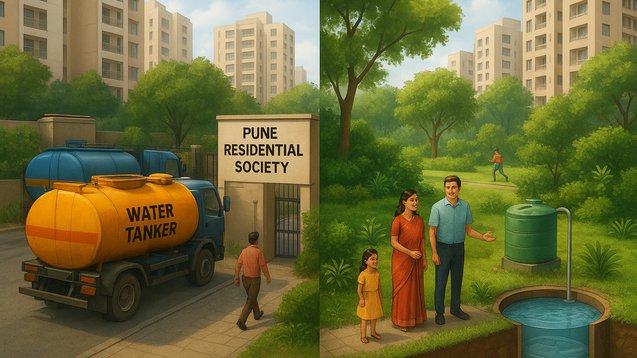
Many housing societies depend heavily on water tankers, especially in rapidly developing areas where municipal supply hasn’t kept pace with construction. Tanker dependency is not just an inconvenience—it’s an added cost that can affect monthly maintenance charges, resale value, and rental demand.
This article explores how water security and tanker dependence influence property pricing across Pune localities such as Kothrud, Baner, Hinjewadi, Wakad, Viman Nagar, Kharadi, Hadapsar, Koregaon Park, Magarpatta City, Aundh, Pimpri-Chinchwad, Bavdhan, Pimple Saudagar, Yerwada, and Camp.
Understanding Pune’s Water Scenario
Pune’s municipal water supply depends primarily on four dams—Khadakwasla, Panshet, Temghar, and Varasgaon. However, as the city expands, newly urbanized zones often face supply delays because of infrastructure gaps.
Rapid construction in IT hubs like Hinjewadi, Wakad, and Kharadi has led to a mismatch between demand and supply. Societies here often rely on private water tankers, which can cost anywhere from ₹700 to ₹1,200 per tanker, depending on availability and season.
This situation not only raises monthly expenses for residents but also affects how buyers perceive the long-term sustainability of a project.
How Tanker Dependency Impacts Property Prices
1. Increased Cost of Living
For a family of four, tanker dependency can add ₹2,000–₹4,000 per month to the cost of living. Over time, this can make a property less attractive compared to another in a well-served area.
2. Reduced Rental Yield
Tenants often prefer homes with a reliable water supply and lower maintenance costs. Societies with frequent tanker use may see higher tenant turnover or lower rents.
3. Slower Appreciation
Water insecurity can cap property price growth. Buyers become cautious about investing in areas where tanker dependency shows no signs of improving, leading to slower appreciation compared to localities with assured municipal supply.
4. Builder Reputation and Sales Velocity
Projects that implement sustainable water solutions—such as rainwater harvesting, STP-treated water reuse, or borewell recharge—often enjoy faster sales and command a small premium.
Locality-Wise Impact of Water Security in Pune
Let’s look at how different Pune micro-markets are affected:
Baner & Balewadi
These are high-demand residential areas, but tanker dependency is common due to fast-paced construction and rising population density. Societies with efficient rainwater harvesting systems here often command better resale prices.
Hinjewadi & Wakad
As IT hubs, these areas attract thousands of employees daily, but municipal water pipelines are still catching up. Tanker costs can be significant, especially in summer. Projects with in-house water treatment and storage facilities enjoy a competitive edge.
Kharadi & Viman Nagar
Kharadi’s IT corridor is growing rapidly, but some pockets face seasonal shortages. Viman Nagar, being more established, has relatively better municipal coverage but still sees occasional tanker use during peak demand months.
Hadapsar & Magarpatta City
Magarpatta City is a planned township with good water management, making it an attractive option. Hadapsar, on the other hand, has mixed pockets—some well-served, others heavily tanker-reliant.
Kothrud & Bavdhan
Kothrud is one of Pune’s older localities with robust municipal infrastructure, making it a safe bet for water security. Bavdhan, though developing quickly, has faced intermittent shortages, but most premium projects now integrate rainwater harvesting.
Pimpri-Chinchwad & Pimple Saudagar
PCMC-managed areas generally have a more reliable water supply, though outskirts and newly built societies still rely on private tankers occasionally.
Yerwada & Camp (Cantonment)
These central localities are among the most reliable in terms of water supply, and this stability is reflected in their steady property appreciation and rental demand.
Water Security as a Hidden Premium
Buyers are beginning to factor water availability into their purchase decisions. Societies that advertise a 24x7 water supply are able to charge a premium of 5–8% over similar projects without such assurance.
From an investment standpoint, choosing a property with an assured water supply can future-proof your investment and minimize resale resistance.
Platforms like Property Aaj help buyers compare projects not only by price and location but also by infrastructure readiness—including water availability—giving a more holistic view of property value.
Sustainable Water Management: The Builder’s Role
Forward-thinking developers in Pune are now making water management a priority by including:
Rainwater harvesting systems to recharge groundwater
Sewage treatment plants (STPs) to reuse treated water for flushing and landscaping
Smart metering to monitor water consumption and prevent wastage
Such features are increasingly becoming a selling point and can improve long-term property appreciation.
Tips for Buyers: How to Check Water Security Before Purchase
Ask about municipal water connection—verify if the society has PMC/PCMC water connection or relies entirely on borewells and tankers.
Check for rainwater harvesting—a working system can reduce dependency during dry months.
Inquire about STP and water recycling—this lowers operating costs and is better for sustainability.
Talk to existing residents—they can give firsthand insights into water availability and tanker frequency.
Factor tanker costs into affordability—consider not just EMI but also monthly maintenance, which may be higher in tanker-reliant projects.
Conclusion
Water security is no longer a “nice-to-have” factor—it’s a decisive element in Pune’s real estate market. Tanker dependency can silently erode the value of your investment through higher maintenance costs, reduced rental appeal, and slower price growth.
As Pune expands, projects that secure their own water sources through rainwater harvesting, STPs, and groundwater recharge will emerge as long-term winners.
If you’re planning to buy property in Pune, take the time to evaluate water availability before making a decision. Platforms like Property Aaj can help you compare localities and choose projects where water security is built into the master plan.
FAQs
1. Why is tanker dependency so common in Pune?
Rapid real estate growth has outpaced municipal infrastructure expansion, leading to gaps in water supply that are filled by private tankers.
2. Do tankers affect property prices significantly?
Yes, properties with high tanker reliance often appreciate more slowly, as buyers factor in higher maintenance costs and inconvenience.
3. Which Pune localities have the best water security?
Established areas like Kothrud, Camp, Yerwada, and Magarpatta City generally enjoy better water supplies compared to newer suburbs.
4. Can rainwater harvesting eliminate tanker dependency?
It can reduce dependency significantly but may not completely eliminate it in peak summer unless combined with borewell recharge and municipal support.
5. How can I find out if a project depends on tankers?
Ask the builder for documents on the water source, speak to current residents, or check society notices about tanker usage.
6. Is water security becoming a factor for tenants too?
Absolutely. Tenants often prefer societies with 24x7 water supply to avoid irregularities and additional costs.
Read more about property matters with our specialists and browse the latest property listings on Property Aaj. Download the app from the Play Store and App Store now for easy buying, selling, and renting!