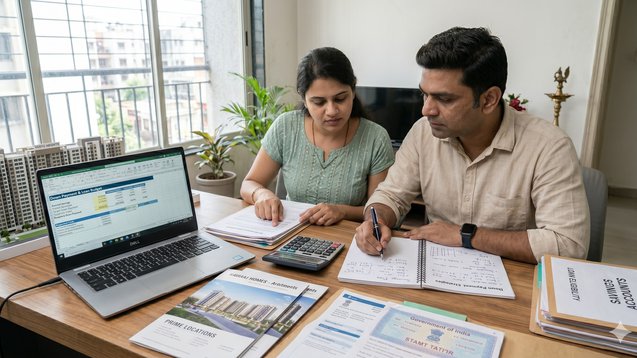
Down Payment Tips, How to Manage Finances Smartly
In India, purchasing a home is not only about making a financial commitment but also about achieving your dreams for you and your family. The first major financial milestone comes directly after deciding to buy a new house; the down payment is the biggest hurdle many homeowners will face throughout their home buying experience. In 2026, it may be hard for buyers in Tier 1 cities such as Mumbai, Bengaluru, or Delhi to put together a down payment because housing prices are projected to rise. However, new homebuyers will have much lower entry costs in Tier 2 cities like Nashik, Indore, and Coimbatore or in Tier 3 towns. Financial planning will be just as important, if not more, for new home buyers in these locations. Most banks in India will generally lend 75% to 90% of the property value, so you will need to find a method of providing the 10% to 25% of the amount needed. Housing prices are always rising due to an increase in demand and decreased availability, so it is very possible that the overall amount you need to save for your down payment and closing costs could be larger than you planned. So how can you prepare a down payment without depleting your savings or creating financial stress in your life? This article outlines the best ways to effectively manage your future home purchase and provides financial strategies to help you reach your goal of owning your own home without sacrificing your financial stability.
Understanding How Much Down Payment You Need
Let us start with clarity. How much money do you actually need for a down payment on a property. Banks in India typically fund up to amounts these are:
90 percent for properties that cost under ₹30 lakh
80 percent for properties that cost between ₹30 lakh and ₹75 lakh
75 percent for properties that cost above ₹75 lakh
This means that the down payment for a property can range from 10 percent to 25 percent of the value of the property. In Tier 1 cities, where the prices of properties are very high, even a 20 percent down payment can be a lot of money; it can be several lakhs. In Tier 2 and Tier 3 cities the percentage of the payment remains the same but the actual amount of money is more man abut there is something that many buyers of properties do not think about. The down payment is not about the percentage of the property value. You also need to think about costs, such as:
stamp duty, which can be 4 to 7 percent of the property value depending on the state you are in
registration charges for the property
brokerage fees that you have to pay to agents
legal fees that you have to pay to lawyers
A smart buyer of a property will calculate the total amount of money they need to pay upfront, not just the down payment for the property. Platforms like Property Aaj can help people estimate the cost of a property, in different cities, which gives them a clearer picture of the costs before they decide to buy a property.
Start Planning Early. The The Easier
If you are thinking about buying a home in the next two to three years you should start planning your down payment now. This is because saving a lot of money at once is not easy. In cities like Tier 1 cities many young people who work start saving money for their down payment as soon as they get their first salary. In cities like Tier 2 and Tier 3 cities people usually save money and also get help from their family to buy a home. Here is a simple way to do it:
Set a target amount that you want to save
Break it down into amounts that you can save every month
Use a system where money is automatically transferred from your account to your savings account every month
For example if you need ten lakh rupees in three years you will have to save around twenty seven thousand rupees every month which does not include the interest you will get. If you start planning you will not feel too much pressure and you can avoid making last minute decisions that you may not like, when it comes to down payment, for your home, which is the down payment.
Avoid Using Up All Your Savings
This is a big mistake buyers often make. They put all their money into paying for a house and end up struggling financially. Remember, buying a home has costs like:
EMIs
Maintenance
Unexpected repairs
In cities high living costs make this even more important. In cities while expenses may lower income stability can be a problem. A good idea is to: keep some money saved for emergencies about 6 months’ worth of expenses. Let’s say you have ₹15 lakh saved. Of using all of it for the house, think about using ₹10–12 lakh and keeping some for unexpected costs. Being financially comfortable is just as important, as owning a property.
Use Smart Investment Strategies to Build Your Fund
Saving money in a standard bank account will not provide sufficient funds. To build your down payment efficiently, consider:
SIPs in mutual funds
Fixed deposits
Recurring deposits
Homebuyers in Tier 1 cities assume greater investment risks because property values increase at a faster rate. In Tier 2 and Tier 3 cities, conservative options like FDs are more common. Your investment period needs to match your buying schedule because this establishes the optimal investment duration. Short-term goal (1–2 years)? Stick to safer options. Long-term goal (3–5 years)? You can consider market-linked investments. This method enables your funds to generate returns while decreasing your need for saving.
Leverage Government Schemes and Benefits
Many buyers miss out on government schemes which can decrease their financial obligations. For instance the Pradhan Mantri Awes Yojana program provides interest subsidies to eligible homebuyers. Women buyers can receive stamp duty discounts through state-level incentives. The benefits prove especially beneficial for Tier 2 and Tier 3 cities which have a higher number of affordable housing developments. The higher property prices of Tier 1 cities restrict eligibility therefore people should still verify their status. A minor subsidy will create a major decrease in your total loan responsibility throughout the repayment period.
Consider Family Support But Plan Clearly
When you are buying a property Family Support is something to think about. You need to have a clear plan. In India Family Support often plays a part in buying a property. Parents may help with the payment or give some money to help out. There is nothing with Family Support but it is very important to be clear about everything. You should talk about things, such as
whether the money from Family Support is a gift or a loan
who will own the property
what everyone expects to happen in the future
In smaller cities like Tier 2 and Tier 3 cities it is more common for families to pool their money together to buy a property. In cities like Tier 1 cities, people who are buying a property often want to be independent but they still like to get some help from their family sometimes. If everyone talks about Family Support clearly it can help avoid problems on, with Family Support.
Balance Down Payment vs EMI Smartly
I think this is a tough choice. Should you pay more money upfront to make your monthly payments smaller or keep some cash and deal with bigger monthly payments? There is no answer that works for everyone. In cities like Tier 1 cities, where monthly payments can be very high, paying more upfront can save you money on interest in the long run.. In smaller cities like Tier 2 and Tier 3 cities people might prefer to pay less upfront and have monthly payments that are easier to handle. You need to think about things.
Can you really afford to make monthly payments?
Do you want to have some extra money available or do you want to owe money?
For instance if you pay 25 percent of the cost upfront of 20 percent your monthly Down Payment vs EMI might be a lot smaller. But only if you can still pay all your bills. The thing to remember is that you need to find a balance, between Down Payment and EMI.
Account for Hidden and Additional Costs
Many buyers focus only on the property price and down payment but additional costs can catch you off guard. The expenses include:
Stamp duty and registration
Interior and furnishing
Society charges
Moving expenses
In Tier 1 cities interior costs reach high levels because of space optimization requirements. In Tier 2 and Tier 3 cities larger homes need more money to furnish them. A practical approach. Add 8–12% extra to your property budget for these expenses. Planning for these costs ensures you’re not financially stretched after purchase.
Improve Your Loan Eligibility Before Buying
A stronger financial profile can reduce the payment you need to make. So how does it work? Better eligibility means you can get:
A higher loan amount
interest rates
To improve your profile focus on:
Keeping a good credit score ideally 750 or higher
Paying off existing debts
Having an income
In big cities like Tier 1 banks are more careful because loan amounts are higher. In cities, like Tier 2 and Tier 3 there might be more flexibility but you still need to provide proper documentation. Having a profile gives you more power when negotiating with lenders.
Choose the Right Property Within Your Budget
The most effective financial choice requires you to select the appropriate property without exceeding your financial constraints. In Tier 1 cities buyers must choose between smaller properties or less desirable locations to maintain their financial limits. In Tier 2 and Tier 3 cities they may acquire bigger residences but must assess upcoming growth potential. Ask yourself:
Does this property fit my financial comfort zone?
Am I stretching too much for this purchase?
The Property Aaj platform enables users to evaluate different properties throughout various cities which assists them in finding optimal combinations of their desired features and their financial capabilities.
Conclusion: Smart Planning Makes Home Buying Stress-Free
People need to make financial choices about their down payment because it requires them to save money. Every step from understanding your actual requirement to managing your savings and investments and EMIs needs to be executed properly. The goal is not just to buy a home, but to do it without compromising your financial well-being. The same planning principles apply to home buyers in both fast-paced metro cities and developing Tier 2 and Tier 3 towns because they need to plan ahead and keep their actual capabilities in mind while avoiding excessive financial obligations. Take your time. Evaluate your finances. Explore verified listings on Property Aaj. Choose a solution which creates lasting peace for you instead of causing you stress. Home ownership should provide people with comfort instead of creating financial burdens.
FAQs
1. What is the ideal down payment percentage in India?
Most buyers aim for 20% of the property value. The ideal percentage depends on your financial comfort and loan eligibility according to your situation. The down payment needs to be high enough to decrease your monthly payments but it should not deplete your entire financial resources.
2. Can I take a personal loan for a down payment?
The option exists to use a personal loan for a down payment but lenders charge higher interest rates so it becomes an impractical choice. The financial obligation increases beyond the personal loan amount and this situation creates problems for obtaining a home loan.
3. How long should I save for a down payment?
You should begin your planning process after establishing your down payment amount through your current savings capacity. The 2 to 5 year planning period allows you to develop your savings while making investments that will grow your funds.
4. Are there any tax benefits on down payment?
The down payment does not provide any tax advantages but taxpayers can deduct home loan principal and interest payments according to specific tax laws.
5. Should I use all my savings for a down payment?
No. Always keep an emergency fund for unexpected expenses. Using all your savings creates financial stress which will affect you in the future.
6. Does location affect down payment planning?
Yes. Higher property prices in Tier 1 cities require larger down payments for properties while Tier 2 and Tier 3 cities establish lower property costs which make it easier to handle their expenses yet need proper planning for financial management.