Introduction
The Indian economy functions as a vast stage where real estate remains its main focus. Middle-class families who purchase their first home and experienced investors who build their portfolio need sustainable long-term growth. The real estate market has evolved since 2026 because property value depends on more factors than traditional "location, location, location" rules. The evaluation process now extends beyond basic mapping techniques; we assess properties based on their distance to upcoming multi-modal transit centers and their environmental performance standards and their capacity to handle digital technology requirements.Real estate professionals in India need both street-smart intuition and data-driven analysis skills to identify prime property locations that will experience growth. The cities of Mumbai and Gurugram present opportunities which extend across their entire urban area while Indore and Lucknow develop their emerging industrial corridors. The markets at Property Aaj (https://www.propertyaaj.com) have transformed from quiet suburban areas into popular market centers within three years. How does one spot these transitions before they become headlines? The process involves identifying "infrastructure tailwinds" while tracking how Indian consumers change their buying habits. This guide will walk you through the essential pillars of identifying high-growth pockets that promise not just a roof over your head but a significant wealth-building asset for decades to come.
The Multiplier Effect of Multi-Modal Connectivity
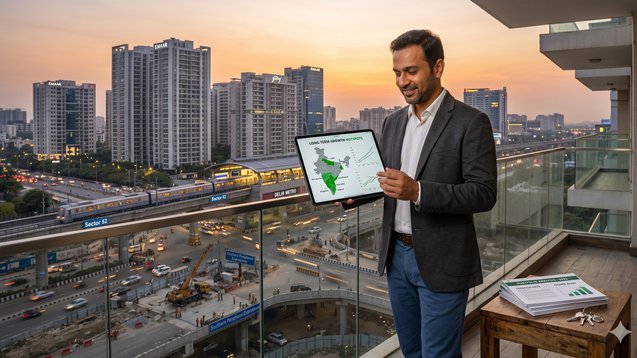
The only certainty in Indian real estate proves itself through the pattern of property valuation which depends on concrete development. The announcement of any major transit project by the government which includes new Metro lines and massive expressways and greenfield airports results in an immediate land price "price discovery" process. The true return on investment occurs for investors who buy shares during the "announcement phase" and maintain their investment until the "construction phase" ends. The concept of connectivity in 2026 now includes more than just road networks. The world now experiences the effects of "Gati Shakti" which combines rail and road and air transport systems. The areas around Navi Mumbai International Airport and Yamuna Expressway in NCR demonstrate typical characteristics of these locations. These areas function as more than residential spaces because they serve as centers for logistics operations and commercial activities. A new signal-free corridor allows professionals to reduce their commuting time by 40 minutes which results in both time savings and increased value for their property. Our research at Property Aaj (https://www.propertyaaj.com) shows that properties located within 3 kilometers of upcoming transit interchanges achieve annual capital appreciation which exceeds the city average by 15 percent. Have you looked at the master plan of your city lately? The answers to future wealth are usually hidden in those maps.
Tier 1 Metros: The Resilient Blue-Chip Investments
The real estate market identifies Mumbai, Bengaluru and Hyderabad as its most valuable Tier 1 cities. The two cities provide exceptional liquidity and rental market performance which other locations cannot match. The Coastal Road and Metro Line 3 projects have revitalized Mumbai's older suburbs through their completion. The major tech park development near Devanahalli airport has created the "Northward Shift" movement in Bengaluru. The buyer psychology in these metros has shifted toward "Premiumization." The people who used to want a flat now demand a "lifestyle ecosystem" because their needs have changed. The highest long-term growth will occur through gated communities which include clubhouses and coworking areas and EV charging stations. The 2BHK entry price exceeds ₹1.5 crore which makes it expensive but the investment risk remains almost non-existent. These properties serve as secure long-term wealth storage because they generate rental income at 3% and the property's worth increases with the city's international recognition.
The Tier 2 Renaissance: High Alpha Growth Zones
The Indian real estate market initially focused on the "Big 7" for many years. The "Reverse Migration" trend which began several years ago has now established itself as an ongoing process of people moving away from city centers. The cities of Kochi and Coimbatore and Jaipur and Nagpur have transformed from their previous status as "retirement havens" into dynamic centers of information technology and manufacturing development. Cities provide better growth opportunities with entry costs that are lower than those in Mumbai and Bengaluru because their value reaches "Alpha" status. A theoretical buyer, Mr. Sharma. His investable amount is ₹60 lakhs. In a Tier 1 city, that might get him a small studio in a distant suburb. The budget enables him to acquire a premium 3BHK property which sits in a high-growth corridor close to an upcoming IT park in Indore. The Indore property will increase in value after five years because its infrastructure development will result in higher returns than a Tier 1 studio located in a base market. Property Aaj research shows that middle-class investors prefer Tier 2 cities because these locations offer them their ideal investment path for achieving 12 to 15 percent yearly returns.
Industrial Corridors and the "Make in India" Impact
The industrial corridors present hidden possibilities which researchers should use to track their discovery of new long-term growth areas. The Delhi-Mumbai Industrial Corridor and the dedicated freight corridors established throughout the region create new Smart Cities which develop along their respective routes. The industrial development of Dholera in Gujarat and Auric in Maharashtra demonstrate how industrial activities drive real estate development. The local housing demand experiences an explosive increase when a major manufacturing plant like an EV factory or semiconductor unit announces its plans to build a facility. The workers require budget housing while the managers require mid-segment flats and the vendors require commercial spaces. The "hub-and-spoke" model functions as an extraordinary mechanism which drives business development. The clever investors who observe this trend buy properties in Tier 3 towns which are located near highways. The key to success requires individuals to demonstrate their ability to wait. The process of industrial growth starts slow, but it eventually brings huge value increases at its completion. The property transforms from a peaceful rural land into a profitable business or residential space through the development of its ecosystem.
The Silver Economy: Retirement and Wellness Hubs
The "Silver Economy" of real estate designed specifically for retired people has established itself as a legitimate investment category by the year 2026. The cities of Coimbatore and Rishikesh along with various regions in Goa experience increasing development of "assisted living" facilities and wellness-oriented residential communities. Active senior living goes beyond traditional old-age homes because it provides seniors with opportunities to engage in activities. The demand for these areas remains constant which makes them attractive for research because they exhibit "inelastic" demand patterns. The wellness hubs will experience continuous funding as the Indian population grows older and the wealthy middle class searches for tranquility outside polluted metropolitan areas. Investors should use a different perspective to assess these territories. You need to find locations that provide access to a multi-specialty hospital and a clean environment instead of searching for locations that are near an IT park. The appreciation here occurs because people want to live in places that provide them with unique lifestyle experiences. In India there exists only a limited number of locations which offer both high air quality standards and proper medical facilities. You possess a valuable asset which will become highly desirable ten years from now because you can locate these specific areas before others discover them.
Buyer Psychology: The Shift to Gated Townships
The post-pandemic world has eliminated standalone buildings which used to serve as residential spaces for Indian middle-class citizens. People now prefer to purchase properties which offer complete amenities in integrated townships. Customers require educational facilities and medical centers and grocery outlets and fitness centers to be accessible from one entrance point. The growth of specific areas occurs because they host "cluster living" environments. People now prefer modern managed living spaces because these areas offer better facilities than unorganized colonies which provide standalone plots. The first branded developer who establishes a gated township in Tier 2 and Tier 3 cities will achieve maximum property value growth. The local elite are eager to adopt more luxurious ways of life. The entry of national-level developers like Godrej Tata or Prestige into smaller cities serves as a strong market endorsement. The "locality" benefits from their presence because it acts as a "stamp of approval." Property Aaj (https://www.propertyaaj.com) recommends users to track "branded entries" which indicate the start of a growth cycle that lasts ten years in that particular micro-market.
Legal Factors: RERA Variations and Stamp Duty
Your growth process requires you to maintain your current assets while overcoming legal obstacles. RERA (Real Estate Regulatory Authority) has established essential transparency requirements which various states implement in different ways. MahaRERA (Maharashtra) serves as the most active regulatory body which delivers better investor protection according to common references about it. The northern states have not yet adopted their full enforcement of deadline requirements. To identify high-growth regions researchers need to examine states which show "investor-friendly" characteristics. Your initial entry cost gets affected by different stamp duty rates which exist in various areas. Some states provide women buyers with reduced stamp duty rates when they purchase properties located in designated "Special Investment Zones." You should monitor "Circle Rates." The market rate of high-growth areas exceeds the circle rate because of supply-demand imbalance which results in increasing prices. The process of conducting legal due diligence functions as the hidden driver behind sustained business growth. A "clouded title" property located in a high-growth area presents itself as a financial burden instead of an economic advantage.
Rental Trends: The Yield vs. Appreciation Debate
Your decision about which location to select depends on your choice between two options which are monthly cash flow through rental yield and future capital appreciation from property value growth. The rental yields in Tier 1 commercial hubs across Bengaluru's Whitefield and Hyderabad's Gachibowli reach some of India's highest levels which often exceed 3.5-4% range. The city experiences this phenomenon because there exists a large number of professionals who work without permanent office locations. The zones show the most significant capital growth because they currently exist outside of development. The areas which now function as construction sites will complete their development into schools and shopping centers within the next three years. The trick is to look for "social infrastructure." A project might have a road, but does it have a reputed school coming up within 5 km?The family demand will create an increase in price for the property. At Property Aaj (https://www.propertyaaj.com), our recommendation advises a 70:30 investment strategy which allows property owners to invest for appreciation while maintaining a required rental standard which protects them from losses.
Tier 3 Cities: The Dark Horses of 2026
The Tier 3 stars require your attention because they should not be overlooked. The cities of Ayodhya and Dholera together with their numerous Temple Towns experience increasing religious tourism which drives their real estate development. The government spends billions on Heritage Circuit development to build new infrastructure for these towns. The process of purchasing commercial space or residential land in these regions presents both dangerous challenges and profitable investment opportunities. The towns experience property value growth through "footfalls" which generate tourist traffic instead of IT job creation. The increase in tourism results in the establishment of additional hotels and restaurants together with the creation of additional staff housing facilities. The real estate market develops a distinct micro-cycle through this process. The ancestral land records in Tier 3 cities make it necessary to verify land titles with caution. You must always buy land that has "NA" (Non-Agricultural) certification because you want to stay within the boundaries of municipal areas. The area demonstrates potential for explosive development yet investors should expect prolonged exit liquidity which requires a ten-year investment period for their assets.
Home Loan Trends and Affordability
When we evaluate different locations, we need to assess the expenses associated with financing. Banks will provide "Green-Linked" home loans in 2026 which will include interest rate reductions for projects that achieve high ESG (Environmental, Social, and Governance) ratings. You can save substantial money on interest payments throughout 20 years by choosing to buy property in an area where developers focus on sustainable development. The "Affordability Index" of every city needs continuous monitoring. Property markets in Tier 1 areas experience stagnation when average EMI payments reach 60% of young professionals' income. The most rapid development occurs in regions which maintain substantial "Affordability Gap" differences. The current high demand for "New" sectors of Kolkata and Chennai's outskirts exists because. The youth can afford this lifestyle which will attract buyers who plan to sell their properties in the future.
Conclusion: The Future is Multi-Polar
The year 2026 will show that the best locations for permanent property value development now extend beyond exclusive high-end postal areas. The real estate market in India now experiences multiple centers of growth. The people in Haryana logistics hubs and Telangana tech corridors and Gujarat industrial zones and Uttarakhand wellness retreats create new wealth. All these successful projects depend on infrastructure development and actual market needs which require construction of permanent housing for residents instead of temporary buildings for investors. As an investor or a homebuyer, your goal should be to identify the "Value Gap." You should identify locations which have 80% finished infrastructure yet still charge 50% of central city prices. You need to remain patient as you conduct your legal research while searching for opportunities beyond Tier 1 markets. Real estate is the most reliable vehicle for generational wealth in India, and by staying informed through platforms like Property Aaj (https://www.propertyaaj.com), you can ensure that your hard-earned money is working just as hard as you are. The construction workers are constructing pathways and railway systems while you must decide your investment location.
Frequently Asked Questions (FAQs)
1. Which city in India currently offers the highest capital appreciation potential?
The Tier 1 cities provide stable investment opportunities whereas Indore and Lucknow and Coimbatore deliver greater investment returns through their current market conditions and industrial growth. North Bengaluru and the Dwarka Expressway belt in NCR show strong potential as Tier 1 areas because of their planned major infrastructure projects which include new airports and expressways.
2. Which investment option between land purchase and apartment purchase leads to better long-term financial growth?
Land (plots) provide better capital appreciation because it exists as a limited resource according to historical data. The gated apartments in communities provide instant rental revenue and show simplified management and security features. A gated apartment provides better security for people who live outside the investment area but RERA-approved plots deliver better long-term investment returns when you can oversee the property.
3. How much does a nearby Metro station actually impact property value?
Studies in Indian metros show that properties within a 1-km radius of an operational Metro station can command a premium of 15-20% in rent and 20-30% in capital value compared to similar properties 5 km away. The price increase of "upcoming" lines occurs through three separate events which include the announcement stage and construction start and operational completion.
4. What are the legal risks of buying property in Tier 3 cities?
The main risk stems from the "Presumptive Title" rule. Ancestral land records in smaller towns can be poorly digitized which results in disputes during later periods. You should demand a "Title Search Report" which covers the previous 30 years to confirm that the land has been certified as "NA" (Non-Agricultural) status. The most effective approach to reduce this risk requires purchasing from a national developer who establishes presence in the Tier 3 market.
5. How do I calculate the "Rental Yield" of a potential investment?
The formula for calculating rental yield requires dividing annual rent by total property costs which include stamp duty and registration fees. In India, a yield of 3% is average, while 4% is considered excellent for residential property. Users can estimate local rents before buying through Property Aaj which provides checking services at https://www.propertyaaj.com.
6. Does the "Green" rating of a building affect its resale value?
Yes, this effect has been increasing over time. By 2026, buyer awareness regarding electricity bills and water scarcity has skyrocketed. The combination of solar power systems and rainwater harvesting systems together with efficient waste management solutions creates properties that require lower maintenance costs while their "future-proofed" status enables easier sales to environmentally conscious Gen-Z and Millennial buyers.
Read more about property matters with our specialists and browse the latest property listings on Property Aaj. Download the app from the Play Store and App Store now for easy buying, selling, and renting!