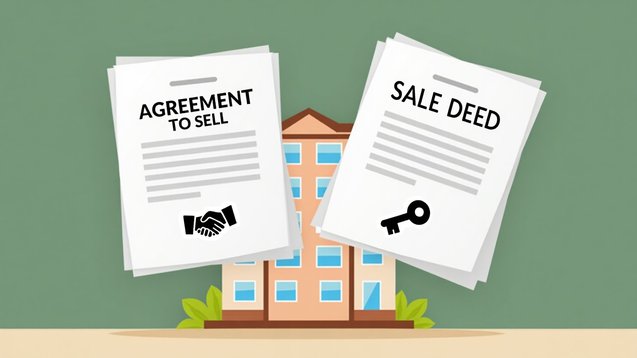
Introduction
When you are buying a property in Pune, regardless of it being a small flat in Baner, a high-end apartment in Kharadi, or even a plot of land in Hinjewadi, there will be a multitude of legal documents. Two crucial documents involved in every property transaction in Maharashtra are the Agreement to Sell and the Sale Deed. Many first-time buyers tend to mix up these two terms, by assuming that they mean the same thing.
However, these terms (and documents) are different in law and each document has a significant legal effect on your journey to purchasing your property.
In this blog, we will break-down for readers the differences between a Sale Deed and an Agreement to Sell, the effect of these documents in law, when to use these documents, and why it is important for you to know the differences so you can prevent any confusion during the sale of property transactions.
Why Legal Clarity Matters in Property Deals
Whether you're investing in Wakad, Viman Nagar, Hadapsar, or Pimple Saudagar, buying real estate is not just a financial decision—it's a legal transaction. Every step, from booking the unit to taking possession, must follow the law.
Failing to understand the role of core documents like the sale deed and agreement to sell can lead to:
Ownership issues
Possession disputes
Loan rejection
Delay in registration or mutation
So let’s break it down.
What Is an Agreement to Sell?
An Agreement to Sell is the first legal step in a property transaction. It’s a written contract between the buyer and seller that outlines:
Sale terms
Price
Payment schedule
Possession timeline
Conditions to be met before sale
It is usually signed when the buyer agrees to buy the property and makes an initial booking or token amount.
Important Features of Agreement to Sell:
It does not transfer ownership
It creates a right to obtain the sale deed in the future
It is often registered, but not always mandatory
It helps buyers secure home loans
It may include a grace period, penalty clauses, and cancellation terms
For example, if you book a flat in Magarpatta City, your builder will sign an agreement to sell, outlining the flat details, construction timeline, payment plan, and possession promise.
What Is a Sale Deed?
A Sale Deed is the final document that legally transfers the property from the seller to the buyer. It is registered at the Sub-Registrar Office and becomes the legal proof of ownership.
Important Features of Sale Deed:
Mandatory registration under the Registration Act, 1908
Transfers legal title and ownership
Buyer becomes the lawful owner
Stamp duty and registration charges are paid
Mutation is done based on this document
Once the sale deed is signed and registered, you can update your name in property tax records, electricity board, and municipal authorities.
If you're buying a ready-possession home in Aundh or Kothrud, the sale deed is what confirms your full ownership.
Key Differences: Sale Deed vs. Agreement to Sell
Why Is the Agreement to Sell Important?
In growing real estate markets like Pimpri-Chinchwad and Bavdhan, developers often offer pre-launch or under-construction properties. Buyers make advance payments and rely on the agreement to secure their investment.
Here’s why this agreement matters:
Acts as a contractual promise
Can be used in court in case of default
Required for home loan processing
Ensures buyer’s interest is protected before the final deed
Property Aaj recommends reading every clause carefully—especially regarding cancellation, refunds, and penalties.
When Do You Sign the Sale Deed?
You sign the sale deed after:
The builder completes construction (in case of new flats)
You inspect the property and are satisfied
All dues (EMIs or cash payments) are cleared
NOCs and occupancy certificates are received
Stamp duty and registration fees are ready
Once this document is registered, you officially own the property.
Do You Need Both Documents in Every Deal?
Not always.
If you're buying a ready-possession resale flat, the sale deed is usually executed directly.
If you’re buying an under-construction or pre-launch flat, you must sign an agreement to sell first, followed by a sale deed later.
Legal Backing of These Documents
Agreement to Sell is governed by:
Section 54 of the Transfer of Property Act
Indian Contract Act, 1872
Sale Deed is governed by:
Registration Act, 1908
Indian Stamp Act
Transfer of Property Act
If any dispute arises, both documents can be used as evidence in court, but the sale deed holds stronger legal weight because it signifies completed transfer.
What Happens If You Only Have Agreement to Sell?
Many buyers make the mistake of never registering the sale deed. They live in the property and assume that the agreement is enough. This is risky.
Without a registered sale deed:
You are not the legal owner
You cannot mutate the property
You may face issues in resale or inheritance
To safeguard yourself, always ensure a registered sale deed is executed after the agreement stage.
Can You Register Agreement to Sell in Pune?
Yes. Though optional, it is strongly advised to register the agreement to sell under Maharashtra Registration Rules. This adds legal credibility and prevents tampering.
In Pune, registration costs include:
₹1,000 registration fee (approx.)
₹100–₹500 document handling charges
Nominal stamp duty if applicable
You can register this at any Sub-Registrar Office, such as in Yerwada, Camp, or Hinjewadi.
Tips for Safe Documentation
Always verify seller’s title before signing
Hire a legal advisor to review documents
Get encumbrance certificate to ensure no loans or disputes
Don’t make full payment until sale deed is signed
Avoid notarized agreements only—they aren’t legally enforceable in ownership transfers
For end-to-end support, you can reach out to Property Aaj, which helps with property verification, documentation, and buyer protection across Pune.
Conclusion
Understanding the difference between a Sale Deed and an Agreement to Sell is not just for lawyers—it’s essential knowledge for any homebuyer. Whether you're investing in Undri, Karve Nagar, or the outskirts of Pune, knowing your legal rights ensures peace of mind.
Remember:
The agreement to sell is the promise
The sale deed is the final step
If you’ve only signed the agreement and haven’t received possession yet, follow up on timelines. If your home is ready, don’t delay the sale deed.
Stay informed, stay protected, and always use trusted platforms like Property Aaj to navigate the legal side of real estate safely.
FAQs
1. Can I take possession without a sale deed?
You should not, legally speaking. You cannot, by law, take possession of premises without the registered sale deed, nor does taking possession mean that you are the lawful owner.
2. Is agreement to sell compulsory in every deal?
No, but it is the norm for under-construction, and pre-launch projects. For possession acting in the real sense, why would there be any agreement to sell?
3. Can the agreement to sell be registered?
Yes, it is not mandatory but is often advised, especially in Maharashtra where disputes are common.
4. Who prepares these documents?
This is normally done by the attorney or professional representation of the builder/seller, but you should always have your lawyer examine them for you prior to signing.
5. What is the stamp duty on the sale deed in Pune?
Generally it is 6% of the purchase price of the property with a housing registration fee of 1%, although the amount of stamp duty does vary slightly based on location of the property and gender.
6. Can I get a home loan with just an agreement to sell?
Yes, most banks will accept this, but the standard practice is to indicate that the bank will require a registered sale deed at the point of disbursal with appropriate loan documentation.
Read more about property matters with our specialists and browse the latest property listings on Property Aaj. Download the app from the Play Store and App Store now for easy buying, selling, and renting!