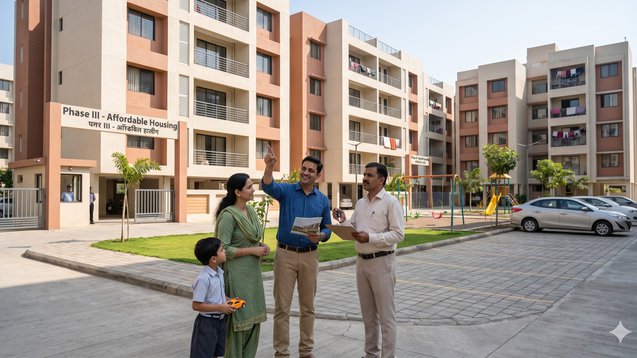
Future of Affordable Housing in India
Introduction
The Indian government now considers affordable housing to be an essential real estate element that extends beyond both governmental programs and social obligations. Indian cities show an evident pattern of urban development that demonstrates new patterns of expansion. The demand now comes from first-time homebuyers and young professionals and middle-income families who need affordable housing. The question here examines whether India can provide sufficient affordable housing solutions to satisfy its increasing needs during the upcoming years. The combination of urban migration and Tier 1 city property price increases and changing lifestyle preferences has created a critical situation for affordable housing. The current situation exists because government programs and better financing methods and fast infrastructure expansion work together. The construction industry faces multiple obstacles which include high land prices and prolonged building periods and complex government regulations. The concept of "affordable" housing now varies between the three different city categories which include Tier 1 cities and Tier 2 cities and Tier 3 cities. The concept of affordable housing in Mumbai differs from the assessment of affordability in Indore and Coimbatore. The blog will investigate the future direction of affordable housing in India which includes its development drivers and existing obstacles and investment strategies for homebuyers in this changing environment.
What is Affordable Housing in India Today?
Affordable housing is not about low prices, it is about getting good value for your money. In words a property is affordable if you can buy it with the money you have.. In India what is considered affordable housing differs from city to city. In cities like Mumbai, Delhi and Bengaluru affordable housing usually means small apartments on the outskirts of the city. In cities like Pune, Lucknow or Nashik it could mean bigger 2BHK homes with good facilities. This difference is important because it affects what people look for in a home.
For example a young IT worker in Bengaluru might choose a home to live close to their office.
On the other hand , a family in a smaller city may want a bigger home with more space and comfort.
Websites like Property Aaj (https://www.propertyaaj.com) are showing affordable housing options in different cities, which shows how varied this type of housing has become. The key to the future of housing is to understand what people in different cities need and provide it to them. Affordable housing in India is about meeting the needs of buyers, in different cities and affordable housing options will continue to vary across cities.
How Government Policies and Improvements to Incentives Affect Demand for Affordable Housing in India.
The Government of India has played an instrumental role in creating an environment that has driven increased demand for affordable housing. Programs such as the Pradhan Mantri Awes Yojana (PMAY) have created great opportunities for people to acquire their homes by offering numerous incentive programs such as tax deductions and subsidies to promote ownership. Additionally, the reduced rate of Goods and Services Tax (GST) for builders and developers to build homes has assisted in increasing new opportunities in affordable housing development. Pradhan Mantri Awes Yojana (PMAY) has driven the creation of new affordable housing stock but there is a challenge continuing to build new stock to keep pace with increased demand from government programs, especially in urban areas, but rather in Tier two and three cities because there are greater opportunities to find parcels of land to build homes at lower costs in those areas as well. The other significant factor affecting how affordable or not; is affordability based upon local variations in regards to policies of each state regarding the amount of stamp duty, registration and any local zoning or development related fees or restrictions. Many home buyers are comparing prices between multiple properties to weigh how much home they can afford when searching properties on the Property Aaj website (https://www.propertyaaj.com). As we look to the future, there must continue to be a combined effort from local and state governments, with fast track approvals to help drive continued growth within affordable housing.
Why Tier 2 and Tier 3 Cities Are Leading the Affordable Housing Boom
The future of affordable housing needs to be studied through non-metro urban areas. The actual growth drivers of countries two through three military classifications now function as emerging growth centers. The cities of Nagpur, Jaipur, Indore, and Kochi experience increasing demand for affordable housing solutions.
What factors are causing this situation to occur?
The combination of lower land expenses and better infrastructure and increased job opportunities make these cities appealing to residents. People can now work from home while businesses need less office space in expensive urban areas. Homebuyers see this purchase as a way to improve their way of life. People can now buy bigger houses for cheaper costs which leads to improved living standards. The entire country of India shows increasing awareness of this movement. People now consider affordable housing to be an intelligent decision instead of a necessary compromise. Property Aaj (https://www.propertyaaj.com) provides buyers with access to emerging markets which previously went unnoticed.
Infrastructure Development: The Silent Driver
Affordable housing needs infrastructure to grow. Metro projects, highways, industrial areas and smart city plans are creating places to live. Areas that were too far away are now becoming good options for homes. In cities affordable housing is usually found on the outskirts because land is expensive. With better roads and transport these areas are becoming easier to reach. In cities building new infrastructure is making more people want to buy homes. As roads get better and industries grow new neighbourhoods are being built. Think of it like this. Housing grows where there is good connectivity. Investors who are smart keep an eye on infrastructure projects. On Property Aaj (https://www.propertyaaj.com) you can find details, about projects that will improve connectivity, which helps buyers find areas that will grow in the future.
A Shift in Buyer Mindsets and Expectations
A decade ago, a buyer purchasing a home would approach their purchase very differently than today’s buyer. The buyer seeking affordable housing today is looking for more than just the lowest purchase price of the home; they want good value by way of quality construction, minimum essential services, and reasonable access to jobs. The current generation of buyers is much more educated than previous generations. The buyer will research the various housing projects available for sale and will gather information about builders that build housing so they may evaluate their long-term viability as a homebuilder and as a result, how purchasing a home in a new project or from a particular home builder will be viewed years down the road. Past generations had no problem renting; today, purchasers want to purchase houses. Buyers today desire to purchase houses to give themselves a sense of entitlement and as a means of providing their families with security and emotional stability. Many buyers in Tier 2 cities desire an improved lifestyle; they are willing to spend more to purchase a house that has desirable living standards. The changing consumer mindset toward affordable housing will ultimately reshape the entire affordable housing market in India.
Rental Market Trends in Affordable Housing
Affordable housing has emerged as an investment opportunity which attracts both investor and end-user markets. The high population density in Tier 1 cities drives strong rental demand for affordable housing. The rental market of Tier 2 cities experiences ongoing growth throughout the region. The expanding industries and educational institutions create new opportunities for tenants to enter the market. The rental returns for affordable housing properties show different patterns to each investor. Property owners can achieve higher yield percentages through lower purchase costs but they need to establish stable demand for their properties. The budget apartment located near a metro line or industrial hub will generate consistent rental income. Investors using Property Aaj (https://www.propertyaaj.com) often look for such strategic locations to maximize returns.
Challenges Facing Affordable Housing in India
Affordable housing faces multiple obstacles although it has potential. The urban centers of India continue to face major difficulties with land acquisition. The high cost of land forces developers to build in remote areas which do not guarantee market demand. Project schedules experience delays because of construction hold-ups and the time needed to obtain regulatory approvals. The implementation of RERA has not resolved all execution problems which still exist. Financing stands as another problem. Home loans exist in the market but lower-income buyers face difficulties because not all of them meet the requirements. People in Tier 3 cities face two main difficulties which include inadequate infrastructure and insufficient job opportunities that restrict their capacity to access employment. The existing challenges require three elements for effective solutions which include policy support and developer innovation and buyer education.
Technology and Innovation in Affordable Housing
Technology is changing housing in India bit by bit. Construction methods like prefabrication and modular building along with materials are cutting down building time and costs. The internet is also helping. People can now look at homes, compare prices and check projects online. Property Aaj (https://www.propertyaaj.com) is working on making it easier to find homes with transparency. In the future homes with features and energy-saving designs might become a part of affordable housing making life better for people, in the long run.
Investment Potential: Is Affordable Housing a Smart Bet?
The answer to the question about affordable housing investment shows that it is a profitable investment. The answer is yes but only when you implement the correct approach. Affordable housing presents three advantages which include its low entry requirements and its continuous market need and its ability to generate future value. The investment returns of a property depend on its geographic location and transportation access and existing market conditions. The first tier cities of the world show slow property value growth which maintains a stable pattern. The second tier cities provide greater growth opportunities which come with specific risk factors. The process of portfolio creation requires investors to establish diverse investments across multiple city tiers. Investors today hold different city tier investments in their portfolio. The process of buying affordable housing requires more than finding low prices; investors must develop intelligent purchasing strategies.
Conclusion
The future of affordable housing in India shows promising developments which continue to change. The project now requires more than building inexpensive houses. The project aims to build environmental-friendly housing developments which provide modern buyers with complete community solutions. Cities in Tier 2 and Tier 3 will serve as the main drivers for this transformation. The growth of these areas will continue through infrastructure development together with changing lifestyles and policy support. Buyers receive an opportunity to acquire property during the optimal market time. Investors gain the opportunity to invest in a market segment which shows strong potential for future development. The project requires success through one essential element which involves making educated choices. You need to study market conditions and learn about the specific area before making your decision. The essential element of affordable housing extends beyond its cost because it enables communities to develop towards a more promising future.
FAQs
1. What is the future of affordable housing in India?
The demand for affordable housing will experience substantial growth because of two factors: urban development and additional government programs and increased purchasing power of middle-class buyers.
2. Which cities are best for affordable housing investment?
Three Tier 2 cities Nagpur Indore and Lucknow present strong investment opportunities because their property values remain low while their infrastructure development continues to progress.
3. Is affordable housing a good investment option?
The investment generates consistent demand together with property value growth, which operates particularly well for developing regions that have good transportation links.
4. What are the risks in affordable housing projects?
The main dangers to a project include two specific dangers which are infrastructure problems and project delays together with restricted rental demand that exists in particular areas.
5. How does infrastructure impact housing?
Good roads and transport make a place more desirable. This means more people want to live. When more people want to live in a place the price of homes goes up. So having infrastructure is very important for making a place grow.
6. Are government schemes still relevant for buyers?
Yes, government plans, like PMAY, are still very helpful. They give people money to buy homes. This makes it easier for people to own their homes.