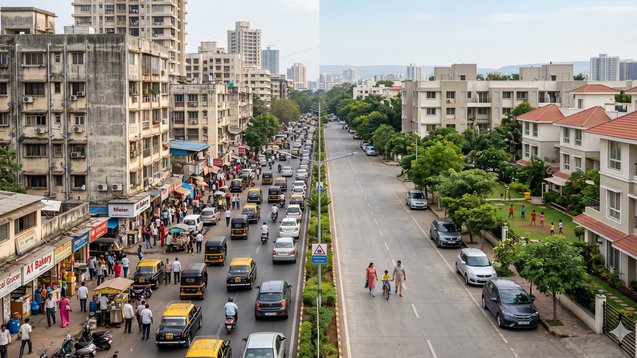
Urban vs Suburban Living Which is Better?
Introduction:
People who want to rent or buy a house in India must first decide whether to choose a city center location or a suburban area. The answer to this question requires multiple steps to reach a final solution. Your decision about where to live will depend on your everyday activities and your future objectives and your understanding of what comfort means to you. People who choose to live in Mumbai, Delhi NCR or Bengaluru have to pay higher prices because they want to stay close to their workplaces and entertainment venues and existing city services. People who live in suburban regions such as Thane and Noida Extension and Sarjapur Road can experience more affordable housing options which provide larger living spaces and peaceful surroundings.
But what about Tier 2 cities like Pune, Ahmedabad, or Lucknow?
Or Tier 3 cities where the urban-suburban divide is less pronounced but still evolving?
Both options offer distinct benefits together with their respective drawbacks. A corporate professional may prefer the fast-paced convenience of urban living, while a family might lean toward the calm and spacious appeal of suburban life. People can use Property Aaj (https://www.propertyaaj.com) to find properties that match their requirements in different cities and at various budget levels and with different living conditions. The practical process helps you choose the best solution that matches your actual needs
Understanding Urban vs Suburban Living in India
Urban living typically refers to homes located within city centers or well-established zones with dense infrastructure, commercial hubs, and high population density. The example locations include South Mumbai, Central Delhi, and Indiranagar in Bengaluru. Suburban living, on the other hand, includes peripheral or developing areas located on the outskirts of major cities. These locations function as planned expansions which include gated communities and wider roads and newer developments. The divide between urban and suburban areas stands out in Tier 1 cities. Urban areas face high demand which leads to expensive costs, whereas suburbs experience fast growth. The gap exists in Tier 2 cities, but it shows less severe impact. Suburban development in Tier 3 cities has not yet reached advanced stages, but evidence of progress exists. The perception of suburban areas as remote locations has changed because they are now accessible. The development of metro systems and highways and IT corridors has turned these areas into independent micro-markets. The current situation needs evaluation for both distance and ecosystem connections.
Cost of Living Premium vs Practical Affordability
The most obvious factor needs to be examined first. Urban living comes at a premium. The costs of property ownership and rental payments and maintenance fees and everyday expenses all increase in urban areas. In Mumbai or Bangalore, a 2BHK in a central area can cost significantly more than a larger home in the suburbs. Suburban areas provide superior value for residential expenses. The same budget provides you with greater space and more contemporary buildings and superior facilities. First-time homebuyers find this feature especially appealing. In Tier 2 cities like Indore or Jaipur, urban areas are still relatively affordable, but suburbs provide an even better deal. Suburban residences in Tier 3 cities provide superior home designs because affordability does not present significant challenges. Property Aaj (https://www.propertyaaj.com) enables buyers to study price fluctuations between urban areas and suburban locations which assists them in making better financial choices.
Compact Living vs Spacious Comfort - Space & Lifestyle
A compact urban home, especially in high-demand urban areas, means you have a limited amount of living space! You have to sacrifice size for location when looking for that perfect home! A suburban home tends to give you more room. Larger apartments, balconies, parks, clubhouses, and other greenery are common in suburban homes. So a family of four living in Bangalore may not find enough home in the city's centre but would feel much more at ease in Whitefield or Electronic City than in downtown. In Tier 2 cities, many developments are like mini townships, with schools, shopping, and recreation all located within the development. So, do you want space or do you prefer to live close to your work?
Commute and Connectivity Time vs Convenience
The main conflict between these two options emerges through the need to travel. Urban areas provide shorter travel distances because their residents can access multiple essential services. The city offers people this advantage because heavy traffic makes movement through Mumbai and Delhi difficult. Suburban living requires people to travel longer distances. The current situation shows that this area needs more time to develop. The current situation shows that the new metro lines and expressways and ring roads will provide better travel options. The suburbs of Hyderabad and Pune now serve as active employment centers because their residents no longer need to visit downtown areas. People must acknowledge that their daily commute represents an essential aspect of their existence. People who spend 2 to 3 hours driving through traffic each day will experience a greater decline in their quality of life than they think.
Infrastructure and Amenities Established vs Emerging
Urban areas have established infrastructure hospitals, schools, malls, public transport, and utilities are already in place. Suburban areas are catching up fast. Most of the new projects include complete facilities but their outside infrastructure systems still require development. The authorities and private sector investors are funding suburban infrastructure projects which are currently underway in Tier 1 cities. The planning process for suburban areas in Tier 2 cities succeeds at creating organized spaces but their social infrastructure development remains insufficient. Tier 3 cities maintain superior infrastructure throughout their urban areas while their suburban regions experience development. Platforms like Property Aaj (https://www.propertyaaj.com) help users evaluate not just property prices but also surrounding infrastructure something many buyers overlook initially
Investment Potential Stability vs Growth Potential
Both urban and suburban properties have advantages from an investment point of view. Urban properties give you stability. They are highly sought after, have an established rental market and have a low risk. However, because of the high prices already, appreciation will probably be slower. Suburbs give you growth potential. Infrastructure development creates more demand for these areas, resulting in a higher price. The early investors that invested in new development areas such as Noida Extension and Navi Mumbai have benefited greatly by being placed early in the development cycle. Though Tier 2 cities or suburban areas will provide the best appreciation opportunity, the appreciation for Tier 3 cities will vary considerably based on the local plans developed. The important factor is timing. If you can find an investment property in an emerging suburb before it peaks, you could see great returns; but it does take research and time.
Rental Trends Demand vs Value
Urban areas show high demand for rental properties because their central locations provide students and professionals and migrants with ease of access to their work and study needs. High rental prices make it difficult for property investors to achieve financial returns which match their investment costs. Suburban areas provide tenants with superior rental opportunities. Tenants receive greater residential space together with improved facilities which make these locations more attractive to families who need extra space. The suburban rental market in Pune and Bangalore has expanded rapidly because of the development of IT corridors and better transportation links. Property Aaj (https://www.propertyaaj.com) provides insights into rental trends across different locations, helping landlords and tenants make smarter decisions.
The Psychology of The Purchaser Image vs function
Let’s talk about a less concrete item - mind-set. Urban living has a very strong association with prestige; a home located in a popular area has a degree of street credibility (social status). Suburban living represents functionality; it’s about maximizing the return for your investment, comfort, and being forward-thinking. Among younger purchasers in major metropolitan areas (First Tier), there is an increasing number of purchasers opting for suburban living due to cost and lifestyle considerations. Suburban living is becoming more acceptable, and is more valued than urban living among young adults, in lower tier (Tiers two and three) communities. The choice made reflects the personal value of image versus functionality, to each individual purchaser
Legal and Financial Considerations
Urban areas maintain better legal systems because they use existing documentation to prove their compliance with regulations. The process involves additional expenses because of increased stamp duty and registration fees. Suburban properties, especially in developing areas, require careful due diligence, clear titles, RERA registration, and builder credibility. RERA has improved transparency across India, but implementation can vary by state. Home loans are equally accessible for both, but banks assess suburban projects based on their location and builder reputation. Before making a decision, it’s always wise to research thoroughly and platforms like Property Aaj (https://www.propertyaaj.com) can help simplify this process.
Future Outlook: Where Is India Headed?
India is experiencing rapid transformation of its urban areas. The increasing population and restricted city center space will lead to suburban development as an unavoidable outcome. The government programs which include Smart Cities and infrastructure development work to accelerate this transformation. The suburbs will develop into independent centers which contain all necessary facilities for work and education and leisure activities. Urban areas will maintain their importance yet the current situation is moving toward new equilibrium. The future may not be urban vs suburban. The future will combine elements from both urban areas and suburban regions.
Conclusion
Which living environment is superior between urban areas and suburban areas? The honest answer: it depends on your lifestyle. People who need quick access to everything should choose urban living because it provides them with shorter travel times and central city access. Suburban living provides residents with affordable housing options which enable them to have more space and develop their properties over time. Suburbs in Tier 1 cities have gained popularity among residents. Residents of Tier 2 and Tier 3 cities can choose between two living options which depend on their personal preferences. The best approach is to evaluate your daily routine, financial situation, and future plans. Homeowners need to consider more than just their property location because their house needs to match their personal requirements. Property Aaj (https://www.propertyaaj.com) enables you to assess and compare multiple options throughout India so you can make an informed decision.
FAQs
1. Is suburban living better than urban living in India?
Your personal priorities will determine which option provides better living conditions. Suburban areas offer economical housing options and larger living spaces, whereas urban areas deliver easy access to multiple locations. Your choice should depend on your lifestyle requirements.
2. Are suburban properties a good investment?
Yes, especially in developing areas with upcoming infrastructure. The properties present better appreciation potential because they exist in less developed residential areas.
3. Do suburbs have good infrastructure in India?
Many suburbs are rapidly developing with improved roads, metro connectivity, and social infrastructure. The development progress of various cities shows different rates of development.
4. Is commuting from the suburbs a major problem?
The factor becomes an issue for cities which experience severe traffic congestion. The established remote work trends together with improved transportation links have diminished this problem.
5. Are urban homes always more expensive?
The answer is yes for most situations. Urban properties command higher prices due to location advantage and demand, especially in Tier 1 cities.
6. Should first-time buyers choose urban or suburban homes?
First-time buyers often benefit from suburban homes due to affordability and better space, but the final decision should align with their work location and lifestyle.