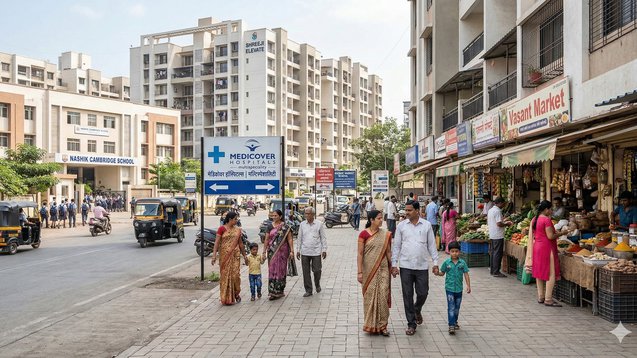
Introduction: Convenience is long-term wealth
Homebuyers prioritize three main factors when selecting a property which include its size, the home value and all of its indoor features. The exterior environment of your house carries greater importance than its interior components. The distance between your home and educational institutions plus medical facilities and shopping centers determines your daily life activities together with your family's well-being and your ability to handle emergencies and the future market value of your property. A home that exists in a prime location enables residents to minimize their travel requirements while achieving their destination needs throughout their entire life. People need to define their objectives first before they can begin effective route planning to achieve their goals. The most effective way to select a property location involves choosing a site that provides direct access to vital municipal facilities.
Why proximity to schools matters
Good educational institutions stand as the primary concern for families who have children to raise. Daily commutes that last throughout the day lead to safety problems because they create fatigue in children. The proximity to reputable schools enables residents to reach their destinations faster which helps them organize their daily activities more efficiently. The system enables children to engage in extracurricular activities because it eliminates transportation issues. The established educational institutions create high demand for residential properties which continue to exist because of their proximity to these institutions. Future renters and buyers will appreciate this advantage even if you do not have children. The educational demand which drives their value remains constant throughout economic fluctuations. The presence of schools offers people both emotional comfort and financial protection.
Evaluating school quality and access
The research process requires you to evaluate the academic standing and school status of educational institutions which lie within your vicinity. The assessment requires you to examine academic outcomes together with facility conditions and extracurricular activities and the difficulty level of student admissions. The assessment of traffic patterns together with building accessibility needs to occur when schools are active. A location that provides primary education together with secondary education and higher secondary education enables educational requirements to be fulfilled in the long run. The educational system needs to provide more thorough resources because this will increase the area’s potential to attract people for an extended time period.
Importance of hospitals and healthcare access
Healthcare access becomes essential when people face medical emergencies. Hospital proximity enables faster medical response times which benefits residents who live near hospitals. The factor becomes crucial for families who have elderly relatives to take care of. The assessment needs to confirm whether the area provides access to multiple hospital types together with diagnostic facilities and pharmacy services and medical clinics. Healthcare services provide young families with security which helps them feel more secure. The sudden nature of emergencies makes it essential to have nearby emergency services because this factor has a major impact on emergency response. Residential areas with developed healthcare systems continue to draw residents who want to settle there.
Long-term impact on resale value
Properties that are located close to essential services tend to maintain their value better during periods of economic decline. The buyer who evaluates two comparable properties will choose the one which provides easier access to educational institutions and medical facilities. Buyers experience decreased doubt about property value when essential infrastructure exists which supports future sustainability. The speed of property sales during periods of market uncertainty determines the financial security of an asset. The ability to sell a property rapidly during market uncertainty improves its financial risk protection.
Markets and daily necessities
The markets provide access to essential goods which people need for their daily existence. The needs of people to obtain groceries and vegetables and to visit pharmacies and banks and to access utility services create multiple small requirements which occur throughout the day. The need to drive long distances for these activities results in daily life problems which include both fuel expenses and time losses that build up over multiple years. The existence of local markets establishes a lively neighborhood environment. The presence of active commercial districts improves public safety because of the continuous movement of pedestrians. The assessment needs to verify whether markets can be reached through walking or driving which takes only a brief period. The assessment needs to provide real accessibility solutions instead of theoretical access options. A home which exists close to essential retail locations helps residents achieve better daily routines.
Balancing convenience with noise and congestion
The property benefits from its market and school access, but its proximity to active commercial zones creates noise and traffic problems. The ideal distance for your property exists between two points which provide necessary access but maintain sufficient space to prevent traffic problems. The assessment of noise and parking conditions requires an on-site visit during times when maximum activity occurs. The process of choosing locations requires an intelligent approach which creates a balance between making facilities accessible and providing users with comfortable space.
Rental demand advantage
Tenants often prioritize convenience. Working couples prefer proximity to schools and daycare facilities. Elderly tenants prefer nearby hospitals. Families value nearby markets. Future rental property owners should choose locations which provide access to essential services because this choice increases their chances of success in finding tenants. The stability of rental income generates better returns on investment while decreasing the chances of vacant properties. The areas which provide maximum convenience to residents serve as permanent rental properties because they create high demand from tenants.
Safety and community development
The civic infrastructure of an area develops more effectively when it contains both schools and hospitals. The community has access to advanced systems which include improved road networks and better street lighting and enhanced public transportation services. The residents of these neighborhoods show more active participation in community activities which leads to improved safety and better organization of public spaces.The existence of schools and medical facilities indicates that an area is undergoing development which will occur in the future instead of growing through unplanned expansion. Sustainable value results from well-organized development processes.
Future growth considerations
The urban expansion process leads to infrastructure development that extends into new areas. The existing network of schools and medical facilities provides essential services to every area of the community. Newly developed regions will have better access to upcoming healthcare and educational facilities, but these services will remain inaccessible until they become fully operational. The focus should be on locations where critical services currently operate instead of areas where services are only planned. The existing infrastructure system operates at full efficiency which decreases potential hazards.
Financial perspective
The property prices for locations that are near essential services show a minor increase from their regular rates. The premium charged for this service actually maintains its worth throughout extended periods. Homebuyers should choose to pay a reasonable price increase for convenience rather than to purchase less expensive properties located in developing regions which need extensive time to reach their full potential. You need to assess your budget capacity which will determine whether you can afford the extra expense. People should not experience financial difficulties because of their need for convenience but businesses should charge fair prices to cover their extra expenses.
Conclusion
The selection of residential areas that are located close to educational institutions and medical facilities and shopping centers results in improved daily accessibility and enhanced family satisfaction and better emergency response capabilities and increased rental market appeal and higher resale prices and sustained property value growth. The physical attributes of a property become useless for actual living purposes until its location becomes accessible for everyday use. A property assessment requires exterior building observation together with an assessment of its surrounding environmental conditions. A house with robust social support systems provides residents both comfort and protection against financial difficulties. The real estate market considers essential services as a vital component that provides developers with competitive benefits.
FAQs
1. Does living near schools increase property value?
Yes, residential areas that have strong school access create higher demand for properties which results in better resale value.
2. How close should a hospital be?
The ideal distance requires emergency services to reach their destination within 10 to 15 minutes.
3. Are properties near markets noisy?
They can be. People should choose distances which help them avoid traffic jams while also providing them easy access to their destinations.
4. Is it worth paying more for such locations?
The long-term advantages usually make it worth paying extra for these locations if you can afford them.
5. Do tenants prefer such areas?
Yes, tenants prefer locations which provide them maximum convenience because these areas create consistent rental demand.
6. Should I invest in areas where facilities are planned but not built?
You should exercise caution because projects that have been announced but not yet built provide less security than existing operational infrastructure.
Read more about property matters with our specialists and browse the latest property listings on Property Aaj. Download the app from the Play Store and App Store now for easy buying, selling, and renting!