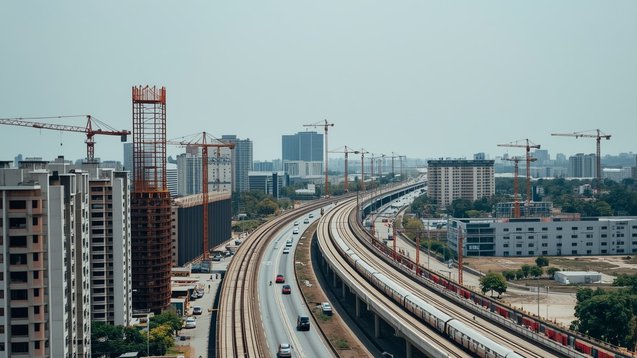
Introduction: Infrastructure drives property growth
The real estate market considers infrastructure to be its most significant asset that drives property value. The presence of roads and metro lines and airports and business parks and commercial corridors creates high-demand areas from standard geographical locations. Investors who acquired properties during the early stages of development received financial benefits from the expanding infrastructure network that later developed in those areas.
The announcement of a new project does not guarantee its creation of actual value for the community. Buyers need to comprehend three aspects of infrastructure development because it impacts property value and rental demand and the sustainability of their living environment. Development plans require detailed analysis to select properties effectively because developers make false claims in their marketing materials.
Why infrastructure impacts property value
The construction of better infrastructure facilities allows people to reach their destinations more easily. The establishment of better roadways leads to decreased time needed for travel. The metro system provides public transport access which links remote suburban areas with downtown urban regions. The presence of commercial centers in a city creates job openings for local residents. When organizations enhance their accessibility features, people show greater interest in their services. The value of real estate increases when there is a higher demand for properties. The existence of new metro corridors establishes a direct connection to various areas which attracts more buyers because their travel time becomes shorter and their travel experience becomes more predictable. Infrastructure development establishes the required infrastructure for a location to function as a viable area. People choose to live in practical locations because such areas offer them essential services. The presence of residents in a location generates continuous demand for services.
The types of infrastructure which hold the greatest importance
Different types of infrastructure projects create different impacts on property value. The focus should remain on those developments which create direct impacts on both economic growth and everyday citizen activities. The development of transportation systems which includes construction of metro lines, highways and railway stations enables better access to various locations. The construction of IT parks and industrial corridors and business districts leads to an increase in rental space demand. The establishment of schools and hospitals and shopping centers enhances the quality of life in a community. The most significant property value increase occurs at sites which feature both transportation systems and employment centers.
Completed projects vs announced projects
The main error buyers make happens when they decide to buy products based on announcements which they hear. The public responds with enthusiasm to government announcements and political speeches yet these events create delays which happen frequently. The three factors of funding issues and legal clearances and policy changes will cause projects to experience delays that last for multiple years. The verification process should be used to check whether construction work has started. The construction project which shows ongoing development needs to be proven more valuable than the design document which remains unbuilt. Properties located close to finished infrastructure experience immediate price changes which differ from properties that are close to future developments which carry greater uncertainty about their value. The combination of patience and verification processes functions as a safeguard for your financial resources.
Timeline matters more than distance
The planned metro station will not affect current property values until its construction begins five years from now. The scheduled highway expansion which will finish within one year will produce immediate effects on the area. The infrastructure assessment requires you to analyze project execution schedules which should be connected to your asset ownership duration. Your investment strategy requires early-stage projects when you plan to hold property for 7 to 10 years. The near-completion projects should be your focus when you need returns that will come in the next 3 to 4 years. The process of growth development depends on the aspect of time.
Rental demand and employment hubs
Rental demand receives direct effects from infrastructure projects which create employment opportunities. Working professionals prefer to move nearer to new IT parks and industrial zones because these new developments create shorter commute distances. The new situation leads to increased rental occupancy which decreases empty property chances. Higher tenant demand leads to stable rental income which boosts total return on investment. Your main goal of achieving rental income needs you to focus on areas which have infrastructure systems that enable people to find jobs. Economic activity creates demand for residential properties.
Appreciation potential in emerging corridors
Emerging corridors often offer lower entry prices before infrastructure completion. People who invest in these areas before their development phase will see their property values rise by high percentages when new transportation links are established. The process of entering these markets brings both potential rewards and costs. The pace of development will proceed slowly because there will be project delays and reductions in project size. The process requires you to evaluate both potential losses and potential gains. The process of investing in multiple locations helps to lessen the danger of having a single investment area. The process of making targeted early investments leads to financial growth while blind betting results in monetary losses.
Impact on daily lifestyle
The presence of infrastructure affects pricing. The presence of infrastructure affects how people live their everyday activities. The construction of new highways eliminates traffic congestion problems. The metro system enables people to travel without needing their own cars, which decreases their need for personal transportation. The system provides better public transportation, which makes travel easier and decreases the stress of commuting.
Commercial infrastructure development creates new options for entertainment, dining, and shopping experiences available to customers. People who live in a well-connected area will find it easier to balance their work duties with their family responsibilities. The infrastructure you select should improve your daily life instead of fulfilling your investment requirements.
Watch for oversupply risks
The presence of multiple developers at infrastructure announcement events creates problems because it leads to oversupply situations. When many residential construction projects begin at the same time, it creates a competitive market which decreases property value increases during the first two years. Research the supply patterns which exist within the micro-market. Healthy growth happens when infrastructure development is matched by steady demand. Excessive speculation causes temporary price increases which result in market distortion. The market maintains price stability because of consistent customer demand, which fuels ongoing business development.
Environmental and planning considerations
The construction of infrastructure projects results in increased levels of noise pollution and traffic congestion. The operation of highways which run adjacent to residential areas leads to disruptive noise problems. The presence of commercial centers results in higher volumes of vehicle traffic. The site provides information about the distance between existing infrastructure elements. People should find proximity to their needs yet everything should remain of high standard. The planning process effectively incorporates infrastructure development while preserving residential areas. Environmental quality needs to be maintained through proper management of accessible spaces.
Government planning and long-term city vision
The government creates urban development plans which include all long-term city objectives. The study focuses on official development plans and existing city growth strategies. Cities develop their territories through particular pathways which become their main expansion routes. Long-term growth potential increases when development occurs within official expansion boundaries. Structured urban development plans create dedicated investment areas which maintain financial support through time. Government-sponsored development projects create economic growth through permanent value increases which demonstrate sustainable business growth. Research activities lead to decreased uncertainty levels.
Financial perspective
The initial costs of properties located close to essential transportation, power, and communication systems show higher values. The premium that property owners pay actually reflects their expectations about future property value growth. The price difference needs to be checked if it matches your ability to pay. Future appreciation assumptions should not lead you to take on excessive debt. Your EMI should remain comfortable even if growth is slower than expected. You should use infrastructure to increase your investment value because it does not need you to spend beyond your financial limits.
Long-term holding advantage
The process of infrastructure-driven value growth takes time to develop. The market experiences temporary price increases which happen before projects get announced, but actual value growth starts after projects reach their operational phase. Your investment period determines how much infrastructure development affects your portfolio. The passage of time increases the effects of time.
Conclusion
The selection of your property should depend on infrastructure projects which require you to conduct a thorough verification process. The assessment should concentrate on the following elements: Project completion status Execution timeline Employment generation impact Transportation connectivity Supply-demand balance Environmental considerations Alignment with long-term city growth. Infrastructure development creates new opportunities for economic growth which leads to increased property values. The smart buyer distinguishes between actual developments and the promotional materials. The evaluation of infrastructure development provides substantial benefits for constructing comfortable living environments and enabling financial advancement. The development of real estate in an area depends more on its roads and rails and commercial centers than on its actual buildings.
FAQs
1. Does metro connectivity increase property prices?
The presence of metro access results in greater property demand which leads to higher property value development.
2. Should I buy based on announced projects?
Caution should be exercised because investors need to confirm project implementation before making investment decisions.
3. How long does infrastructure impact take?
The effect of the project will grow stronger with time after the project reaches its conclusion.
4. Do infrastructure projects increase rental demand?
The answer is yes because the projects create job opportunities which lead to higher rental demand.
5. Can infrastructure reduce living quality?
When people live near busy roads their peace will be disrupted because noise and traffic will become worse. People need to find a safe distance from everything important.
6. Is early investment in emerging corridors risky?
Emerging corridors present investment risk because both total investment and early market entry need to be evaluated for potential future expansion.
Read more about property matters with our specialists and browse the latest property listings on Property Aaj. Download the app from the Play Store and App Store now for easy buying, selling, and renting!