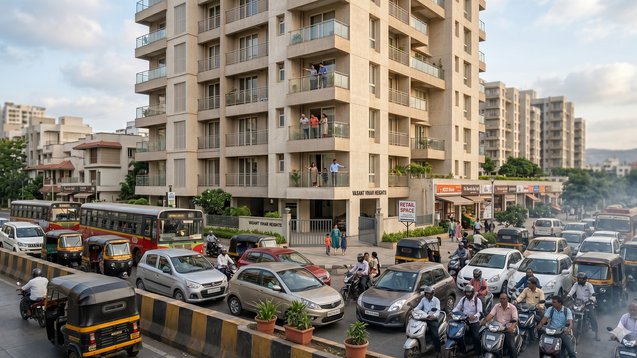
How Traffic Patterns Can Ruin an Otherwise Perfect Property
Introduction
The search for the ideal home leads to an apartment which offers both space and affordable pricing and architectural high-quality and an active community atmosphere. The situation seems to meet all requirements according to documentation. The first few weeks after you move to your new home bring about the situation which includes continuous vehicle horn sounds and street gridlock during peak times and extended travel times and the daily struggle to drive through packed roadways. Traffic patterns represent a crucial yet often neglected aspect which impacts property purchases throughout India. Buyers need to understand how daily traffic patterns will affect their property value which leads to better decision-making than focusing only on building size and features and cost. Roadways that experience persistent gridlock will quickly diminish the attractiveness of a well-planned residence. The situation affects all cities throughout India. Traffic congestion in Mumbai and Bengaluru and Delhi NCR results in decreased property demand and extended commute times for residents of these Tier 1 metropolitan areas. The urban expansion in Pune and Indore and Ahmedabad leads to increased traffic problems which those cities face. The development of new infrastructure in Tier 3 cities brings about different traffic issues. Property Aaj (https://www.propertyaaj.com) offers buyers the ability to evaluate property listings according to their amenities and pricing and transportation options. Property values require buyers to understand traffic patterns because this knowledge determines whether they make good investments or future problems. The study of traffic patterns shows how they impact property selection while their omission leads to a perfect house turning into a home which creates long-lasting regret.
Why Traffic Patterns Matter More Than Buyers Realize
Traffic movement creates problems which extend beyond mere difficulties. The situation impacts all aspects of life because it creates stress levels that affect individual safety while producing noise pollution which leads to decreased property values. Many buyers assume that being close to a main road is always beneficial. Main roads offer direct access to multiple destinations which should make them valuable. The answer is yes according to theoretical understanding. The actual situation of high-traffic corridors generates persistent noise along with environmental pollution and unpredictable travel times. A hypothetical buyer from Bengaluru purchases an apartment close to a major IT corridor. The location seems perfect because it is close to office hubs. The road becomes a bottleneck during peak hours because vehicles cannot move forward. The place which should provide easy access becomes a location which people find difficult to reach. Traffic congestion in Tier 1 cities decreases the functional accessibility of important city areas. The rapid development of Tier 2 cities creates new neighbourhoods which experience unexpected traffic problems because the street network fails to keep up with development. New commercial developments in smaller cities can produce intense traffic patterns which disturb the quietness of nearby residential neighbourhoods. Real-estate buyers who have experience now examine current traffic conditions along with road usage limits before they choose their properties. Property Aaj (https://www.propertyaaj.com) offers buyers a platform to compare different neighbourhoods but traffic patterns in each area must be studied for proper research.
The Hidden Cost of Daily Commutes
Commute durations depend on traffic conditions which represent a major element that affects how people value their properties. During peak travel times a 3 to 5 kilometer distance difference will extend travel time by 30 to 45 minutes in major metropolitan areas. The expense requires people to change their daily habits which creates a substantial financial burden. People who work at technology centers in Hyderabad's HITEC City and Bengaluru's Outer Ring Road prefer to rent apartments that require longer travel times because these routes provide faster movement. People need more time to travel to a location which appears to be closer on the map because of traffic congestion at street intersections. Tier 2 cities are also experiencing this trend. The cities of Pune and Jaipur are developing new employment centers but traffic jams are becoming more severe in these regions. The commute times in Tier 3 cities remain shorter than in other areas. However, poorly planned intersections or narrow roads can create surprising delays. The real world commute time during peak hours provides buyers two Property Aaj (https://www.propertyaaj.com) assessment properties which reveal insights that maps cannot provide. The real question requires an answer which asks about the time needed to drive to work each day.
Noise Pollution and Public Health Information
Traffic disturbances extend beyond their impact on travel duration. The disturbances affect how people function throughout their daily activities. People who live close to busy streets experience non-stop vehicle sounds from horns and engines and trucks passing through their area. Residents find it increasingly difficult to handle the situation as time progresses. Air pollution represents another environmental hazard. Increased vehicle traffic leads to higher levels of particulate matter which results in lower indoor air quality. The impact of this situation affects families who have both young children and elderly members. The noise and dust from the balcony which faces a busy street make it less attractive after an initial period of excitement. Premium housing projects in Tier 1 cities use soundproofing and elevated setbacks to minimize traffic noise during their construction process. Mid-range developments do not provide access to these particular solutions which require special implementing conditions. Citizens from Tier 2 and Tier 3 cities can find peaceful residential areas although bus terminals and highways and wholesale markets create constant vehicle traffic in certain parts of the city. People who want to buy a property need to check the site at various times throughout the day because this helps them understand actual noise patterns and vehicle traffic levels.
Traffic and Property Value Appreciation
Traffic patterns create hidden effects which directly impact property prices. Properties in areas which have smooth access and reasonable traffic conditions continue to increase in value because people find these locations to be attractive. Market prices in areas which experience constant traffic jams show lower development rates compared to markets which have central yet congested locations. Homebuyers in Mumbai and Delhi NCR now show greater interest in properties which provide access to both metro stations and ring roads that support multiple transportation methods. The areas which receive less traffic than major roadways show better performance than normal traffic routes. Price changes in Tier 2 cities occur because of improvements in both traffic control systems and construction projects. The development of bypass roads and flyovers creates a major impact on property demand throughout specific neighbourhoods. The Property Aaj website (https://www.propertyaaj.com) enables investors to identify profitable locations by analysing planned road construction and upcoming traffic system enhancements.
The Difference Between Connectivity and Congestion
People want connectivity. People want to avoid congestion. Most property advertisements showcase their locations which exist near highways and major intersections. The connection between two locations reaches its peak point when there exists a perfect connection between both yet most people face difficulties because of excessive traffic. An area with strong connections provides various routes which enable drivers to leave and enter the area thus minimizing traffic congestion. The capacity of congested areas to handle traffic depends on a single road or intersection which becomes overloaded during times of heavy traffic. Suburban areas in cities such as Chennai and Gurugram face severe traffic problems because thousands of residents use a single road that connects their neighbourhoods. Balanced connectivity often includes:
Access to arterial roads
Nearby public transport
Alternative commuting routes
Planned infrastructure expansion
Property Aaj (https://www.propertyaaj.com) offers buyers access to property listings which they should evaluate based on the availability of multiple connection options instead of relying on one main traffic pathway.
Rental markets receive direct impact from traffic conditions.
Young professionals and tenants prefer to travel through predictable routes which take less time to reach their destinations. Properties located in areas with smoother traffic flow attract more rental demand. In Tier 1 cities, tenants frequently choose apartments slightly farther from business districts if the commute route is faster. Rental demand in Tier 2 cities concentrates around employment hubs and university campuses. The traffic jams that occur around these regions decrease the desirability of their adjacent residential properties. The traffic conditions in Tier 3 cities tend to remain lower than other areas because their commercial development creates challenges for rental market decisions. Investors using Property Aaj (https://www.propertyaaj.com) to evaluate rental opportunities should consider commute efficiency, not just distance from workplaces. A property that saves tenants 20 minutes of travel each day generates greater rental income.
Traffic Dynamics Experience Changes Through Infrastructure Projects
Traffic patterns experience continuous change because infrastructure projects establish new patterns. The construction of new flyovers and metro lines and bypass roads and ring roads will decrease traffic congestion in these high-traffic areas. Metro rail expansions in Delhi and Bengaluru and Pune have redirected residential demand toward areas with superior public transport access. Many urban centers experience decreased traffic pressure because of expressways and bypass roads. The buyers need to check project status because it can exist in three states which are approved, in construction, or proposed. Developers use real estate marketing to show future infrastructure which will take many years to complete. The website Property Aaj allows users to monitor project progress and evaluate different neighbourhoods yet they need to validate information through their own research. The understanding of future infrastructure developments will enable buyers to select locations which provide benefits throughout the entire period.
Guidance on traffic evaluation needs to be conducted before property acquisition.
Traffic assessment should be part of every property inspection. The buyer needs to visit the property at least three different times which includes morning and evening and late-night times. The study should include vehicle movement patterns and parking conditions and road width measurements. Local residents can provide information about traffic patterns that occur during different times of the day. The navigation applications provide users with historical traffic information which enables them to determine their actual travel duration. The signs that indicate future traffic problems should be examined. The construction of commercial centers and office parks and shopping malls will lead to increased traffic in the area. Property Aaj (https://www.propertyaaj.com) provides real estate research platforms which allow users to compare different locations although direct observation remains highly important. The property appearance in photographs creates an ideal image but actual road conditions in the area determine the quality of the residential experience which people will have.
Conclusion
Indian real estate buyers prioritize three factors which include amenities and pricing and builder reputation. The daily traffic patterns create hidden impacts on residents which become apparent to them only after they enter their new homes. A beautiful home loses its appeal when residents experience daily traffic delays that last for several hours. The combination of noise pollution and commute stress and unpredictable travel times creates a situation where customers who initially bought products become dissatisfied with their purchases. Agents use traffic patterns to evaluate property value in all three city tiers which include Tier 1 and Tier 2 and Tier 3. As urban areas expand and their systems develop better transportation links will become essential to cities while traffic jams will remain a major obstacle. Smart buyers take the time to understand how roads function, how traffic flows during peak hours, and how upcoming infrastructure might change commuting patterns. Through Property Aaj (https://www.propertyaaj.com) buyers can research properties from different areas which helps them choose homes that create their ideal living conditions. In real estate, the right location is not just about proximity. It is about how easily you can move through your city every day.
FAQs
1.Why should traffic patterns matter when buying property?
The existence of traffic patterns creates direct impacts on four different aspects which include commute durations and noise production and environmental contamination and overall convenience. Even a well-designed property can feel frustrating if daily travel becomes difficult. Buyers should always evaluate road congestion and peak-hour traffic conditions before finalizing a property.
2.Is it better to buy property near a highway or main road?
The presence of a nearby highway allows better connectivity to different areas. However, this improvement brings two negative effects which include traffic congestion and environmental contamination through increased noise pollution. The property needs to maintain a distance which prevents ongoing traffic interruptions while still providing easy access to its location.
3. How can buyers check traffic conditions before purchasing property?
Buyers need to observe the area during its busiest times while using navigation applications to study traffic flow and they must interview local residents about their daily travel experiences. The neighbourhood needs to be observed at various times throughout the day to provide accurate understanding of its characteristics.
4. Do traffic patterns affect property prices?
Yes. The property value of a location increases faster when it provides both good transportation links and easy traffic flow solutions. Price growth in central areas slows down because of ongoing traffic congestion problems that affect those neighbourhoods.
5. Do Tier 2 cities experience traffic problems which are equivalent to the traffic problems of metro cities?
The development of Tier 2 cities together with their growing vehicle fleet causes increased traffic problems. The combination of better urban planning methods together with infrastructure development projects enables more efficient handling of current problems than existing solutions for older metro areas.
6. Do infrastructure projects have the potential to enhance traffic conditions in the vicinity of a property?
The answer is affirmative. The construction of new metro lines together with flyovers and bypass roads and expressways will create major traffic improvements. Buyers must first verify the official status of projects before they can depend on those projects for their needs.