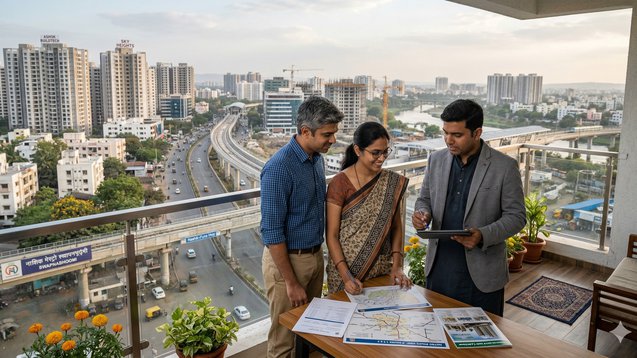
Introduction: Why the Right Property Should Support Your Future Freedom
People consider property ownership to be the highest expression of personal stability. Homeownership provides Indian families with three important advantages because it delivers security, creates pride, and establishes long-term financial security. Property should deliver two essential benefits because it provides people with stable living conditions but should also enable them to attain their desired level of freedom for their entire life. Real estate ownership provides people with complete control because it enables them to make essential life decisions after they acquire their property. The system should allow people to change their careers while they achieve financial independence and move to new places and adopt different lifestyles without facing any difficulties. Many buyers make the mistake of focusing only on immediate needs. They may choose a home close to their current workplace, a property that stretches their budget, or a location that seems attractive today but lacks future growth potential. Over time, such decisions can restrict financial flexibility and lifestyle choices. Imagine a professional who wants to relocate for a better career opportunity but owns a property in a location with weak resale demand. A family needs to pay home loan payments which consume their entire income so they become unable to save money for other investments. These situations illustrate how property can sometimes limit freedom rather than enhance it. Current property market trends show that modern buyers prefer to select properties which provide them with both flexible and adaptable options. The website Property Aaj (https://www.propertyaaj.com) enables buyers to assess different locations while they study ongoing infrastructure projects and choose properties that match their future objectives. Through wise property selection people can change their real estate investments from financial responsibilities into tools which empower their personal liberation.
Understanding the Meaning of Long-Term Freedom in Property Ownership
The concept of permanent ownership rights through property ownership enables individuals to maintain their financial and personal decision-making authority after they acquire real estate. A property should not restrict you to a fixed situation which makes it hard to either move or rent or sell your property. The property should provide you with multiple options to handle different situations throughout your life. A young professional purchases a property for personal use but decides to rent it out when he moves for work. A family will choose to downsize their house or upgrade their living space according to their evolving requirements. High-demand markets enable properties to maintain their flexibility because both buyers and tenants continue to show interest in the properties. The properties situated in regions with poor transportation links face challenges when it comes to selling or renting. The Indian real estate market today functions under rapid changes which create essential connections between permanent ownership rights and three main factors which include location growth and infrastructure development and economic activity. Buyers can evaluate different properties through Property Aaj tools and listings which work with multiple cities to help them find assets that maintain their value and flexibility throughout time.
Location Connectivity and Mobility
The preservation of property flexibility depends on location because it serves as the primary variable which determines property flexibility. A location that offers multiple connection points enables people to reach employment centers and educational facilities and transportation systems without difficulty. The improved connectivity system brings two benefits which include enhanced public accessibility and increased interest in properties. The areas which border metro corridors and highways and airport routes experience continuous buyer and tenant activity. The areas show predictable property value growth and they maintain active rental markets. The business districts in Tier 1 cities which include Bengaluru Mumbai and Delhi NCR create higher property demand for nearby buildings. Suburban areas in Tier 2 cities which include Jaipur Indore and Coimbatore undergo transformation into active residential areas because of ongoing infrastructure development. The buyers who select properties in areas with high connectivity and active economic development create long-term property value because their personal needs will evolve over time.
Choosing Property Types That Offer Flexibility
Different types of properties provide different degrees of freedom and flexibility to their users. Apartments which exist in properly managed residential communities deliver two benefits because they generate high rental demand while requiring fewer maintenance tasks. The properties attract more interest from professionals because they need to work in multiple locations throughout their careers. Independent houses provide their owners both the right to possess land and the capacity to change their property through development. Many Indian cities permit property owners to build extra floors on their plot-based properties which creates opportunities to generate rental income. Investors show increasing interest in plotted developments which exist in developing urban areas. The properties permit construction work to take place at different times while enabling building owners to select their own design choices. The future needs of the property should be examined by buyers who want to assess its potential for multiple uses. The property has the potential to generate income through rental agreements. The property allows for future building expansion through its redevelopment. The property can be transferred to new owners without difficulty when necessary. The answers to these questions confirm that the property functions as an asset which provides benefits to the owner.
Financial Flexibility and Smart Budgeting
Financial planning establishes a foundation which supports long-term freedom. Homebuyers frequently exceed their budget limits when they choose larger homes or select premium locations. The initial satisfaction which comes from taking on multiple loans will turn into ongoing financial difficulties. A property should ideally fit comfortably within a buyer’s financial capacity. The system provides users with savings opportunities and investment options and funds for their daily costs. Financial experts often recommend that home loan payments should not consume the majority of monthly income. The balanced financial structure enables property ownership to maintain its value while supporting all aspects of life. The Property Aaj website (https://www.propertyaaj.com) enables users to compare property prices and discover affordable areas which have potential for future development.
Rental Potential and Passive Income Opportunities
The property which generates rental income establishes permanent financial independence for its owner. The rental income stream enables payment of loans and funding of property maintenance expenses while delivering economic security during times of work transition and moving to new locations. The rental demand in India reaches its highest levels around locations which contain job centers and educational institutions and business districts. The cities which develop their technology industries together with their educational institutions will experience continuous demand from renters. Young professionals demonstrate persistent interest in renting apartments which exist near the IT corridors of Pune and Hyderabad. The properties which exist close to educational institutions successfully draw students and faculty members. The buyers must assess a property to determine its potential for future rental income generation when they evaluate different property options.
Infrastructure Development and Future Growth
The flexibility of properties together with their long-term value depends on the development of infrastructure. The government spends money on metro systems and highways and industrial corridors and smart city projects to create transformative effects across entire regions. Areas that currently appear underdeveloped may become thriving residential and commercial zones within a few years. The transformation process leads to better living conditions which results in increased property demand and higher resale values. The cities of Tier 2 and Tier 3 across India currently experience infrastructure development which creates new chances for buyers who want to invest in properties that will increase their value over time. Property Aaj (https://www.propertyaaj.com) allows buyers to research infrastructure plans and urban development projects which help them find locations that will boost their property value and increase their lifestyle options through future growth.
Avoiding Properties That Limit Future Options
The properties do not provide permanent open access because they protect their entire area. Properties situated beyond economic centers and vital transportation routes and essential service locations will face difficulties in attracting future buyers and tenants. The existence of legal issues and substandard building materials and excessively expensive maintenance needs in a property will restrict its future use. Buyers must conduct thorough assessments of legal documents and builder reputation and neighborhood development plans and property conditions before completing their purchasing decision. The property will continue to be an asset for multiple years if all aspects receive proper analysis.
Lifestyle Independence and Personal Goals
The freedom that lasts through life requires both financial resources and complete personal independence. The ideal property needs to enable people to achieve their professional objectives which include working in different locations and starting businesses and exploring new places and saving for retirement. Professionals who work in a well-connected urban area can choose to move between jobs and locations because the property offers them better access to transportation. Investors can achieve financial independence through real estate properties that experience high rental demand because those properties generate passive income. Real estate ownership should provide people with the freedom to make their own life choices instead of limiting their options. The property becomes an investment when it matches personal objectives. It establishes a basis which will create future possibilities.
Conclusion
The process of selecting property which provides permanent freedom rights needs a future-focused approach. Buyers must look beyond immediate preferences and consider how the property will support flexibility, financial stability, and lifestyle independence over time. The future potential of a property depends on four factors which include location connectivity and rental demand and infrastructure development and property affordability. Successful property buyers use real estate as their primary residence which they can transform into a marketable asset according to their evolving life needs. Through Property Aaj (https://www.propertyaaj.com) buyers can discover properties which provide them with both protective security and flexible security through their research of various options and their examination of authentic listings. The right property should deliver more than basic housing needs because it should enable people to develop their lives through various life changes which result from their personal pursuits.
FAQs
1. What does long-term freedom mean when buying property?
The concept of long-term freedom establishes a property selection process which enables future movement decisions through different methods of property use which include relocation and renting and selling and property improvements.
2. Why is location important for maintaining property flexibility?
Properties situated in areas with good transportation links and advanced building networks and active business operations tend to maintain continuous demand from buyers and tenants which simplifies their selling or renting process.
3. Can rental income improve financial freedom?
Rental income serves three financial purposes which include backing home loan expenses and creating ongoing income and helping people who experience job transitions or need to move.
4. Are Tier 2 cities good options for flexible property investments?
The rising infrastructure development in several Tier 2 cities together with their affordable property costs creates an attractive opportunity for buyers who prefer properties that will maintain value while they acquire their future investment needs.
5. How can buyers avoid restrictive property decisions?
Buyers should research location development, infrastructure projects, legal documentation, and rental demand before finalizing a property purchase.
6. Where can buyers explore property options that support long-term freedom?
Buyers can compare verified listings, analyze locations, and evaluate property opportunities across India using Property Aaj (https://www.propertyaaj.com).
Read more about property matters with our specialists and browse the latest property listings on Property Aaj. Download the app from the Play Store and App Store now for easy buying, selling, and renting!