Introduction
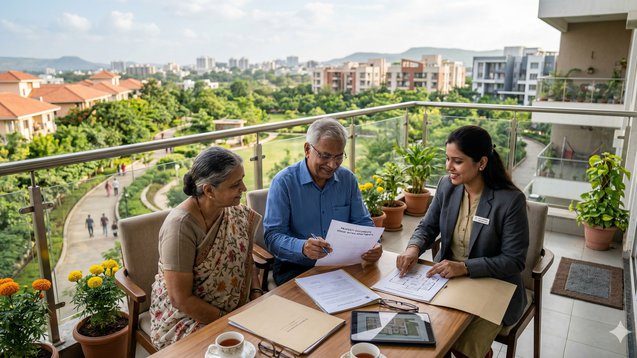
People imagine retirement in different ways because it represents a distinct life stage. Some people visualize retirement as a tranquil home that features lush vegetation, but others want to remain near urban centers which offer medical facilities, shopping options, and social interaction. The choice of property determines your retirement lifestyle according to your vision. In India, more people are beginning to treat real estate not just as a place to live, but as a long-term retirement strategy. The process of acquiring property for retirement purposes presents a challenge which differs from the experience of purchasing your initial residential property. Your work demands require you to choose a location that provides easy access to workplaces and business centers. Your priorities change after you stop working. People give more emphasis to comfort and accessibility and maintenance expenses and healthcare access and financial security. Retired people throughout India are investigating various types of housing. Some people choose to live in quiet suburban apartments which are located in Tier 1 cities like Bengaluru or Pune, while others prefer to move to the more tranquil pace of life which exists in Tier 2 cities like Indore or Coimbatore. Even Tier 3 towns are gaining attention because of their affordability and peaceful environments. Property Aaj (https://www.propertyaaj.com) provides buyers with a tool to assess retirement properties in various locations throughout India by delivering verified property listings and neighborhood information and property valuation data. Before making a property selection, people need to comprehend which factors determine whether a house fulfills retirement living requirements.
Understanding What Retirement Living Really Means
The process of selecting a property for retirement requires you to first determine your personal definition of retirement living. Most people believe that retirement only requires them to move to a more peaceful location but the actual situation contains more complex details. Some people choose to enter retirement by moving from their spacious family home into a smaller apartment. The second option requires them to move to another city where expenses are more affordable. Some retirees choose to live in busy city areas because they want to remain close to their offspring and grandchildren. In Mumbai and Delhi, which are classified as Tier 1 cities, retirees choose to reside in gated apartment communities that provide them with professional security services and building maintenance. The developments include walking paths and community halls and medical facilities which enable residents to experience convenience throughout their daily activities. Retirees in Tier 2 cities face affordable property prices which enable them to buy larger homes or villas without financial difficulties. The third option which requires residents to move to Tier 3 towns provides residents with a more peaceful existence but their healthcare services do not reach metro city levels. The key element requires you to match your retirement lifestyle expectations with the specific location and property type that you select.
Location Matters More Than Ever After Retirement
The selection of a retirement property requires more attention to location than any other factor. People need to move according to their jobs during their working years but they can freely choose their destinations after they retire. The ideal retirement location should offer both peaceful areas and easy access to essential services. The ability to reach hospitals and pharmacies and grocery stores and public transport facilities provides tremendous benefits for everyday life. Retirees in Tier 1 cities prefer to live in areas that provide easy access to healthcare services because they want to stay close to doctors and medical facilities. The neighborhoods around main hospitals in Bengaluru and Hyderabad and Chennai draw many senior residents to their areas. The retirement market in Tier 2 cities such as Jaipur and Lucknow and Kochi is expanding because these cities provide decent healthcare services at affordable prices that are lower than those in metropolitan areas. Some retirees choose to live in Tier 3 towns or semi-urban areas because these locations have better air quality and slower-paced daily lifestyles. Property Aaj (https://www.propertyaaj.com) enables buyers to research various cities while assessing neighborhoods through accessibility and amenities and their potential for long-term residential use before making their choice.
Choosing Between Apartments, Villas, and Senior Communities
Your retirement lifestyle will be profoundly affected by the property type which you decide to purchase. The various housing options provide different benefits which depend on your personal needs and your available financial resources. Retirees living in urban India prefer apartments as their primary housing option. The security features and elevator access and maintenance services and common areas of modern apartment complexes enable residents to perform their daily activities with greater convenience. The apartment system provides a suitable option for people who wish to avoid the responsibility of home repairs and lawn maintenance. Retirees who want to maintain their personal space select villas or independent houses as their preferred housing option. This option is more common in Tier 2 and Tier 3 cities where land prices are still affordable. The need for continuous upkeep and protection measures of independent homes presents difficulties which some retirees will be unable to manage as they age. Retirement communities which exclusively serve older adults are becoming a more popular community development trend. The developments provide medical treatment facilities and recreational programs and emergency response capabilities. Property Aaj (https://www.propertyaaj.com) provides buyers with the ability to assess multiple housing options which they can use to identify the property type that matches their retirement living needs.
Managing Long-Term Property Costs
The most important element of the retirement property selection process which people usually ignore is their need for long-term expense control. Retirees rely on fixed income sources which include pensions and savings and investments whereas working professionals experience regular salary increments. The expenses for maintenance and property taxes and society fees will continue to rise because of time progression. A large independent house may initially appear attractive but ongoing repair expenses could become burdensome. Residents of well-organized residential societies present nonresidential apartments which maintain stable monthly maintenance expenses. The fees used to fund security services and common area upkeep and water supply systems and landscaping activities. The total purchase expense will be affected by the different stamp duty and registration charges which exist between Indian states. Some states provide lower stamp duty rates for senior citizens and women buyers which helps them purchase property at reduced expenses. The total ownership costs between different cities and projects become visible to retirees through Property Aaj (https://www.propertyaaj.com) which enables them to make financially sustainable property decisions.
Healthcare Access Should Be a Top Priority
Healthcare access becomes a crucial consideration when selecting property for retirement. People who currently maintain good health should prepare for future medical requirements. Emergency situations can receive fast medical care when people live near dependable hospitals and doctors. Retirees prefer to live in Tier 1 cities because these areas provide access to advanced healthcare facilities which exist in India's main metropolitan areas. Several Tier 2 cities have experienced significant advancements in their healthcare systems during the last ten years. The cities of Ahmedabad and Chandigarh and Mysuru now contain hospitals which provide advanced medical services and specialized treatment centers. Residents of Tier 3 towns face challenges in accessing healthcare services because their hospitals only provide basic medical care which forces them to seek treatment in larger cities. The choice of a property which enables quick access to hospitals delivers security and comfort to both retirees and their family members.
Rental Income Can Strengthen Retirement Finances
The retirement property market serves as a source of comfort and financial security for most investors. The purpose of this investment strategy leads retirees to purchase properties which create active rental yield. The rental income which retirees receive enables them to pay for their daily needs and medical expenses and their travel plans. Properties adjacent to IT parks and universities and commercial areas maintain constant demand from tenants. The rental market in Tier 1 cities experiences strong demand while property values remain high. The rental market in Tier 2 cities provides a suitable option because it combines affordable property costs with increasing demand for rentals. The rental markets in Pune and Hyderabad and Noida function effectively because they provide employment opportunities to residents. The rental income in Tier 3 towns proves to be lower than other areas yet requires less capital to enter the market. The Property Aaj website (https://www.propertyaaj.com) enables retirees to assess rental patterns and investment possibilities which help them identify properties that generate enduring financial security.
Thinking About Future Mobility and Accessibility
People who buy retirement homes only think about mobility and accessibility as practical needs because they do not consider these features. A property that seems comfortable today should remain convenient even decades later. Elderly people find increasing value in building features that include elevators and wide hallways and step-free entrances and accessible bathrooms. Senior residents show a preference for apartments that exist on lower floors or buildings that provide dependable lift systems. Gated communities provide residents with security personnel and medical emergency services and transportation assistance which serve as additional benefits. Developers now create senior-friendly home designs for their projects which they implement in Tier 1 and Tier 2 developments. These design elements make daily living easier and reduce the risk of accidents. Retirees can establish long-term home comfort and safety through proper property selection which requires them to pay attention to specific details.
Balancing Emotional and Financial Decisions
People buy property for their retirement because of both financial and emotional reasons. People choose to live in their hometown which provides social connections while others choose to discover new cities. A person who worked in Mumbai for many years might decide to spend his retirement years in Goa or Dehradun which offers him a peaceful existence. A different person may choose to return to their hometown in order to maintain proximity to their family members. People do not have one answer which applies to all situations. The perfect retirement home exists when it meets all emotional needs and essential requirements of the person. Buyers should evaluate their ability to enjoy the property for 15 to 20 years before making a purchase decision. The choice you make today will determine how much better your retirement experience will be in the future.
Conclusion
The process of choosing retirement property needs to be conducted through research because it requires people to think about their future needs. Retirement property choices require people to assess their lifestyle needs and their ability to access healthcare services and their capacity to maintain financial stability and their experience of living in different communities. The country of India provides numerous retirement-friendly destinations that exist throughout its Tier 1 Tier 2 and Tier 3 urban centers. People in metro areas enjoy top-notch medical services and transportation networks, but those who choose to live in smaller towns enjoy lower living costs and tranquil environments. The two options present different benefits which people should assess based on their own needs. Before buying property, retirees need to assess three factors which include property type and maintenance expenses and rental income and property access. People need to purchase a house, but their actual purpose is to build a space which enables them to experience a complete retirement experience. Property Aaj (https://www.propertyaaj.com) enables users to research verified listings and perform city comparisons to find properties that meet their financial requirements and personal goals. The right retirement property choice provides people with security and comfort and independence which lasts for multiple decades, making it one of their most vital life investments.
FAQs
1. What type of property is best for retirement in India?
The most suitable option for retirement housing in India is gated community apartments because they deliver building protection together with essential upkeep work and accessible on-site facilities. The retired population in Tier 2 and Tier 3 cities should choose villas or independent houses because these homes provide them with needed space and private time.
2. Should retirees buy property in Tier 1 or Tier 2 cities?
Tier 1 cities provide superior healthcare services together with advanced infrastructure systems, but their higher costs make them less accessible to residents. The combination of affordable pricing together with excellent amenities in Tier 2 cities makes these locations suitable for retirement, which attracts many homebuyers to these areas.
3. Is rental income important when choosing retirement property?
Retirees achieve greater financial protection through rental income during their retirement years. Properties situated close to commercial centers and universities and job markets attract reliable tenants who provide steady occupancy.
4. How important is healthcare access when buying retirement property?
Healthcare facilities need to exist within close distance to reach essential medical services. People who reside close to medical facilities can access emergency help while gaining protection for their long-term safety requirements.
5. Are senior living communities becoming popular in India?
The demand for senior living communities has increased in India because of their expanding presence. The development provides medical services and recreational spaces together with social interaction areas that cater specifically to retired individuals.
6. Where can retirees compare retirement-friendly properties across India?
The Property Aaj platform (https://www.propertyaaj.com) enables buyers to access verified property listings while they evaluate different cities and property selections throughout India.
Read more about property matters with our specialists and browse the latest property listings on Property Aaj. Download the app from the Play Store and App Store now for easy buying, selling, and renting!