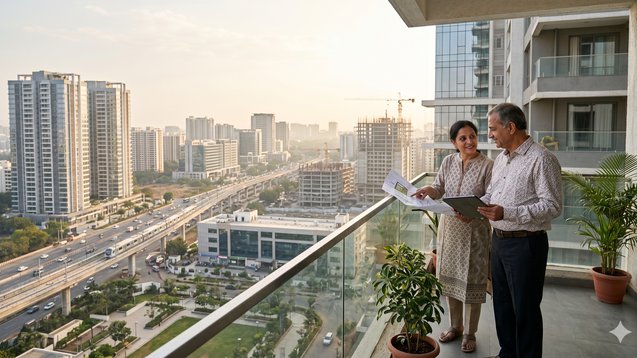
Choosing Property That Will Stay Desirable in the Future
Introduction
The property market in real estate brings one essential query which determines your investment decision between becoming a smart investment or suffering through perpetual regret. The question seeks to determine the future attractiveness of the property for the next 10 to 20 years. Indian buyers demonstrate their purchasing behaviour through their emphasis on three elements which currently attract their attention. The process of creating desirability requires time to develop while its existence will persist until it gets extinguished. The process of evolution emerges through two elements which include infrastructure development and the changing buyer needs in the market and the requirements of liveability. Think about older premium areas in cities like Mumbai or Chennai. The area keeps its high demand because people can access various public services which exist between its older structures. The Outer suburbs which used to attract visitors have now become unattractive because of their existing development and excessive population growth. The property assessment process requires clear objectives which apply to all types of cities from Tier 1 metropolitan areas to developing Tier 2 cities and Tier 3 towns. The guide will demonstrate to you actual elements that establish lasting value for Indian real estate properties which will lead to your property maintaining worth and staying in demand.
What Makes a Property Really Attractive to People Over Time
A property is not just attractive because it is fancy. It is attractive because people keep wanting it. A property that people want to buy or rent is one that they will still prefer when new properties are available. In cities people like properties that are in a good location have good transportation and are close to where they work. In cities people like properties that are near new roads and shops and are not too expensive. In smaller towns people like properties that are near their family and friends and are easy to get to. Let us look at two properties.
One is a fancy apartment that is far away from everything else.
The other is a flat in a nice area with good transportation.
After ten years the second flat is more likely to be attractive to people. This is because what people want in a property changes over time. People start to care about how easy it is to get to work and school and how convenient the property is, rather than just how fancy it is. When you look at properties on href="https://www.propertyaaj.com">Property Aaj</a> you will see that the properties that people always want to buy or rent have some things in common. They are in locations and are easy to use. What makes a property attractive is not about being impressive but about being useful and relevant to people.
Location Fundamentals That Never Go Out of Style
Certain location factors maintain their validity throughout all historical periods despite changing trends. The need for public facilities will always determine property demand which exists within proximity to workplaces and schools and hospitals and transport hubs. In Bengaluru and Delhi NCR properties located near metro lines and business districts maintain their value better than properties situated at greater distances from these areas. The city center and new commercial areas in Indore and Surat provide residents with their most desirable locations. The economic development of Tier 3 towns depends entirely on their connection to central areas and their access to public facilities. Ask yourself:
Does this location provide present-day convenience which will continue to exist in the future?
Does the site provide multiple entry points or does it have a single entry point?
The market always shows high demand for properties which minimize daily activities like traveling and running errands and handling urgent situations. The experienced investors on Property Aaj who use Property Aaj as their investment guide make their decisions based on essential fundamental factors because this choice represents the best investment strategy.
Infrastructure Development: The Silent Value Driver
Future desirability depends on infrastructure because it represents one of the most important elements. The expansion of metro systems together with expressway construction and IT park development and commercial facility establishment will completely alter local areas. Infrastructure expansion has turned areas that used to be considered outskirts of Hyderabad and Pune into important parts of the city. The development process needs to be managed correctly because it can result in negative consequences. The community experiences multiple problems that include congestion and water shortages and decreased quality of life because of unplanned development. Infrastructure development becomes a vital factor for Tier 2 cities when the process follows proper design standards and achieves uniform execution. Tier 3 towns may see slower but steadier improvements. Before making an investment, please verify the following information:
The current development initiatives from the government
The upgrades planned for roadways and transportation systems
The public infrastructure improvements which include water systems and drainage networks and electrical supply systems. The value of a property located in a developing area will increase over time.
Quality of Construction and Project Longevity
The condition of a property is really important when it comes to how it will age. A property with construction quality will not stay nice for long. It will have a lot of maintenance issues and problems like leakage and structural damage which can make it hard to sell even if it is in a location.
In cities like Tier 1 cities good developers usually build high quality properties but they are expensive.
In cities like Tier 2 cities you will find some great projects and some average ones.
In smaller towns like Tier 3 towns you have to be very careful and do your research.
You should look for the Quality of Construction and Project Longevity of a property. Check the following things:
Builder reputation
Construction materials
Maintenance planning
You should also think about how the building will look after 10 to 15 years.
Will it still look nice?
Well maintained?
People who use Property Aaj often look for projects by developers because they want a property that will last. A property that is built well will always be popular. Attract people's attention. The Quality of Construction and Project Longevity of a property is very important because a built property will continue to be nice and attract interest for a long time.
The Architectural Design of Spaces Fulfils Contemporary Requirements of Modern Living
The present-day experience of modernity will become outdated within the next 24 hours. The long-term value of a space decreases because it contains compact kitchens and limited storage and unsafe airflow systems. The practical design of a home which provides adequate airflow and daylight access and adaptable room options maintains its value throughout different eras. All metropolitan areas require their citizens to utilize available space in an efficient manner. People who buy homes in Tier 2 cities usually choose properties that offer them more space and practical home designs. The residential areas of Tier 3 towns provide residents with more space but their urban development plans do not achieve optimal efficiency.
Think ahead:
Will this layout suit future work-from-home needs?
Can rooms be repurposed easily?
A well-designed home adapts to changing lifestyles, keeping it desirable over time.
Amenities That Add Value Are Really Important
Amenities can make a place more desirable. Only if people actually use them. A swimming pool or clubhouse might sound like a thing but what really matters is if people can use it when they want to. Things like parks, walking tracks, security systems and parking facilities are really useful. Do not go out of style. They are better than things that sound fancy. Nobody uses it. In cities people expect to have really nice amenities. In cities these amenities are becoming normal. Smaller towns are starting to have them now. Do not get distracted by things like:
Overhyped luxury features
Facilities that are hard to maintain or barely used
Instead think about the amenities that make life easier every day. A property, with amenities that're useful and easy to take care of will stay nice for a long time.
Rental Demand and Investment Attractiveness
Desirability of a property directly impacts its rental demand. The value of a property which tenants actively search for will continue to decrease. Rental demand remains steady in areas that are located near IT hubs and universities and commercial centers. The rental markets in metropolitan areas maintain strong performance but face intense competition. Job growth in Tier 2 cities has created increased demand for employment opportunities. Tier 3 towns may have limited rental opportunities. The strong demand for rentals provides benefits which include:
Steady income potential
Easier resale
Lower vacancy risk
The personal use of your purchase provides you with future flexibility through this element. Platforms like Property Aaj can help you identify areas with strong rental trends.
Buyer Psychology and Market Trends
Understanding how buyer preferences evolve is crucial. Today buyers prioritize three essential factors which are connectivity and security and lifestyle convenience. Tomorrow's buyers will prioritize sustainability and smart home technology and green spaces. People in Tier 1 cities generally purchase products based on their lifestyle choices. Tier 2 cities are experiencing rapid advancements. Tier 3 towns maintain their focus on practical solutions that offer affordable options.
Ask yourself:
Will future buyers be interested in this property?
Does it align with evolving trends?
A property that matches long-term buyer psychology will remain desirable even as markets shift. The property will continue to attract buyers throughout future market transitions because it fulfils their psychological needs.
Legal Clarity and Regulatory Strength
Legal security has an impact on how much people want a property. A property with titles and all the proper approvals and RERA registration is something that buyers and investors really like. The way RERA is implemented is different, in states. For example Maharashtra and Karnataka have strong enforcement of RERA.
Some states are still working on making things more transparent.
The cost of stamp duty and registration also varies, which affects how affordable a property is.
The following items must be verified before proceeding with the work:
RERA status
Land ownership documents
Builder approvals
Using trusted platforms like Property Aaj helps you reduce legal risks while investing in properties which have been verified. A legally sound property remains easier to sell and more desirable.
Environmental Quality and Liveability
Environmental factors have grown more important for urban development in growing cities. The three factors of air quality, water availability, and noise levels, together with green spaces, determine how long people will stay in a location. People will start to avoid areas which currently have poor environmental conditions. Delhi experiences pollution-related effects on its demand patterns. Coastal cities face flooding concerns. Tier 2 and Tier 3 cities often have better air quality, but they lack proper waste management systems.
Search for:
Areas with abundant vegetation
Areas with dependable water resources
Areas with minimal sound disturbances
A healthy living environment enhances both comfort and long-term desirability.
Conclusion
The process of selecting a future-proof property requires more than examining its base characteristics. The process requires understanding permanent values instead of pursuing temporary trends. The combination of strong location fundamentals with reliable infrastructure and quality construction and practical layouts and legal clarity results in continuous market demand. The entire country of India maintains these standards in both major metropolitan areas and smaller urban centers. Short-term excitement should not determine your choice about which option to select for extended use. The process requires you to visit the location and investigate the area while you think about how the property will develop in future years. A property achieves desirability through its capacity to remain attractive to buyers while maintaining its value and meeting new customer needs during the post-purchase period. You will achieve success by using that standard as your reference point.
FAQs
1. What makes a property future-proof in India?
A future-proof property combines strong location, good infrastructure, quality construction, and adaptability to changing lifestyle needs. The factors create continuous property demand throughout the future time period.
2. Is it better to invest in developing areas or established ones?
Both investment options provide positive investment benefits. Established areas provide investors with reliable property value protection while developing areas deliver greater property value growth potential. Your choice should be based on the level of risk that you are willing to accept.
3. How important is rental demand for long-term desirability?
It is very important. The answer shows extremely high importance because strong rental demand enables property owners to generate future income and sell their property at later times.
4. Do amenities impact long-term desirability?
Yes, but only practical ones. Practical amenities create value for users but decorative features lose their value over time.
5. How does RERA affect property desirability?
The RERA system establishes transparent regulations which provide legal protection for properties, thus making them more appealing to buyers while decreasing investment risks.
6. Can Tier 2 cities offer better future potential than metros?
The statement holds true for multiple situations. The combination of decreased entry expenses and enhanced infrastructure and increased employment opportunities establishes Tier 2 cities as strong contenders for future development.