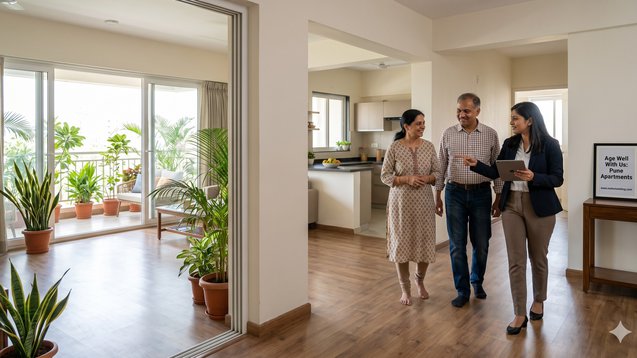
Choosing Property That Will Age Well With You
Introduction
People commonly treat homeownership as a major life accomplishment which they can achieve and celebrate before moving into their new house. But here’s a thought that many buyers overlook: your life will change and your home needs to keep up with those changes. What works perfectly in your 30s may not feel as convenient in your 50s. The concept of selecting a property which maintains its value throughout time exists to address this situation. The rapidly developing Indian real estate market requires people to select homes which will remain suitable for future needs as urban areas grow and new living patterns emerge. You need to consider present requirements and upcoming developments when making your purchasing decision for either a bustling Mumbai metro area or a developing Indore Tier 2 city or a peaceful Tier 3 town. Think about it:
will your home still be comfortable when mobility becomes limited?
Will your neighbourhood keep its importance between your children reaching adulthood and them moving out of the house?
Will the infrastructure experience improvement or decline throughout the years?
This guide will help you look beyond immediate attraction and focus on long-term practicality. A home which ages well retains its financial worth while continuing to provide comfort and flexible living space to the owner throughout their entire lifetime.
The reason why home future-proofing has gained increased importance today.
Indian homebuyers show better market knowledge yet their understanding of home sustainability remains limited. Homebuyers make decisions based on their current budget restrictions and existing lifestyle requirements because they fail to forecast their future needs. A young IT professional from Bengaluru purchases a studio apartment located near the office building. The system operates perfectly in the present time. The system will show different results after five years when they begin their family. The work-from-home arrangement will become a permanent situation which causes them to require additional space. Homebuyers in Tier 1 cities accept smaller living areas because of high property values. Homebuyers in Tier 2 cities choose larger properties but they fail to consider upcoming infrastructure developments. The residents of Tier 3 towns choose affordable options which limit their future ability to sell or rent properties. Future-proofing requires people to examine who needs to answer particular questions which make them feel uncomfortable.
Will this layout work for different life stages?
Can this home adapt to changing needs?
Is the surrounding area evolving in the right direction?
A home that ages well is not about luxury it’s about adaptability. Your investment and daily life protection depends on your system's ability to adapt.
Location Stability: The Foundation of Long-Term Comfort
The expression "location is everything" presents a particular meaning which concerns the stability of a site rather than its current popularity. A location that ages well is one that remains relevant over time. The existing locations in Mumbai and Delhi NCR maintain their attractiveness because of their established infrastructure system which drives the development of new areas. The residential areas of Ahmedabad and Coimbatore select particular sections to develop into permanent living spaces. The current situation examines a suburban area which experiences rapid development. The area shows potential for development through its present infrastructure. The area will develop traffic congestion problems because its infrastructure cannot support its current growth rate. Buying a property in a well-connected area with planned metro expansion differs from purchasing an isolated project which developers promote as a future hotspot. The platform Property Aaj enables users to monitor local area trends which help them make informed decisions instead of following emerging trends. The home location establishes permanent benefits which include comfort and security and property value that remain intact for many years.
Design and Layout: Thinking Beyond the Present
The first appearance of modern apartments shows great architectural value. The question arises about which apartments have permanent design features that enable people to use them indefinitely. The combination of open spaces and reduced storage and small kitchen areas satisfies young buyers but their future requirements will bring different demands. People require storage space as their needs grow. People need distinct areas to work and to unwind outside their work hours. Daily life requires you to ascend three staircases as your 60th birthday approaches because you selected an elevator-free building. You need to find a way to live in a house that has both limited door width and no air circulation throughout the space. Developers in Tier 1 cities present intelligent building designs which allow construction within existing space limitations. Tier 2 cities provide better building designs which cost less than their actual value. Tier 3 towns provide more extensive houses but their present-day design lacks current architectural practices. Look for:
Lift access
Spacious layouts with flexibility
Good ventilation and natural light
Scope for modification
A well-designed home doesn’t just look good it evolves with you.
Infrastructure Growth and Accessibility Over Time
The development of infrastructure systems throughout history shows how accessibility has improved. The ability of a property to remain valuable throughout time depends on the development of its nearby infrastructure system. The present-day rapid growth of Hyderabad and Pune stems from the establishment of IT parks and highways and metro lines which connect previously remote areas. The whole territory does not follow this development pattern which applies to specific regions. The expansion of infrastructure systems in Tier 2 cities shows multiple patterns of development. Some regions experience economic growth while other regions face economic decline. The growth of Tier 3 towns progresses at a slower rate yet follows a consistent pattern. The property assessment process requires you to examine three elements:
Planned infrastructure projects
Government investment in the area
Connectivity upgrades
The future value of a home situated close to an upcoming expressway and metro line will increase because of its enhanced accessibility. The Property Aaj platform provides you with information about upcoming developments which assists you in making decisions that consider future developments.
Community and Social Ecosystem
A home exists beyond its physical boundaries because it includes the people and their surrounding environment. Your need for community support increases as you progress through different life stages. Your neighbourhood support system provides essential benefits which help you maintain better life quality during your senior years. Gated communities in metropolitan areas create this ecosystem through their shared amenities and planned community events. Traditional neighbourhoods found in Tier 2 cities create strong social connections which bind residents together. Tier 3 towns succeed at this element because their communities maintain close relationships. Consider:
Who lives in the area?
Is it family-friendly?
Are there social spaces like parks or clubs?
Your home remains connected to the community because active residents maintain a balance between their social life and their home time.
Financial Sustainability and Long-Term Affordability
A home that stretches your finances may feel rewarding initially but it can become a burden later In Tier 1 cities high EMIs create financial limitations which restrict people from managing their money In Tier 2 cities better affordability exists but people must evaluate their future income growth prospects The first two costs in Tier 3 towns create affordable entry points which restrict future property value growth. People should consider future results because:
Will your EMI remain manageable?
Are maintenance costs reasonable?
Will the property appreciate enough to justify the investment?
A home that achieves financial sustainability enables you to live your life without experiencing financial worries. Many buyers use Property Aaj to compare pricing trends and choose options that balance cost with long-term value. .
Rental Potential and Exit Strategy
People cannot predict their future needs because life brings unexpected developments which force them to change their living situation or home property or business assets. The best design for a house needs to maintain its original structure. The best rental properties exist in areas which show high demand for rental units according to their proximity to IT hubs and universities and commercial centers. The rental markets in Tier 1 cities show high demand because of their competitive nature. The new job hubs in Tier 2 cities create higher demand for their rental market. The rental market in Tier 3 towns appears to have restricted availability. A good exit strategy ensures:
The process of reselling property becomes simple for everyone involved
Property owners will receive steady rental payments
Investors experience reduced chances of losing money
Permanent residence needs no special access because it provides people with complete control over their lives.
Legal Security and Regulatory Factors
Long-term home selection requires unambiguous legal information. India's real estate market operates under different regulations which result in distinct property development processes across its states. RERA implementation, stamp duty rates, and approval processes differ significantly. For example:
Maharashtra and Karnataka have strong RERA enforcement
Some states still face delays in project approvals
Stamp duty ranges from 5% to 8% which affects total expenses
Always verify:
Clear land titles
RERA registration
Builder credibility
A legally secure property ensures that your investment remains protected over time. A reliable platform such as Property Aaj enables you to search for validated properties while it decreases your legal exposure.
Environmental Quality and Health Considerations
Your health depends more on your environment as you age. The essential elements of air quality and noise levels and green space accessibility become critical requirements. The major problem of pollution affects cities such as Delhi. Coastal cities experience both high humidity levels and flooding dangers. Cities in Tier 2 and Tier 3 provide cleaner environments but they fail to establish proper waste management systems. Look for:
Green surroundings
Low noise pollution
Reliable water supply
A healthy environment contributes directly to long-term comfort and well-being.
Conclusion
Choosing a property that ages well with you is about thinking ahead not just financially, but personally. Home selection requires you to choose a property which will present benefits throughout your life changes while maintaining your health needs and urban development requirements. Across India, the right choice will look different for each buyer. The basic principles of stable location and practical design and strong infrastructure and financial sustainability continue to guide appropriate design decisions. You should take time to complete the entire procedure. You should explore the sites while you raise your inquiries and visualize your future existence there across all your upcoming decades. A property maintains its value through time because it provides benefits which enhance your security and comfort during every passing moment.
FAQs
1. What does it mean for a property to “age well”?
The property maintains its comfortable and functional and valuable state throughout the passage of time. The system evolves with your developing needs and various life stages which you will experience throughout your lifetime.
2. Should I prioritize location or property size for long-term living?
The ideal solution requires equal attention to both aspects. The primary advantage of a good location exceeds the benefits of larger property dimensions because it provides better access and higher resale value and more enduring convenience.
3. Are Tier 2 cities better for long-term living compared to metros?
The answer is yes because Tier 2 cities provide better living conditions through their affordable housing and their developing infrastructure and their ability to create peaceful environments.
4. How important is rental potential if I plan to live in the property
The system provides you with different choices because it offers you multiple options for renting your property. The system provides you with different choices because it offers you multiple options for renting your property.
5. What legal checks should I prioritize?
The RERA registration process and valid land ownership documents and builder track record should be the primary requirements for your investment assessment. The three elements protect your investment from risks and legal conflicts which might arise.
6. Can older properties age well, or should I only consider new ones?
In prime locations with high construction quality older properties can maintain their value over time. Property owners must take into account the costs associated with maintenance and renovation work.