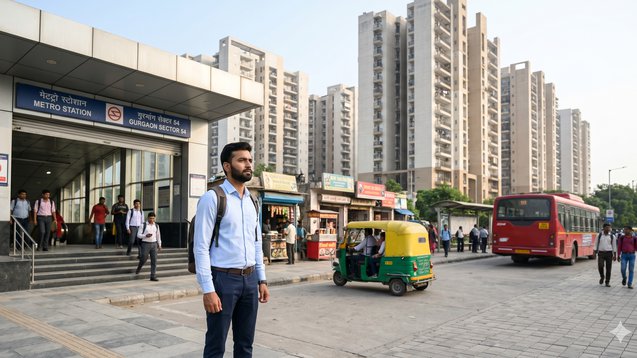
How Public Transportation Access Impacts Daily Life
Introduction: The Hidden Factor That Shapes Everyday Living
Property evaluations start with discussions about property pricing and square footage and available facilities and builder trustworthiness. Yet one factor quietly influences daily life more than almost anything else: access to public transportation. Imagine two identical apartments. One apartment stands within walking distance of both a metro station and a major bus corridor. The other apartment exists in a remote area of a developing suburb which requires residents to drive long distances to access public transport. The two homes show identical appearances on their documents. The two homes provide different living experiences which their appearance would suggest. The past ten years have shown increasing recognition of public transport connectivity as an essential element for urban development in India. City development now follows new patterns because metro systems and bus rapid transit networks and suburban railways and regional transportation networks have expanded their reach. In major metros like Delhi, Mumbai, and Bengaluru, proximity to transit corridors has become a major real estate driver. Tier-2 cities such as Pune, Ahmedabad, Kochi, and Lucknow are fully developing their metro and bus systems while Tier-3 towns increasingly use their highway and railway networks. Public transport systems which operate safely and reliably determine how homebuyers and investors will judge a property which will affect its value and rental income and market price performance throughout its existence. The website Property Aaj enables users to evaluate different locations in India through their comparison functionality which shows how transportation access affects everyday activities in the area. The ideal house for you extends beyond your neighbourhood because it determines how accessible different locations become.
Commute Time: The Most Immediate Impact on Daily Life
The first and most obvious influence of public transportation access is commute time. For millions of Indians, daily travel to workplaces, schools, or universities can take several hours. People who live near dependable public transportation systems experience better life quality because their transportation problems decrease substantially. Delhi and Mumbai residents use metro lines and suburban railways to reach distant locations without needing to live in expensive central city areas. Many professionals deliberately choose homes near metro stations even if property prices are slightly higher. Tier-2 cities are seeing similar shifts. Upcoming metro corridors in Lucknow, Pune, and Nagpur are already shaping residential development patterns in those cities. People in Tier-3 towns lack advanced transit systems yet use railway stations and intercity buses and highway connections to travel between locations. Many property consultants use the daily commute threshold as a practical guideline to assess property value. People who can access their workplace through public transportation within 30 to 40 minutes tend to have better happiness about their residential situation. The buyers who search through Property Aaj listings use transit proximity to narrow down their neighbourhood selection process. Time saved in commuting directly improves quality of life.
Impact on Property Prices and Real Estate Demand
The existence of public transportation systems boosts property value through their ability to enhance travel accessibility. The presence of metro stations and bus corridors and major transit hubs enables buyers to recognize that homes will deliver them future benefits at higher prices. The impact is particularly evident in Tier-1 cities. The past ten years have seen areas along metro lines in Delhi NCR and Mumbai experience significant price increases. The expansion of transit systems transformed areas that were once seen as distant suburbs into desirable residential neighbourhoods. Tier-2 cities are following the same trend. The metro projects in Ahmedabad and Kochi and Lucknow have increased demand for residential properties in their surrounding areas. The value of properties located close to railway stations and highway intersections and future bus terminals increases in Tier-3 towns. The premium people pay for transit accessibility shows different price points to different locations. The price difference between metro-connected apartments and suburban apartments in Bengaluru shows significant cost variation however smaller cities display more moderate price differences. Investors using transit proximity as their evaluation method on Property Aaj will find that this element indicates properties which will increase in value over time.
Rental Demand and Tenant Preferences
The presence of public transportation systems has a significant impact on rental market conditions. Young professionals and students who make up the tenant group usually choose to live in areas which provide them with easy transportation access instead of complete luxury services. People value their ability to travel between their job sites and their educational centers more than they value access to a pool and community room. Properties within Tier-1 cities which exist close to metro stations and suburban rail links receive continuous interest from renters. Well-connected smaller apartments outperform larger suburban houses which exist in distant areas. Tier-2 cities show similar patterns around IT parks, universities, and commercial hubs where public transport connects residential neighbourhoods. People who want to rent in Tier-3 towns prefer to live close to railway stations and bus depots and educational institutions. Properties with strong transport connections present investors with better rental returns and reduced chances of vacant spaces. The website Property Aaj enables buyers to compare rental rates between different neighbourhoods while transport links provide the most dependable method to forecast tenant demand.
Lifestyle and getting around is much easier when you have good transportation.
Public transportation is not just for commuting to work. It also helps people get around in their lives. People need to go to the store, see a doctor, visit friends and have fun. When they have a way to get around these things are not so hard and do not take as long. In cities people like to use the metro to go out on weekends or at night because they do not have to deal with traffic. In cities people are starting to use buses and ride sharing services that are connected to train stations. In smaller towns being close to a bus stop or train station is still really important if you want to get around easily. Think about a person who lives in a suburb of a big city and has an easy way to get around. They can go visit friends, go to events or explore the city after work without having to worry about driving a way or finding a place to park. People who live in areas that are not well connected have to use their own cars, which takes more time and money. Being able to get around easily makes life a little better in ways you might not even notice. Public transportation, like buses and trains and ride sharing services make lifestyle and everyday mobility much easier.
Public transport corridors usually determine where cities expand their boundaries.
Urban planners build residential and commercial areas according to the location of primary transport networks. The concept exists as transit-oriented development which creates compact walkable neighbourhoods that people can access from their stations. Metro corridors in India have become driving forces which create new residential areas and commercial spaces and office buildings. Developers begin to establish residential developments when a metro line gets declared because they expect demand to grow in the surrounding locations. The first pattern of development already exists in the major cities of Tier-1. Tier-2 cities are rapidly adopting similar development strategies as infrastructure investment increases. Homebuyers will see their properties gain value because of new transit routes which will bring about better infrastructure development throughout the years. The website Property Aaj provides neighbourhood research which benefits from future transit expansion plans that help identify potential development areas.
Environmental Benefits and Quality of Life
Public transportation systems have an impact on the environmental condition of public spaces. The use of public transportation systems by more residents results in decreased traffic congestion and reduced pollution levels. The process brings about better conditions for urban living. The expansion of metro networks in Delhi which battles severe air pollution problems has enabled residents to make fewer car trips for their daily travels. Tier-2 cities are investigating sustainable transport solutions which include electric bus systems and metro rail networks. The availability of better public transport services in small towns decreases the requirement for residents to travel long distances using their personal vehicles. People who live in neighbourhoods with efficient public transportation systems tend to experience fewer traffic jams while enjoying more pedestrian-friendly areas. Modern residential townships purposely select locations close to transit corridors because they want to encourage environmentally friendly urban development.
Buyer Psychology: Why Connectivity Matters
Indian buyer preferences have experienced major changes throughout the last ten years. People used to choose big houses located in faraway suburbs because those houses cost less. Buyers today select homes which are smaller than their ideal size but located in areas which provide better transportation links. Why? People experience increased daily stress because their access to public transportation systems determines their ability to reach different locations. People experience 60 minutes of office work through a morning period which lasts 120 minutes. The process becomes tedious after multiple repetitions. People who live near metro stations or bus routes experience better transportation options for their daily travel needs. Young professionals, working couples, and students especially value this convenience. Properties which offer excellent transportation links attract a larger number of potential buyers. The basic psychological principle shows that well-connected neighbourhoods maintain their market demand according to real estate research which uses Property Aaj as its evaluation platform.
Accessibility for Families and Senior Citizens
Public transportation serves both working professionals and public transportation enables families and senior citizens to access its services. Children traveling to schools or coaching centers often rely on public transport or shared mobility options. Transportation hubs make their daily activities easier to manage. Bus and metro station access enables senior citizens to reach hospitals and markets and community centers without difficulties. Older residents in cities with extensive metro systems prefer to live near stations because they can travel independently without relying on their family members. Tier-2 and Tier-3 cities may rely more on buses or auto-rickshaw networks but both modes of transport need to offer equal accessibility. A well-connected neighbourhood creates independence and convenience for residents of all age groups.
Government Infrastructure Investment and Future Growth
Public transport expansion across India continues to accelerate. The construction of metro systems is currently active in multiple cities which include Pune, Kanpur, Agra, and Bhopal. Many areas are experiencing growth of both bus rapid transit systems and electric bus fleet operations. Real estate investors consider infrastructure investments as indicators which predict upcoming market expansion. The development of new transit corridors will lead to a rise in demand for properties situated close to these routes because they will provide better transportation access. The project timelines require buyers to conduct thorough verification. The completion of infrastructure projects sometimes encounters delays which can affect their schedule. The evaluation of government development plans together with city master plans enables identification of suitable expansion prospects. The real estate platform Property Aaj displays infrastructure projects which enhance the attractiveness of local neighbourhoods to potential buyers. The comprehension of these market trends enables buyers to make optimal property investment choices for their future needs.
Conclusion: Connectivity Shapes Everyday Living
A home serves as the location where people experience their entire life yet the extent of which residents can navigate their urban environment determines their ability to enjoy their life. Public transportation access impacts commuting duration and it affects people who work in that area and their convenience and it drives up demand for residential properties and it influences environmental conditions and it determines the value of real estate over time. The urban areas of India which include both busy metro systems and growing Tier-2 cities and operational Tier-3 towns show that connectivity remains one of the most effective determinants which impacts where people decide to live. Buyers who carefully evaluate transport accessibility often make better real estate decisions. The potential investors experience shorter commuting times while their rental properties attract more tenants and their property values increase throughout the years. Homebuyers should ask themselves this essential question before making a purchase decision which allows them to assess property access to different city areas. The property will maintain its appeal for future years if public transportation systems which include buses trains and metro lines operate close to the site. Property Aaj is a platform which enables users to assess different neighbourhoods and find areas with good transportation access through their website at httpswww.propertyaaj.com. Urban life in contemporary society requires people to be able to move freely because this ability directly determines their overall living experience.
FAQs
1. Why is public transportation access important when buying property?
Public transportation serves two purposes because it decreases commuting times and it improves the convenience of daily travel. People tend to demand properties which exist close to metro stations and bus corridors and railway lines because these locations provide better long-term value.
2. Do properties near metro stations cost more?
Yes, in most cases they do. The price of homes near metro stations usually costs more because buyers prefer the ability to reach their destinations through fast and dependable public transportation.
3. How does transport connectivity affect rental demand?
Tenants often prioritize easy access to workplaces and universities. Properties located close to transit stations experience increased rental demand which results in decreased vacancy rates.
4. Are Tier-2 cities improving their public transport systems?
Tier-2 cities are spending large amounts of money to construct their metro rail systems while they develop electric bus services and upgrade their road infrastructure. The ongoing changes already impact how people want to live in those cities.
5. Can new transportation projects make property values go up?
Yes. When a big transportation project is planned and done well the areas around it usually get infrastructure and the property prices go up.
6. Should people who are buying property only think about what transportation will be like, in the future?
No. While new transportation projects can make property more valuable, people who are buying should also think about how easy it's to get around right now. Having transportation that already exists is usually a better sign that a place is a good place to live today.