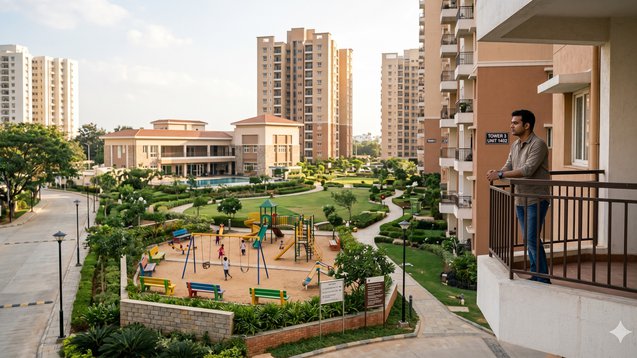
Introduction: The Invisible Factor That Shapes Everyday Living
The first elements that draw your focus when you enter a residential project are the sample flat and amenities and complete building design. The space presents a well-executed design that creates a feeling of spaciousness while maintaining visual attractiveness. The site visit usually overlooks one aspect which contributes to building design. The design element remains hidden from immediate detection yet it determines your daily experience through its effect on privacy and comfort and ease of access. Tower density describes the number of buildings which developers construct throughout a specific land area. The three Tier 1 cities of Mumbai and Bangalore and Gurgaon experience high tower density because their land area remains restricted while building demand remains high. Developers in Tier 2 cities such as Pune and Indore and Lucknow face fewer restrictions than Tier 1 cities yet building density patterns still differ throughout the area. Planning standards determine space usage efficiency in Tier 3 towns which possess sufficient land resources for development. A project with too many towers packed closely together may look impressive on paper, but once occupied, it can feel crowded, noisy, and less private. The design of a development through proper spacing establishes an environment which provides both safekeeping and smooth movement for its users. Understanding tower density before you buy can help you avoid long-term discomfort and make a smarter investment.
What Tower Density Really Means in Practical Terms
Tower density depends on building quantity and building distance and residential population within the same area. The two projects have identical tower counts, yet different building layouts between them create distinct differences in residential experience. High-density projects exhibit the following characteristics More towers occupy smaller land areas More flats exist on each floor. The number of residents in the community increases. Low-density projects show opposite results to high-density projects. The project contains fewer towers. The project includes more open areas. The project has fewer people living in it. When you explore projects on Property Aaj (https://www.propertyaaj.com) you need to examine more than the brochure to determine how many people will occupy the building space after its completion.
Impact on Privacy and Personal Space
The primary impact of tower density manifests through its effect on people's ability to maintain their private space. High-density developments require towers to be constructed at short distances from each other, which results in your windows or balconies facing another flat building directly. The results from this situation lead to three different outcomes. The first outcome results in reduced visual privacy. The second outcome establishes a permanent state that leads to people observing their nearby neighbors. The third outcome establishes a spatial limit that restricts people from experiencing their personal area. The less dense building projects create additional open space for their occupants to enjoy. The increased distance between towers creates improved separation that enables your home to provide better independent space with enhanced comfort. The residents of Tier 1 cities experience persistent privacy violations because their urban design limits space availability. The planning process in Tier 2 and Tier 3 cities allows for improved spacing, which depends on developers' chosen methods of execution.
Ventilation and Natural Light Considerations
The amount of sunlight and fresh air that reaches your flat depends on the tower density of your building. When buildings are placed too close together, they block each other’s light and airflow. The design of high-density projects results in restricted sunlight access for lower floors while the project design also limits airflow through the building and creates darker indoor spaces that lack proper ventilation. Developments with proper spacing between buildings enable more natural light to enter multiple units while their design allows better air movement throughout the area. The Indian climate requires ventilation and sunlight to maintain comfortable indoor conditions which makes this element important for building design. A well-ventilated home reduces the need for artificial lights and cooling systems which creates a more comfortable space while reducing energy consumption.
Effect on Noise Levels and Overall Peace
Increased residential buildings lead to higher resident numbers which create increased noise problems. High-density communities experience sound from shared spaces and streets and adjacent apartments because of their close distance between buildings. The following effects will occur to you. The environment will have more background noise. The shared areas will become overcrowded. The environment will lose its peacefulness. The lower-density projects require less human presence because their design creates larger spaces which result in decreased noise production. The space provides a comfortable atmosphere that enables families and elderly people and remote workers to work effectively.
Traffic Movement and Internal Congestion
The movement patterns of vehicles and pedestrians throughout the community depend on tower density which serves as a vital factor. The internal roads experience congestion problems because high-density areas develop when more residents arrive which leads to more vehicles during peak traffic times of the day. The society experiences common problems which include:
Entry and exit points create traffic congestion
The available parking spaces at the location show insufficient capacity
The community experiences repeated interruptions during its daily activities
Internal infrastructure experiences less stress because lower-density projects enable smoother movement throughout the area. The solution provides customers with better daily experiences while their work requirements decrease. The number of planned towers and units at Property Aaj (https://www.propertyaaj.com) serves as the main factor which determines actual movement patterns at the location.
Amenities: Overcrowded vs Comfortable Usage
The primary selling point of a property depends on its available amenities which become operational based on the number of towers present on the site. The high-density environments lead to two main effects which include: The first effect results in people experiencing overcrowded public spaces while The second effect requires people to wait before accessing public facilities which leads to The third effect results in public spaces reaching their capacity limits. The people who operate the facility face difficulties because the reason behind this situation is that multiple people try to use the same space at the same time. The swimming pool operates at full capacity because too many residents use it during peak hours which makes the facility less attractive to visitors. The experience becomes better when the number of users decreases.
Maintenance and Management Challenges
Higher population density results in greater maintenance requirements. The increased number of residents leads to additional damage of infrastructure assets and higher waste production and increased demands on management systems. High-density developments face three primary challenges which architects need to address. The first challenge which architects need to solve involves the maintenance of complex systems. The second challenge which architects need to solve requires them to determine how long their common areas will remain usable. The third challenge which architects need to address requires them to decide how their management system will operate. In less populated areas maintenance work becomes simpler to perform. The maintenance work in establishment facilities tends to become more effective. The space creates an impression of better organization. In India, where society management quality varies, this factor can significantly impact your living experience over time.
Safety and Emergency Access
The safety of a building depends on its tower density. Emergency access during crowded situations becomes difficult for emergency responders because narrow roads and parked vehicles obstruct their routes. The lower-density projects which receive proper planning enable emergency vehicles to travel without obstacles and display access points which lead to improved emergency response times. Emergency services face challenges in high-density areas which exist within Tier 1 cities because they lack sufficient space for their operations. This buying factor exists as a key element which customers tend to overlook yet they must acknowledge.
Comparing Tier 1, Tier 2, and Tier 3 Trends
The urban areas of Tier 1 cities face complete vertical building systems because their available land space cannot meet their intense construction requirements. Buyers often need to choose between two options which include tracking building density and assessing the value of a specific location. Developers in Tier 2 cities now enhance their project designs through effective planning which combines mid-density and low-density development options. Buyers have more options to choose from. The design of space exists as the primary concern in Tier 3 towns while various planning standards create different outcomes. Design, space, and building systems at some projects create an excellent experience, but other projects become overcrowded because of their design flaws. The differences between these two options will help you make a better choice which will result in better decision-making outcomes according to your research.
How to Evaluate Tower Density Before Buying
The assessment of tower density needs observational work together with analytical work. The master plan shows the total number of constructed towers which architects used to determine their spacing. Check the number of units per floor and estimate the total population of the society. Visitors to the site should assess building distances while visualizing the spatial experience that will occur when the area reaches its full capacity. A project that feels spacious during construction may feel very different once all residents move in. Property Aaj (https://www.propertyaaj.com) enables users to compare multiple projects while they search for building designs which provide better distance between structures and reduced building density.
Conclusion: Space Is Not Just Inside Your Flat
The process of selecting a home leads people to evaluate only the apartment. The apartment experience depends equally on the surrounding environment. The density of towers in an area determines all aspects of daily life when people experience their surroundings. The project design creates a space which provides users with better privacy and improved airflow and reduced sound levels which enables easier movement throughout the area. A high-density one may offer more amenities or a lower price but it often comes with compromises. You need to identify your most important tasks to establish the ideal balance between different work activities. Create a complete understanding of building design through layout examination and density evaluation and evaluation of space utilization. Property Aaj (https://www.propertyaaj.com) provides reliable services to help you investigate and analyze multiple choices. A good home requires more space than your personal property because your home extends beyond your owned space.
FAQs
1. What is tower density in real estate?
Tower density refers to the number of buildings and flats within a project and how closely they are placed.
2. Is low tower density better?
The answer is yes because low tower density provides people with better privacy protection and decreased crowding and improved living conditions.
3. Does tower density affect ventilation?
The answer is yes because towers that are built too close together will obstruct both airflow and sunlight which results in reduced ventilation.
4. How does tower density impact amenities?
When people build multiple structures in a space the resulting density increases which causes amenities to become overcrowded and less enjoyable to use.
5. Is high density unavoidable in big cities?
First-tier cities experience high density development because of land limitations but the quality of urban planning determines the actual development density.
6. Can tower density affect resale value?
The answer is yes because projects that have well-spaced designs attract more buyers which results in better long-term value.
Read more about property matters with our specialists and browse the latest property listings on Property Aaj. Download the app from the Play Store and App Store now for easy buying, selling, and renting!