Introduction
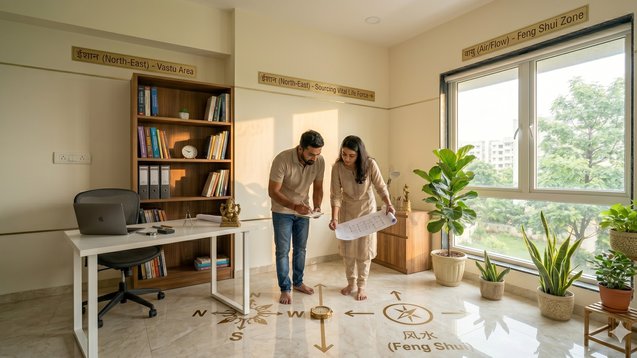
The two systems of Feng Shui and Vastu Shastra have become popular among people who look for better ways to enhance their home and work environments. The two systems show initial similarities but become different when people examine their core elements more closely. The two systems share a common foundation which describes energy flow through specific directions to achieve equilibrium between opposing forces. The two systems serve as tools for people to enhance their health and financial status and their overall physical and mental health. The two systems show their most distinct features through their various elements which create different experiences for their users. Vastu serves as the main architectural guideline for Indian residents who particularly use it to make real estate choices. People who want to buy property in Mumbai and Bangalore and Tier 2 cities which include Nashik Indore and Jaipur usually study Vastu before making their purchasing decision. Urban homeowners and interior designers and entrepreneurs who embrace global design philosophies currently show increasing interest in Feng Shui. The main point of comparison between these two systems lies in their fundamental differences which determine which system you should choose to follow. You need to understand their method because it helps you find the most effective solutions for your particular needs and environment and your targeted objectives. The blog presents Feng Shui and Vastu as two systems which will make their fundamental differences between them clear through their straight explanation of their two systems.
Origin and Cultural Background
Vastu Shastra originates from ancient India and is deeply rooted in traditional architectural and construction methods. Its implementation has continued for more than two thousand years because it governs temple construction and urban development and residential design. In India, Vastu serves as a design system which people connect to their cultural customs and family heritage. Vastu functions as a crucial element in property selection for Tier 2 and Tier 3 cities which maintain strong cultural traditions. Buyers in Tier 1 cities choose Vastu-compliant homes because this feature gives them security and enduring satisfaction. Real estate platforms like Property Aaj (https://www.propertyaaj.com) frequently showcase Vastu-friendly properties because these homes draw diverse customers from all parts of India.
Feng Shui originated in China and follows the principles of Taoist philosophy. The system studies how Chi energy moves through different objects and spaces. East Asian countries widely practice this system which has gained international popularity because it allows users to adapt it to their needs. In India, Feng Shui primarily finds application among urban residential and commercial property owners who want to test different interior design methods.
Core Philosophy and Approach
The two disciplines of Feng Shui and Vastu differ fundamentally because they establish different methods for managing spatial arrangements and energetic movements. Vastu establishes building elements through its structural components and directional requirements. It provides fixed guidelines based on cardinal directions north, south, east, and west and assigns specific functions to each zone. The Vastu rules require construction sites to follow their prescribed standards which create a more inflexible system of building requirements. The system of Feng Shui creates spaces that can change according to the needs of their users. The system operates through energy movement that it uses to direct energy throughout the entire building space. The system employs the Bagua map as a diagnostic tool which assesses different sections of residential or business spaces and provides energy balance recommendations. Feng Shui systems allow more adaptation because they enable users to work with present conditions which require no building modifications. In Tier 1 cities where apartments come with fixed layouts many homeowners find Feng Shui easier to implement compared to Vastu.
Direction vs Energy Flow
Vastu requires people to follow specific directional guidelines. Each human activity needs to take place in accordance with its designated direction which includes sleeping and cooking and working and storing valuable items. Property selection requires Vastu assessment because it establishes important guidelines for proper evaluation. Buyers in cities like Pune, Hyderabad, and Nashik frequently check whether a home faces east or north before making a purchase. Feng Shui requires strict directional alignment whereas it studies how energy moves throughout a given area. The study examines how pathways and furniture layouts interact with elements that obstruct energy movement. Energy flow will be disrupted by a cluttered entrance or improperly arranged furniture because these factors break energy flow patterns. The modern urban home design framework developed through Feng Shui enables people to make interior design changes without needing to modify their building's structural elements.
Application in Modern Indian Homes
The real estate market today faces challenges in Vastu compliance because space limitations exist in Tier 1 cities and their building regulations. High-rise apartments come with fixed layouts which restrict design flexibility while having common walls with adjacent units. Homeowners in those situations implement a combination of Vastu compliance through recognized principles and they apply Feng Shui methods to modify their interior spaces. In Tier 2 cities, where homes are larger and layouts are more flexible, Vastu is easier to implement fully. Buyers show a preference for Vastu-compliant properties which leads developers to create projects that follow Vastu guidelines. Property Aaj (https://www.propertyaaj.com) displays these homes because they receive higher demand and they offer better resale value. Vastu remains the primary design system in Tier 3 towns especially for independent houses. Residents here practice traditional customs which makes them less likely to use Feng Shui.
Remedies and Corrections
The two systems demonstrate their main distinction through their different methods of managing errors. Vastu remedies need to be implemented through architectural changes. The kitchen requires renovation because its current direction violates Vastu principles and the entrance needs to undergo alteration. Vastu provides a few non-structural solutions, but its system requires a complete redesign to fix major problems. Feng Shui provides more solutions that do not require any physical alterations. The system achieves energy equilibrium through the use of mirrors, plants, water components, different colors, and various objects. A mirror serves to change energy flow, while a plant works to create a positive environment. The system of Feng Shui provides advantages for rented spaces which occupants cannot modify through construction work.
Scientific and Practical Perspective
The scientific evaluation of both systems shows that their components match contemporary architectural standards. Environmental science and architectural design both support Vastu's requirement for sunlight access through its ventilation system and its designated spatial distribution system. The psychological principles of interior design match Feng Shui's principles which promote space organization through decluttering and natural element integration and design flow. These principles show their most powerful effects on mental health when people live in Tier 1 cities which combine their high stress levels with their limited available living space. The correct application of these concepts in Tier 2 and Tier 3 cities will create better comfort and functionality because those areas provide larger residential spaces. The property market values homes that offer complete daylight and airflow and tidy spaces because these Vastu and Feng Shui features create an atmosphere of comfort. The property Aaj website (https://www.propertyaaj.com) uses its listings to showcase Vastu features which include layout efficiency and environmental comfort of properties.
Which One Should You Follow?
The answer to this question which people most frequently ask depends on your personal circumstances. Home construction and property purchase in Vastu-compliant areas of India require buyers to follow Vastu principles during their selection and construction activities. The practice meets buyer needs and enhances the resale value of the property. People who live in rented apartments and fixed-layout homes can use Feng Shui to make their spaces better through minor improvements. The most effective solution often requires combining two different methods. The structural decisions should use Vastu while Feng Shui will guide the changes made to interior space.
Conclusion
Feng Shui and Vastu are different systems that both aim to create balanced living spaces which provide comfort and support to users. Vastu establishes its fundamental principles through its system of directional alignment which includes its methods of structural design. The Feng Shui system enables space design through its energy flow system which permits interior design changes. The two systems together provide an entire method for developing spaces that suit contemporary living patterns. You can combine both options when you live in a small apartment in Mumbai or a large house in Nashik or a single family home in a rural area. People should concentrate on things which enhance their comfort and work efficiency and help them relax. When you examine properties, you should evaluate their price and location, but you must also assess how the space presents itself and operates. The website Property Aaj (https://www.propertyaaj.com) assists users in locating homes which successfully meet their needs. The value of a space depends on its design elements because design elements enable people to live their lives within that space.
FAQs
1. Is Feng Shui better than Vastu?
The two systems have equal value because Vastu provides strict construction guidelines while Feng Shui lets designers create flexible interior spaces.
2. Can I follow both Feng Shui and Vastu together?
Yes, many people combine both systems to balance structure and flexibility in their homes.
3. Which is more popular in India?
Vastu is the more commonly practiced system in India which people use to make real estate choices.
4. Does Feng Shui work in Indian homes?
Feng Shui principles apply to all homes because they help enhance both spatial arrangement and energy distribution.
5. Is Vastu necessary when buying a property?
It depends on personal preference, but many buyers in India consider it important for long-term comfort and resale value.
6. Can these principles affect property value?
Yes, homes that feel balanced, well-lit, and organized attract more buyers while they achieve better results in the market.
Read more about property matters with our specialists and browse the latest property listings on Property Aaj. Download the app from the Play Store and App Store now for easy buying, selling, and renting!