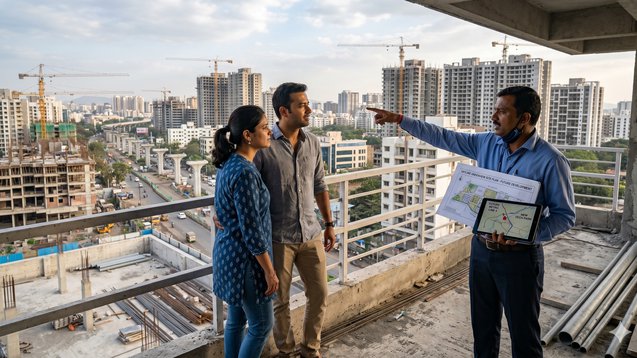
The “Future You” Method for Selecting a Home
Introduction
People think about purchasing a house as an instant choice which they must make at this moment. Buyers focus on what they need today their current job location, current family size, or current financial comfort. Property decisions actually need to extend beyond their present value because they serve future needs. Indian homebuyers typically plan to own their properties for a period between 10 to 20 years or even longer. The home you choose today must meet your requirements as your personality develops throughout your life. The “Future You” method reaches its maximum usefulness at this particular moment. This approach asks buyers to determine their home suitability through a better question which evaluates their future needs:
- “Will this home still make sense for my life five or ten years from now?”
Indian buyers who look for properties across different real estate markets make better investment choices through property buying which follows a long-term approach. The “Future You” method evaluates career progress and lifestyle changes together with infrastructure growth and family development and investment prospects throughout an extended period. Homebuyers who use Property Aaj (https://www.propertyaaj.com) to search for available properties discover that the best property acquisitions do not involve pursuing immediate benefits. Property buyers decide according to how their property selection suits their upcoming life requirements. You can use this method to evaluate homes through understanding its application process.
Understanding the “Future You” Concept
The “Future You” method requires you to make property decisions which will benefit your entire life path instead of your present situation. First-time buyers in the market consider their immediate requirements which include office distance and budget limits and nearby social activities. The components you establish as essential present a partial solution which needs additional elements to complete. People establish their life patterns during a ten-year period which follows typical patterns of development.
People advance their professional development.
People bring new members into their family circle.
People develop new expectations for their everyday activities.
A young professional renting in a metro may initially prioritize nightlife and office proximity. Five years later, priorities might shift toward quieter neighbourhoods, schools, and larger living spaces. People in Tier 2 cities buy homes during their first career phase but later realize that infrastructure growth results in major changes to property value and community development. Buyers use life evolution visualization to select properties which will continue to be appropriate for their needs after their initial purchasing excitement has disappeared. Platforms like Property Aaj (https://www.propertyaaj.com) help buyers compare properties not only based on current features but also based on long-term growth potential.
Thinking Beyond Your Current Lifestyle.
Many buyers unknowingly make decisions based entirely on their present lifestyle. A single professional in Bengaluru selects a studio apartment near a tech park because it matches their work pattern. The couple needs to determine their space needs three years after their wedding. The couple needs to establish their spatial requirements because their storage needs and parking requirements now determine their decision.
Homeowners in Tier 1 cities face high real estate costs which make property upgrades during ownership extremely expensive. A buyer can achieve better flexibility through buying a larger apartment than they require at the present moment.
Tier 2 cities offer residents superior planning capabilities than other locations. The home-buying process permits employees to acquire bigger residences during their first work experiences.
Tier 3 towns provide the most affordable major residences but buyers must assess their future employment plans and developing infrastructure. The main inquiry requires: Will this home still function with my future lifestyle requirements which I will develop over the next five years? Property Aaj (https://www.propertyaaj.com) buyers who examine property listings on their website tend to choose their property dimensions and designs and neighbourhood selection based on this particular viewpoint.
Choosing Locations That Will Get Better Over Time
The location of a property is still the important thing that affects its value. The "Future You" approach is about picking places that will get better and better. In Indian cities areas that were once on the outskirts become popular residential areas as infrastructure improves. For example:
When metro lines are extended
When new highways are built
When IT parks are set up
When industrial areas are developed
When airports are expanded
These changes can really make property values go up. In cities like Delhi and Mumbai new areas near metro extensions often become more valuable. Smaller cities are also growing fast with infrastructure projects and investments in industries. Smaller towns are also developing slowly with roads and local economic projects. When people research what's being built in an area before buying a property they often get a deal. Looking at property listings on Property Aaj (https://www.propertyaaj.com) can help people find areas where new infrastructure will make property values go up. Thinking like yourself means choosing a location that will still be good in years to come and Property Aaj can help you do that by choosing locations with growth potential and thinking like the "future you" means choosing a location with growth potential.
Planning for Family Growth and Changing Needs
Future homebuyers need to consider their upcoming family expansions when they choose their current residence. A young couple buying their first home may currently need only two bedrooms. Parents and visiting relatives can raise space requirements beyond their current two-bedroom apartment. This requirement holds special value in Indian homes which maintain their tradition of housing multiple generations together. People in Tier 1 cities where property prices reach their highest point will pay for larger homes when they initially buy smaller properties. Proper planning enables families to prevent costly home modifications which would require major expenditure during later stages of their house renovation work. Tier 2 cities provide better housing options because buyers can acquire larger properties before their actual purchase. Township 3 areas provide residents with affordable yet spacious independent houses. Future planning extends to various elements which include.
Schools situated in close proximity
Hospitals and medical centers
Areas designated for outdoor activities
Places of community interaction
These elements may seem less important initially but become crucial as families grow. The “Future You” method ensures that the home continues to meet evolving family needs.
The Indian workforce has developed a pattern where workers change their place of employment.
People who work remotely or through hybrid work arrangements have developed new ideas about workspace locations. This research study investigates the fundamental question which follows. Your professional advancement will require you to move to a different location. The property should operate as a rental business or resale asset according to the ideal situation.
Tier 1 cities provide strong rental demand because they contain major employment centers.
The rental market in Tier 2 cities has developed as businesses establish operations outside metropolitan areas.
Residents in Tier 3 towns experience lower rental returns but maintain constant demand because of their region's economic conditions. Smart buyers evaluate whether their property could attract tenants if they relocate. Property platforms like Property Aaj (https://www.propertyaaj.com) allow buyers to analyze rental demand and neighborhood trends across multiple cities. The "Future You" method helps people consider their residential options and investment prospects.
Evaluating Long-Term Affordability
Financial comfort is one of the most overlooked aspects of future planning. Many buyers only evaluate their ability to pay for down payment and EMI costs at the present time. But life seldom maintains its financial situation without change. People experience financial changes because of career changes and business opportunities and educational expenses and unforeseen events. A home loan should remain manageable even during challenging financial periods. Tier 1 cities often push buyers toward larger loans because of their high property prices. Tier 2 cities allow more balanced affordability for many buyers.Tier 3 towns provide lower purchase costs but they offer fewer financing options and experience slower property value growth.The “Future You” method encourages buyers to choose properties that leave room for financial flexibility. A person needs to find a home that brings comfort because a home needs to make their life better without creating financial difficulties.
Evaluating Infrastructure That Improves Quality of Life
When we think about the future we also need to think about infrastructure that makes our lives better. Infrastructure is really important for our lives. Many people look at the inside of a house first. The neighborhood infrastructure is what matters in the long run. There are things to consider when we think about infrastructure these are:
Public transport this is something that we use every day
Road connectivity this is important for getting around
Schools and colleges these are necessary for our kids
Hospitals we need these to stay healthy
Retail and entertainment options these make our lives more fun
Public safety this is something that we all want
Big cities usually have good infrastructure but they can be very crowded and polluted. Smaller cities are getting better at planning and making life easier for people. Small towns do not have a lot of infrastructure now. They can get better over time. When people think about the future they think about how the infrastructure around them will change over the ten years this is what we call the Future You approach and it is all about evaluating how infrastructure that improves quality of life, like neighbourhood infrastructure might evolve over time and how this will affect our quality of life and the quality of life of the Future You.
Learning from Real Buyer Scenarios
The two buyers assess two different properties in the city of Pune. The first buyer selects an apartment that has a small size and occupies a busy district which is situated near their workplace. The second buyer selects an apartment which is larger than his previous choice because it is situated near a developing metro corridor. The metro system starts its service five years after construction begins. The second buyer benefits from improved transit access and increased property value and better building facilities. The first buyer faces difficulties because of traffic jams and the inability to sell his property. The two homebuyers acquired residential properties yet only one of them thought about his own future needs. The actual situations demonstrate that property decisions require extended thinking because it has a significant impact on decision-making.
Conclusion
Homeownership represents the most significant financial and personal choice for Indians who purchase their first house. The majority of homebuyers approach their purchase decision through a temporary viewpoint which centers on their present requirements. The "Future You" method transforms your viewpoint about your situation. The system requires you to predict your future lifestyle changes which will occur during the next ten years instead of checking whether current housing conditions match your present requirements.
Will the location show signs of progress in the future?
Will the available area continue to fulfill requirements?
Will the asset maintain its investment potential?
Will the neighborhood provide necessary amenities for your lifestyle?
Needs by Tier 1 metro areas and Tier 2 developing markets and Tier 3 emerging areas tend to create permanent value through future market needs according to Indian real estate trends. Property Aaj offers listings through its website (https://www.propertyaaj.com) which enables buyers to examine different properties across multiple locations and financial ranges and development areas so they can better understand the long-term impacts of their choice. The ideal residence for you extends beyond structures which meet current requirements. The best option maintains its validity as the right decision for upcoming times.
FAQs
1. What is the “Future You” method in property buying?
The "Future You" method evaluates residential properties through a five to ten year assessment of anticipated personal life changes. The study evaluates various factors such as career development, family growth, infrastructure improvements, and property value assessment to determine optimal property selection.
2.Why is long-term thinking important when buying property in India?
Property purchases typically involve long-term financial commitments such as home loans and are often held for decades. The property maintains its usefulness and worth throughout time because of long-term thinking.
3. Should people who are buying a house think about the roads and buildings that will be made in the future?
Yes. If a new metro line or highway is going to be built in an area the value of the houses will probably go up. Thinking about what will be built in the future can really affect how much a house is worth and how easy it is to get
4. How does thinking about the "Future You" help people who are buying a house for the time?
People who are buying a house for the time usually think about if they can afford it right now. The "Future You" method helps them think about what their life will be like in the future so they can make sure the house they buy will still be a fit, for them even if their job or family changes.
5. Does this approach apply to Tier 2 and Tier 3 cities as well?
The answer is yes because multiple Tier 2 and Tier 3 cities currently demonstrate fast expansion. Buyers who anticipate infrastructure improvements and economic expansion can benefit from long-term property appreciation.
6. Can a property chosen using this method become a good investment?
Yes. The selection of homes through long-term growth factors results in better resale and rental market performance because the chosen properties match upcoming urban development trends.