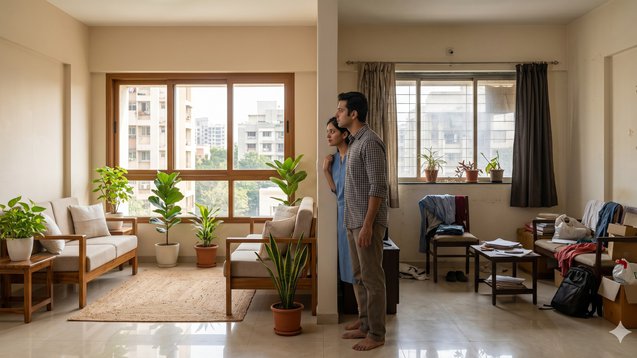
Energy Balance in Homes – Myth or Reality?
Introduction:
Walking through two distinct houses reveals an oddity which proves difficult to explain. The first space creates an atmosphere of peace which maintains an open and inviting nature. Although the second space demonstrates excellent design elements it creates a feeling of discomfort which makes users feel restricted. Home purchasers from India demonstrate an ability to perceive this distinction even when they cannot explain it. The concept of energy balance which exists in houses needs to be understood at this specific point. The Indian population uses Vastu Shastra to define this particular concept. The term positive energy appears in home buying conversations which take place between people who purchase homes throughout Mumbai and Bangalore and Indore. Buyers frequently ask Does this house feel right? Is the layout balanced? Will living here bring peace? The main issue requires us to investigate whether energy balance functions as a real factor which determines your living experience or if it serves as a mental concept which people develop through their cultural and traditional backgrounds. People hold multiple perspectives about the answer to this question. Energy balance functions as a scientific and design principle which people in Tier 1 Tier 2 and Tier 3 cities use to assess their present situation. We will present practical information which enables you to identify vital aspects of your home search through Property Aaj (https://www.propertyaaj.com) or current space assessment.
What Does “Energy Balance” in Homes Actually Mean?
The actual definition of energy balance needs to be established before people can determine whether it constitutes a myth or a real phenomenon. The Indian traditional system uses energy balance to describe how natural elements interact with living spaces through their light, air, spatial, directional, and layout characteristics. Vastu Shastra categorizes this through five elements: earth, water, fire, air, and space. The concept becomes practical when you remove all spiritual terminology from the original text. A home with good airflow, balanced natural light, organized layout, and minimal clutter will naturally feel more comfortable. The concept in Tier 1 cities exists in Indian cities like Delhi and Mumbai as two separate elements. The design requires architects to ensure apartments receive proper airflow during their entire space through natural light. The design needs to achieve efficient utilization of available space. The energy balance system in Tier 2 and Tier 3 cities follows traditional Vastu layouts because their available space exceeds typical residential requirements. Energy balance exists as a real phenomenon but people believe it exists only in mystical forms. The combination of system design elements and human perceptual abilities creates the current situation.
The Role of Vastu in Shaping This Belief
Vastu Shastra has played a role in how Indians think about energy in their homes. For a time families have followed certain rules about direction room placement and layout to create peaceful living spaces. In today's real estate market on websites like Property Aaj you will often see terms like "Vastu-compliant" or "Vastu-friendly.". What does that really mean? Usually it refers to things like:
Entrance direction
Kitchen placement
Bedroom positioning
Natural light flow
In cities buyers might not even consider a property if it doesn't meet these Vastu criteria. In large cities buyers think about Vastu but also consider location and price. In cities however Vastu is not as important. Buyers might like it. They won't sacrifice a good location or a job close by. The idea of energy balance therefore is not about old traditions. It's also about how much choice buyers have when it comes to buying a home and the importance they give to Vastu in their decisions. The Vastu principles are still important to Indians. Vastu Shastra continues to shape their beliefs about homes.
Science vs Belief: Where Does the Truth Lie?
Here’s where things get interesting. When people talk about energy are they talking about something we can measure or something that’s in our minds? From a scientific point of view there’s no proof that just aligning things in a certain way can change energy in a special way.. Some things that Vastu says are important really do make a difference:
Sunlight makes us feel better and sleep better
Good air flow makes the air cleaner
Noise levels can make us stressed
In words , what Vastu calls energy flow is often the same, as how our surroundings make us feel. Let’s think about these two apartments. One is well lit and has good air flow, the other one is dark and stuffy. Most people will like the one better. They might say it has energy even if they don’t think about Vastu. So even though the Vastu belief is old it can still have results.
How Layout and Design Affect Daily Comfort
Let’s make this real. Imagine an apartment in Gurgaon. The entrance leads to a small kitchen. The living room has no windows. The bedrooms are near a road. Even if it follows Vastu rules it might not feel right. Now think of another flat that doesn’t strictly follow Vastu but has:
living space
Air flowing through
Rooms placed right
Which one would you pick? This is where balance of energy is more about how you feel than rules. In cities builders focus on using space well because there isn’t much of it. In cities like Nashik or Jaipur you often find homes that balance Vastu with practical design. When looking at homes, on Property Aaj smart buyers don’t just look at labels. They see how the home feels. Not what it says.
Buyer Psychology: Why People Trust the Concept
The study of buyer behaviour exists because people find it difficult to trust this particular concept. The process of making real estate decisions depends on two main factors which include logical reasoning and emotional comfort needs. The practice of energy balance enables Indian families to achieve their required state of peace and security. The method provides answers to these specific inquiries
Will this home bring peace?
Will it support our growth?
Is it a “good” place to live?
The emotional factor holds more significance in Tier 2 and Tier 3 cities than in other locations. The use of Vastu becomes part of their decision-making process because buyers consult their elders. Young buyers in Tier 1 cities tend to choose practical options yet they show some Vastu preferences which they consider essential for their permanent residences. The study shows that people perceive homes as more than just financial investments because they view them as places with emotional value.
Impact on Property Value and Market Trends
Does following Vastu principles affect what people pay for a property? The answer is yes. It does not affect all properties in the same way.
In cities like Tier 1 cities:
People are willing to pay a little more for a property that follows Vastu principles, around five to ten percent more.
The location of the property and the amenities it offers are still the things that decide its price.
In cities like Tier 2 cities:
Vastu principles and other factors are equally important.
If a property follows Vastu principles it can sell faster.
In smaller towns like Tier 3 towns:
Following Vastu principles has a big impact on how much people want to buy a property. If a property does not follow Vastu principles it may take longer to sell. Property developers know this so they often say their projects follow Vastu principles even if they do not follow all of them. For people looking to invest in property and browsing websites, like Property Aaj at https://www.propertyaaj.com this is a thing to know. Even if you do not believe in the importance of Vastu principles yourself the people who might buy your property in the future might care about Vastu principles so it is something to consider when buying a property.
Is It Possible for Humans to Sense Energy in Their Homes? Real Life Point of View.
Think about it, most folks don’t have any kind of methodical way when they enter a home; they trust their gut feelings. When you step into that apartment some thoughts go through your mind like:
This place is huge
This makes me feel closed in
This makes me feel calm
A lot of folks refer to the sensation they experience as being associated with energy. The factors that actually affect energy in a space include:
Amount of light
Amount of air movement
Amount of sound
How open/closed the space is
In higher-end apartment buildings (Tier 1), simply by adding or improving lighting or by decluttering might make a big difference in how the space feels. In larger houses located in towns Tier 2 + Tier 3, energy can often be enhanced by the natural surroundings of the property. So you can, indeed, feel energy but the majority of the time it relates to physical characteristics versus unseen energies.
Common Myths Around Energy Balance in Homes
There are several misconceptions that confuse buyers.
Myth 1: Only Vastu-compliant homes have positive energy
The truth about the situation shows that proper design and maintenance work execute better than anything else.
Myth 2: One wrong direction ruins the entire house
Most problems that people experience in their lives can be solved through different approaches.
Myth 3: Energy balance guarantees success or happiness
A residence helps you live your preferred way yet it does not determine your results. The existence of these falsehoods leads to people making poor choices which result in them passing up an excellent property because of little Vastu issues. A balanced perspective is always more beneficial.
Practical Ways to Improve Energy Balance in Any Home
People can achieve home energy balance through any home design which exists beyond their requirements. Start with simple steps:
The first step requires you to enhance your home's natural light.
The next step requires you to create a space which allows air to flow freely throughout the building.
The third step requires you to remove all unnecessary items from your space.
The fourth step requires you to select colours which promote peace throughout your environment.
The fifth step requires you to position furniture in a way which allows people to move through space without restrictions.
All these improvements will create visible changes which people can see through their entire living space. When evaluating properties on Property Aaj (https://www.propertyaaj.com), think long-term. A home that feels comfortable daily is always a better choice than one that just looks good on paper.
Tier-Wise Differences in Belief and Application
People in India think about energy balance in ways.
Tier 1 cities have an approach to energy balance. They make adjustments by following the rules strictly. Lifestyle factors are very important to them.
Tier 2 cities have a mindset when it comes to energy balance. They think about Vastu and comfort at the time.
Tier 3 cities have traditional beliefs about energy balance. The direction and layout of a place are very important to them.
Understanding these differences in energy balance helps you make decisions when you are buying a property for investment. Energy balance is a factor to consider when making such decisions, especially energy balance, in Tier 1 cities Tier 2 cities and Tier 3 cities.
Conclusion
The question of energy balance in households requires an answer that exists between these two extreme positions. The scientific study of Vastu shows its energy balance system comprises actual components that include light and airflow and architectural design and human comfort. The elements in your home environment establish direct connections to your emotional response toward your residence. The Indian real estate market today shows that Tier 1 Tier 2 and Tier 3 city buyers who want to make smart purchases should avoid extreme market trends. Vastu observance remains mandatory because they create home energy balance which they achieve through following Vastu or rejecting it entirely. They aim to establish equilibrium between opposing forces. A home should feel right in both logical and emotional aspects. The outcome of good design or belief system design delivers superior value than the system which creates the outcome. Your home functions as your primary residence throughout your entire existence. Positive energy exists when a space creates a sense of calmness and comfort while offering supportive elements.
FAQs
1. Is energy balance in homes scientifically proven?
Energy balance exists in homes according to scientific evidence from traditional Vastu practices. The three elements of light and ventilation and layout design work together to create energy balance which supports comfort and well-being according to scientific research.
2. Should I prioritize Vastu when buying property in India?
Your decision depends on your personal belief system. The resale value in Tier 2 and Tier 3 cities depends on Vastu while Tier 1 cities focus on location and amenities.
3. Can a non-Vastu home still feel positive?
Absolutely. The combination of high-quality design and natural light and proper ventilation creates an environment that provides comfort and tranquillity without needing to follow Vastu standards.
4. Does energy balance affect property prices?
Yes, to some extent. Vastu-compliant homes may attract a premium especially in smaller cities where buyer sentiment is strong.
5. How can I improve energy in my current home?
The process of decluttering and better lighting and furniture rearrangement and airflow control will create significant impacts.
6. Is Vastu more important for self-use or investment?
Emotional comfort makes Vastu more important for self-use than investment purposes. The three factors of market demand and location and appreciation potential determine the value of investments.