Introduction
The modern world is experiencing continuous transformation of its present-day living patterns. The way people live, work, and use their homes today is very different from how it was even a decade ago. Homebuyers now seek homes that offer flexible spaces instead of fixed room designs which require separate areas for each activity. The market shows increasing demand for houses which can meet various needs throughout different time periods. Homebuyers consider flexible space design as a vital requirement when selecting properties. A room that serves as a bedroom today might need to function as a home office tomorrow. People use their living rooms from morning until evening as both exercise areas and study rooms. Homes that support this kind of adaptability provide greater long-term value and convenience. Indian buyers from Mumbai and Bengaluru apartment residents to Pune house buyers now prefer home designs which enable different activities to be performed in a single area. Buyers use Property Aaj (https://www.propertyaaj.com) to assess floor plans and find homes which offer design flexibility. Homebuyers who select houses with space flexibility will benefit from more than just immediate advantages because their homes will protect their future needs.
What Does Flexible Room Usage Mean?
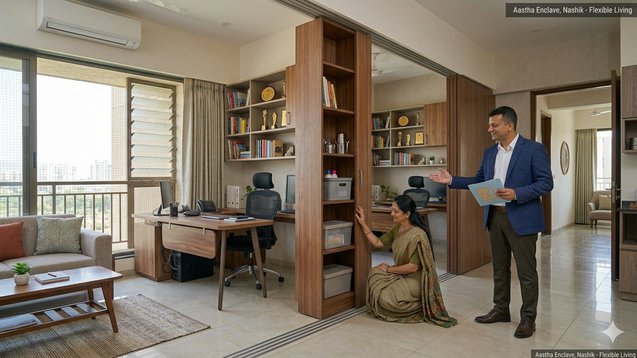
Flexible room usage refers to the ability of a space to serve multiple purposes without requiring major structural changes. Flexible homes use adaptable layouts which allow their residents to meet various requirements throughout different periods of time. A spare bedroom functions as a home office or study area which transforms into a guest room whenever necessary. A dining area serves as a workspace while a living room transforms its layout to support both exercise and social events. Open layouts together with minimal structural barriers and design elements which include sliding doors and foldable partitions and multi-functional furniture create this flexible environment. Buyers exploring listings on Property Aaj (https://www.propertyaaj.com) can review floor plans to understand whether spaces are adaptable or strictly defined.
Why Flexible Homes Are Becoming Essential
The rise of remote work and online learning together with home-based activities now impacts how people utilize their residential spaces. The modern world requires households to create separate spaces which enable people to work, study , exercise and unwind from their daily activities. The existing design needs to change because it restricts people from fulfilling their requirements. The design of a house with fixed-purpose rooms does not offer sufficient space flexibility for building a comfortable workplace. The solution to this issue presents itself through flexible homes which empower residents to modify their interior spaces according to their current requirements. The capacity to adapt spaces meets the requirements of growing families who need additional room throughout their development. The residents of Delhi and Bengaluru need flexible layouts because their cities face high property costs and space constraints which create a need for efficient space management. The ability of homes to shift between different functions enables them to maintain their practicality and usefulness throughout extended periods which makes them a more effective financial choice.
Flexibility in Tier 1 City Apartments
The main living spaces of Mumbai's high-rise apartments require design solutions that create space for two people to live together while maintaining their need for personal space. The shift toward open-plan spaces throughout the house shows how homebuilders increasingly develop spaces that allow homeowners to create their desired environments. The design of modern buildings now includes sliding partitions together with modular design systems which architects select as their preferred solution. A living room space needs to function effectively for both entertainment purposes and home office activities. The design of small bedroom spaces includes built-in storage systems which enable users to access more available space on the floor. Property buyers who visit Property Aaj (https://www.propertyaaj.com) need to search for building designs which enable them to move furniture easily without facing major architectural limits. The small design element of movable partitions provides compact homes with better flexible space use that enhances their operational capabilities.
Advantages in Tier 2 Cities
Home designs in Tier 2 cities which include Ahmedabad and Pune already provide residents with their most flexible home design because these cities built larger house dimensions. The apartments in these cities provide extra rooms which residents can use for different purposes. The study room inside a house functions as a guest bedroom and a hobby space. The design of these homes provides residents with better space dimensions which enable them to test different functions within their home spaces. The increasing work-from-home trend has made Tier 2 market buyers demand homes which provide them with both comfortable living spaces and flexible home design.
Independent Houses and Maximum Flexibility
Independent houses and villas provide homeowners with the greatest freedom to use their interior spaces. Homeowners can design their spaces according to their specific needs because their homes feature larger floor areas and minimal building restrictions. Homeowners in these types of residences can transform their existing spaces into home offices or gyms or entertainment spaces. Homeowners will redesign entire house sections to accommodate their evolving requirements. Properties in smaller towns and suburban areas typically come with additional rooms and open spaces which residents can modify to their needs. When buyers at Property Aaj (https://www.propertyaaj.com) search through its listings independent homes offer the most options because they allow buyers to change and use their properties in multiple ways.
Design Features That Support Flexibility
The design elements present in this home design provide multiple spaces which enable different activities to take place. The open floor plan which connects different rooms without creating fixed boundaries represents the home design's most essential characteristic. Homeowners use sliding doors together with movable partitions to establish temporary room separations which they can remove at any time. The large room serves as a workspace during the daytime while it transforms into a living space after sunset. The space operates multiple functions because of its multi-functional furniture. The combination of foldable tables with sofa beds and storage-integrated furniture enables users to create efficient space usage throughout their areas. The design of homes which provide abundant natural light together with effective air circulation creates comfortable environments suitable for various activities during daytime hours. Buyers who assess properties on Property Aaj (https://www.propertyaaj.com) should examine these specific features to determine how well homes match their personal lifestyle requirements.
Long-Term Value of Flexible Homes
The primary advantage of flexible room usage creates value benefits which continue into the future. A home which allows for flexibility will meet evolving family requirements because built-in changes do not need extensive construction work. The extra room in a house begins as a workspace for a young couple, who later transform it into a nursery, before using it as a study room for their children. The ability to adapt to changing circumstances helps people maintain their current residence without needing to find another home. The resale value of flexible homes increases because they attract more potential buyers who want to purchase the property. Prospective buyers often prefer homes that can accommodate different lifestyles. Homeowners who select properties with flexible spaces will protect their investment from becoming obsolete during upcoming years.
Practical Tips for Evaluating Flexible Layouts
People need to picture possible room usages because they need to understand property spaces during their visits. The space should provide multiple functions that require only minor adjustments to achieve operational efficiency according to common standards. The testing process requires assessment of two factors which include testing wall constraints for movement and evaluating how the building layout enables people to customize their space. The design of a room depends on window and electrical outlet locations which determine available functionalities. The assessment should determine whether furniture can be moved freely throughout the space or whether the existing design limits furniture installation in specific areas. Buyers who visit Property Aaj (https://www.propertyaaj.com) can check different floor plans to find homes which offer flexible room designs instead of fixed room layouts. The assessment of these elements needs to be completed because it will determine whether the home remains usable throughout changing family requirements.
Conclusion
You need to select a house which enables you to use various rooms for different purposes because this choice will create a space that stays cozy during all future times. People today require flexible living spaces because their ways of living continue to evolve. Architects design flexible home solutions which operate efficiently in both small urban apartments and large country houses while delivering cost savings throughout the entire duration of their use. Buyers use their analysis of property layouts along with design elements and space patterns to find suitable properties which fulfill their current needs and future growth requirements. Aaj Property (https://www.propertyaaj.com) enables users to search for properties which display design layouts that allow flexible room usage for comparison. A home which expands with your requirements throughout your life stages provides you with the most effective support for your current and future needs.
FAQs
1. What is flexible room usage in a home?
A room becomes flexible through its ability to serve different functions which includes a bedroom that operates as a home office.
2. Why is flexibility important in modern homes?
People require their homes to provide spaces which combine work activities with study and leisure time because their living patterns have evolved.
3. Are flexible layouts common in apartments?
Yes, especially in newer developments that include open plans and modular design features.
4. Which type of property offers the most flexibility?
Independent houses provide the greatest flexibility because their design enables residents to use their entire property without any limits.
5. What design features support flexible usage?
Open layouts and sliding partitions together with multi-functional furniture and good lighting create flexible spaces.
6. Where can buyers compare flexible home layouts?
Buyers can explore and compare floor plans on Property Aaj (https://www.propertyaaj.com) to find homes designed for adaptable living.
Read more about property matters with our specialists and browse the latest property listings on Property Aaj. Download the app from the Play Store and App Store now for easy buying, selling, and renting!