Introduction
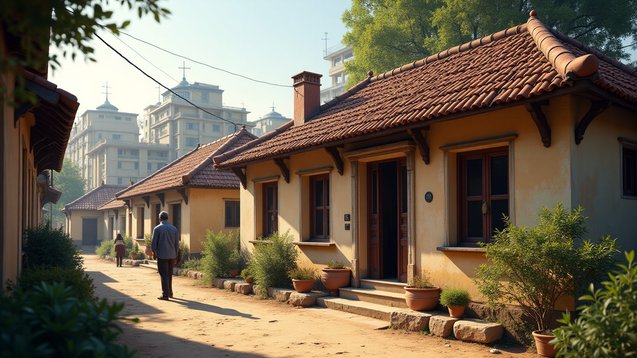
Lal Dora villages are an old but fascinating part of Delhi’s real estate landscape. These are villages where originally allocated land for agricultural use evolved into densely inhabited and sometimes urban land use when their village status has not been updated. Despite being on a lower persistent property price and having a comparatively larger area, investment in Delhi Lal Dora villages entails its own unique range of legal issues and limitations. This guide explains everything you need to know before buying it in 2025.
What is Lal Dora Land?
Lal Dora was a red line drawn on the revenue maps that separated village habitation from agricultural land during the British Raj (1908). The land is located within the red line (the village abadi area) and is exempted from building bye-laws and municipal regulations which makes construction and transactions easier but risky.
Examples of Lal Dora Villages in Delhi
Chattarpur
Mehrauli
Bijwasan
Sultanpur
Neb Sarai
Ghitorni
Rajokri
Asola
Nangli Sakrawati
Kapashera
Burari
Bawana
Najafgarh
Jharoda
Can You Legally Buy Property in a Lal Dora Village?
Yes, but with conditions. Since these areas are not governed by standard DDA or MCD land-use regulations, Lal Dora properties are often sold without clear titles or formal registration, making due diligence essential.
Rules and considerations when buying in Lal Dora areas (2025)
1. Title verification is vital
Most Lal Dora properties don't have a registered sale deed or the proper mutation documents. Always:
Involve a property lawyer.
Certificate of ownership through revenue records (Khasra, Khatauni).
Check details through Delhi Bhilekh Portal: https://dlrc.delhigovt.nic.in.
2. No approved map or sanction plans
Even though the construction in Lal Dora areas doesn't need DDA or MCD approval, it basically means the same thing: that there are no building plans sanctioned, no occupation certificates, and you will have little to no resale value and bank acceptance or loan opportunities.
3. Banks and bank loans are unlikely
Most banks will not allow any loans on unregistered properties or GPA-based Lal Dora properties. You can expect:
Private financing.
Co-operative bank loans.
Convert property to freehold to access more financing.
4. Risky Sale of GPA/PoA
The transfer of ownership usually occurs through:
General Power of Attorney (GPA).
Agreement to Sale (ATS).
These documents are not legally equivalent to a sale deed under Title and the Honorable Supreme Court has basically outlawed use of GPA to transfer ownership (in a 2011 judgment).
5. Comparison with Noida and Gurugram.
Lal Dora land (area) is usually surrounded by the development of urban Delhi, unlike the rural areas in Noida or Gurugram. This however doesn't offer:
Infrastructure.
Sewage connection.
Fire clearance and electricity plan approvals.
Government Initiatives (2025 Updates)
Lal Dora Regularisation
Delhi government has proposed:
Allowing regularization of unauthorized homes in Lal Dora villages
Issuing ownership certificates or registry rights post-verification
Integration into DDA Master Plan 2041
Status: Still under process. Always check the latest circulars from Delhi Development Authority or Revenue Department.
Process for Safe Purchase of Property in a Lal Dora Village.
Step 1: Legal Verification.
Get title deed proof (jamabandi, khasra, khatauni).
Ensure no disputes or encroachments.
Step 2: Legal Sale Agreement.
Preferably sign a sale deed registered at the sub-registrar office.
Avoid GPA-only transactions.
Step 3: Mutation Application.
Get the mutation done in your name from the Tehsildar.
Get property tax records updated (if applicable).
Step 4: Freehold Conversion.
If freehold eligible apply to convert the property via the DDA (Delhi Development Authority).
Advantages of Buying in Lal Dora Villages
Lower cost per sq ft
Larger plots
No strict building bye-laws
Located near major urban zones (e.g., Chattarpur near Saket)
Risks and Limitations
Property Aaj Tip: Deal Only with Verified Sellers
On Property Aaj:
Only verified Lal Dora listings are shown
We connect you to lawyers and land surveyors
Get help with ownership certification, mutation, and freehold conversion
Conclusion
Investing in Delhi's Lal Dora villages could be rewarding but of course only if proper legal due diligence is completed. Do not rely on verbal agreements or a general power of attorney (GPA). Despite growing demand and prospects of regularisation you must be cautious and do your research. Trust platforms like Property Aaj to find safer and legally vetted Lal Dora opportunities.
FAQs
1. Is it lawful to build on Lal Dora land in Delhi?
Yes, you can build without MCD/DDA permission, only in the abadi, not on agricultural land
2. Can I get a home loan on a property in Lal Dora?
Most nationalised banks will not provide funding unless the land is freehold, otherwise you can try NBFC, or a private bank
3. What documents do I need to buy a property in Lal Dora?
Khasra/Khatoni
GPA or ATS (preferably sale deed)
Identity proof
Seller's proof of residency and ownership.
4. How do I check if a property is in Lal Dora?
You can either check the Delhi Bhulekh website or look on the Revenue Department map for the red-line demarcation.
5. Can I register a Lal Dora property?
Yes, you can register provided the land has clear title and has not been acquired. Registration can take place through the Sub-Registrar Office provided you have the necessary paperwork.