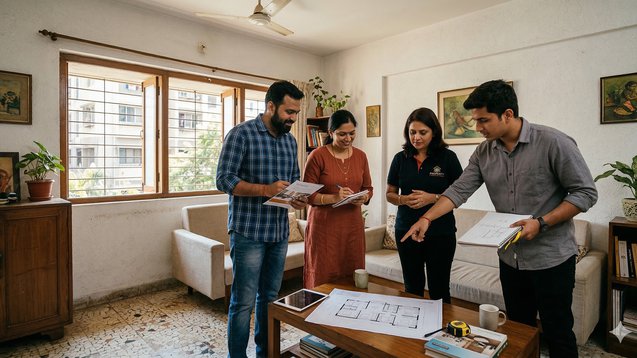
Selecting a Property with Future Renovation Scope
Introduction
Homebuyers in India direct their attention toward the current state of properties which they want to purchase. The decision-making process frequently depends on visual attractiveness which includes fresh paint and modular kitchens and shiny tiles. Buyers who have experience and intelligent investors operate with a different mindset. They ask a more powerful question: What can this property become in the next 5–10 years?
The process of choosing a property for future renovations in the fast-changing real estate market extends beyond personal customization. The strategic approach leads to better living conditions and higher rental income and increased property value over time. Homeowners in both Tier 1 metro areas and emerging Tier 2 and Tier 3 cities can achieve substantial property value increases through upcoming home improvement projects. The way buyers behave in India has undergone a transformation. Younger homeowners demand homes that allow them to change their living arrangements. Property investors seek assets which they can change. Families desire homes which can adapt to their evolving requirements. Understanding renovation potential on Property Aja (https://www.propertyaaj.com) enables you to find hidden properties that other people frequently miss. We need to show the process of property evaluation which enables assessment of current comfort and future potential.
The current market needs testing of renovation potential because it provides better value than other properties.
The real estate market in India experiences more active movement. People buying property in Tier 1 cities have started to explore existing homes instead of purchasing newly constructed properties. Many people prefer to buy properties that are not brand new but which have potential for complete renovation work.
Why?
Renovation projects create three different value improvements which generate new value. The first benefit extends to personal space improvements. The second benefit leads to higher rental property earnings. The third benefit increases the property value for future sale. A practical case study shows this principle. The 12-year-old apartment located in Pune has a price of 10-15 percent lower than current new developments which makes it look outdated. The property needs only intelligent design changes to compete against new developments which require expensive upgrades. In Mumbai Bengaluru and Delhi NCR which are Tier 1 cities with limited land availability residents find investment value through properties that permit renovations. The first reason exists because buyers in Tier 2 cities typically want to update their homes through renovations without building additional space. In Tier 3 markets people who own independent houses enjoy better options for structural modifications. The Property Aja website (https://www.propertyaaj.com) is worth viewing because it includes older listings which deserve your attention. Outdated interior design elements hold some of the best value for customers to discover.
Structural Flexibility: The First Thing to Check
The building's actual structural condition needs assessment before designers can begin their work on modular kitchens and open floor design. Not every property allows meaningful renovation. Intelligent buyers seek answers to these fundamental questions.
Which type of internal wall construction does the building contain?
Does the building's column distance meet requirements for different room configurations?
What is the height measurement of the building's slab?
Do the plumbing shafts maintain a permanent position or allow for movement?
The load-bearing walls in Tier 1 apartments which construction occurred before 2010 create complete obstacles for all major restyling tasks. The newer RCC-framed buildings which replaced the older construction methods now provide greater design flexibility.
Independent houses built in Tier 2 and Tier 3 cities become the most adaptable residential option. The following actions become available to you:
You can extend your room boundaries.
You need to obtain permission before adding new levels to your building.
You can adjust your space design.
The building and municipal permission verification process needs to be completed before any building activities begin. Property Aja (https://www.propertyaaj.com) development assessment requires you to select RCC frame buildings which allow for later design changes. The design option will provide you with more future design possibilities.
Location remains the most important factor which affects building renovation projects.
Buyers frequently make this mistake because they think that a property needs renovation work to compensate for its poor location. Actual results show that this practice leads to negative outcomes. The best interior design solution cannot resolve three core problems which include
The first problem involves insufficient
The second problem involves inadequate social system
The third problem involves areas which have low demand
In Tier 1 cities, renovation-friendly properties perform best in established but slightly aging neighbourhoods think mature suburbs rather than brand-new outskirts. The ideal location for Tier 2 cities sits between upcoming infrastructure corridors which contain existing housing stock and growing customer demand. The central areas of Tier 3 towns which contain independent housing units provide the best potential for home renovation work. The home renovation rule states that you should transform your property instead of making changes to your neighbourhood. The Property Aja website allows users to evaluate properties through two main criteria which include their physical state and the future development potential of their surrounding micro-market area.
Budget Planning: Renovation Costs Across Indian Cities
Renovation budgets show major differences throughout India which results in buyers making common mistakes by failing to understand this expense. The average costs for mid-range interior renovation projects in 2025 will reach the following price points:
Tier 1 cities will charge customers between ₹1,800 and ₹3,500 for each square foot of space. Tier 2 cities will charge customers between ₹1,200 and ₹2,200 for each square foot of space. Tier 3 cities will charge customers between ₹900 and ₹1,600 for each square foot of space. The costs will increase because of structural modifications and plumbing system changes and electrical system updates. The actual situation: A Hyderabad buyer acquires an older 2BHK home at an ₹8 lakh discount compared to a new building project. The home renovation requires ₹4 lakh. The total savings amount to ₹4 lakh which includes a personalized residence. Building work that requires major structural alterations will result in immediate savings to vanish. The situation requires assessment of all temporary housing costs which occur during the renovation process and all necessary permissions from the residential association and all delays caused by contractors and all changes in material costs. Buyers should maintain a contingency fund between 15 and 20 percent to protect against unexpected expenses. The renovation process will experience unexpected challenges which will cause actual results to deviate from initial project estimates.
Rental and Resale Advantage of Renovation-Ready Homes
Metropolitan areas provide renovation-friendly properties with substantial investment potential.
In Tier 1 rental markets:
Tenants increasingly prefer modern interiors
Work-from-home culture values better layouts
Furnished rentals command higher rental rates
Bengaluru residents achieve higher rental returns from renovated older apartments than from basic new construction.
In Tier 2 cities:
Rental premiums exist but are moderate
Families prioritize size and location first
Interior quality is gaining importance
In Tier 3 towns:
Rental uplift from renovation is limited
But resale perception improves significantly
Online listing behaviour also matters. Properties showcased on Property Aja (https://www.propertyaaj.com) with upgraded interiors typically generate more inquiries than untouched older units in the same building. The visual attractiveness of online content affects how people search in today's digital-first environment.
You must confirm all legal and societal requirements which apply to your situation.
This is the point where buyers frequently discover unexpected problems.
Before planning renovations, check: Society by-laws Structural modification permissions RERA disclosures Local municipal rules Building age and condition.
Tier 1 cities require housing societies to implement strict renovation windows and noise restrictions while needing residents to obtain official approvals.
Tier 2 cities enforce their regulations at moderate levels while applying their rules to larger residential complexes.
In Tier 3 towns and independent houses, flexibility is higher — but municipal approvals still matter for structural changes.
You must consider stamp duty and registration costs. property title needs to be clear and FSI and FAR requirements must be met for future major structural expansion which includes adding extra floors to independent homes. A legal due diligence process which takes only a short time will prevent multiple end-of-month delays which occur later in the process.
Buyer Psychology: Who Should Prioritize Renovation Scope
Not every buyer needs renovation flexibility. Your buyer profile will determine your need for renovation options. You should strongly consider it if you are: A long-term end-user An investor targeting value-add opportunities A buyer in high-cost Tier 1 markets Planning phased home upgrades Comfortable managing contractors. You may not need it if: You want immediate move-in convenience You prefer turnkey homes You have limited time for project supervision You are buying purely for short-term holding. Young urban buyers are increasingly open to renovation projects because they value customization. Traditional buyers in Tier 2 and Tier 3 cities still prefer ready-to-move homes —but this is slowly changing.
Your personal lifestyle choices should take priority over your need to follow social trends.
Future-Proofing: Design Choices That Age Well
A renovation-friendly property requires you to consider more than just cosmetic upgrades. The project requires you to concentrate on permanent changes which will maintain their worth throughout time.
The main improvements bring high impact through three specific actions:
The project will create open space between living and dining areas.
The team will work to enhance natural light access throughout the building.
The project will implement smart solutions for storage needs in the building.
The team will enhance the building's electrical system through capacity upgrades.
The team will install plumbing systems that meet future needs.
The team will create designated areas for remote work.
Homeowners should avoid excessive customization because it decreases property value when they sell their home. The presence of highly specialized building designs and particular design elements creates restrictions on buyer options.
In Tier 1 cities, neutral, modern interiors typically deliver the best ROI.
The Tier 2 market shows successful results through practical enhancements which include storage space and kitchen design systems.
Town centres in Tier 3 locations experience their highest property worth when building expansions receive authorization. The process of renovation should function as value engineering because its purpose goes beyond mere decoration.
Smart Property Hunting Strategy
The property filtering method should be changed when you search for renovation opportunities.
The selection process should include both new projects and these options:
8–15 year old buildings in prime locations
Large carpet area homes with basic interiors
Independent houses in established neighbourhoods
Corner units with better light potential
Properties priced slightly below market average
The Property Aja website (https://www.propertyaaj.com) allows users to view floor plans and building age and structural type information which requires more than just viewing photos. The least attractive property actually provides the highest financial return.
Conclusion
The selection of properties that have potential for future renovation work represents the most effective method for success in the current Indian real estate market. The process needs to establish an equilibrium between four critical elements that include structural feasibility and location strength and budget discipline and long-term vision.
In Tier 1 cities, buyers can acquire renovation-friendly homes which enable them to construct high-end living spaces while decreasing their expenses. The second market provides businesses with opportunities to update their operations. The third market provides businesses with opportunities to develop their growth strategies. The key is simple: look beyond the surface. The property has existing value because its outdated design provides access to an essential location and its fundamental architectural framework remains strong. The ability to identify future value of properties will enable Indian homebuyers to make more intelligent purchase decisions because they increasingly understand design and investment. Your home will develop together with your life if you make a smart decision today.
FAQs
1. Is buying an older property for renovation a good investment in India?
The answer is yes because Tier 1 cities present expensive new construction solutions which make older properties more valuable. Strategic renovation work improves both living comfort and resale value of properties which have strong building quality and prime location.
2. How much of the renovation budget should I keep aside?
The property cost for mid-level upgrades should be kept at 10 to 20 percent according to the safe thumb rule. The additional contingency buffer should be maintained because hidden repairs tend to appear during work commencement.
3. Can I break walls in any apartment during renovation?
No. Only non-load-bearing partition walls can usually be modified. Engineers need to approve structural walls while building owners must obtain authority from the society. Architects must check building drawings before they can create new layout designs.
4. Do renovated homes get better rental returns?
In Tier 1 cities, yes —especially for young professional tenants. The rental premium in Tier 2 and Tier 3 markets brings about better occupancy rates and improved tenant quality.
5. Are society approvals mandatory for interior renovation?
Most apartment complexes require this approval. Societies control three aspects of building work which include work timing and debris disposal and structural modifications. The company will face penalties and work suspension if it fails to follow this requirement.
6. Should first-time homebuyers choose renovation projects?
Homebuyers should only undertake renovation projects when they possess sufficient project management skills to handle temporary disruptions. Buyers who want an easy moving experience should choose homes that are ready for occupancy while buyers who wait can obtain greater value through renovation.
Read more about property matters with our specialists and browse the latest property listings on Property Aja. Download the app from the Play Store and App Store now for easy buying, selling, and renting!