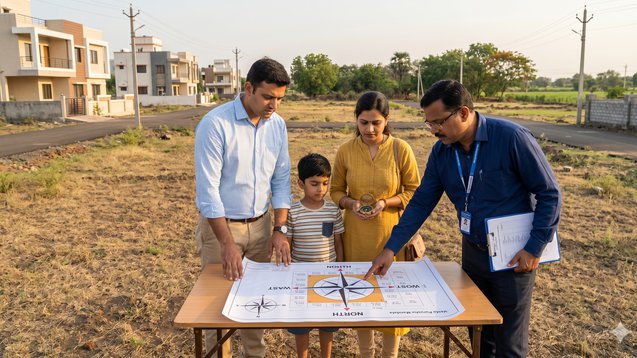
Plot Buying Vastu Tips, Avoid These Mistakes
Introduction:
The process of purchasing land in India functions as the most authentic method of investing in real estate. The acquisition of land goes beyond land ownership because it provides you with the ability to build in the future and it enables your property to increase value over time. Plotted developments in Hyderabad and suburban land parcels near Bangalore and emerging zones in Nagpur show one commonality because Vastu determines which locations buyers should select. The reason for this situation exists because land ownership creates a permanent base which will develop to its highest potential in all subsequent processes. The common mistake buyers make occurs when they choose between two opposite approaches. People tend to follow Vastu superstitions without thinking or they stop following it altogether. People who choose both of these options will experience future dissatisfaction. The actual purpose of Vastu for plots requires people to make choices based on their knowledge instead of pursuing an impossible outcome. The way people organize their building sites requires both physical elements but also requires residential development to have proper legal documentation and its present situation and future expansion possibilities. The blog presents the most common Vastu errors that plot buyers commit together with their solutions. This guide enables you to see things with good understanding while you visit Property Aaj for site evaluations and make investment decisions.
Mistake 1: Overvaluing Direction Without Context
Let's start with the mistakes people make. They focus much on the direction of a plot. In Vastu direction does matter.
North-facing plots are linked to wealth.
East-facing plots are good for growth and health.
The problem is many buyers think direction is the thing that matters. That is not true. In cities like Bangalore or Mumbai a north-facing plot in a bad location may not increase in value as much as a west-facing plot in a good area. In cities direction still matters, but it is not the only thing. The location is also very important. In smaller towns people prefer north and east-facing plots, which can affect how much you can sell the plot for later. A better way to do it is to think about direction and other things, like:
How easy is it to get to the plot?
What kind of roads and facilities are being built?
Will people want to live in the future?
Direction is important. You have to think about the whole picture.
Mistake 2: Ignoring Plot Shape and Dimensions
A plot's shape is just as important as its direction.. People often forget about it. Here are some ideal shapes:
Square
Rectangular
On the hand you should avoid:
Triangular plots
uneven shapes
This is really important. From a Vastu point of view regular shapes help the energy flow Also they make it easier and cheaper to build on. In cities like Hyderabad many plotted developments have Vastu- shapes. In smaller towns you might find irregular plots for sale at lower prices. Here's a common problem: A buyer picks an irregular plot thinking they are saving money. They end up spending more on construction adjustments. Sometimes what seems like a good deal turns into a long-term compromise on a plot of land. You have to think about the plot shape and dimensions. The plot shape and dimensions are really important. You should choose a plot, with a shape and dimensions.
Mistake 3: Not Checking Plot Slope and Elevation
This is one thing that people often ignore when it comes to Vastu. Ideally,
The plot should slope towards the north or east.
A higher elevation in the south or west is preferred.
There are other important things to think about. The slope of your plot affects:
How water drains
How water flows
How stable your construction is
In cities developers usually make sure the plots are level so you do not have to worry about slope issues. In smaller cities especially when you buy land independently this becomes very important. Imagine buying a plot that seems okay on paper but has waterlogging issues during the season. That’s not a Vastu problem, it's a real practical issue, with your land.
Ignoring Road Placement & Access (mistake no. 4)
Road positioning relative to your property is important in Vastu Shastra. Best:
North or East side (front side)
Okay, but not ideal:
T-Junction (going directly into your property)
From a practical perspective though.
In urban areas (like Pune, Gurgaon), there are many subdivisions that have complicated site plans. The road positioning may not always be ideal. Before you dismiss a lot based solely on its Vastu principles, consider the following:
Traffic flow
Access
Safety
Therefore, a lot that is in an area considered well-accessible (but may not conform entirely to Vastu principles) is likely a better long-term investment than a property that is located in an ideal geographic position but has very poor access.
Fifth Mistake: Ignoring Your Location and Your Environment
Vastu doesn't just affect your land; it also affects what is around your land. Be aware of:
How much open land there is in the north or east
Whether there is congestion or clutter
The proximity of water bodies
In a tier 1 city, you might have to make a compromise due to density. In a tier 2 or tier 3 City, you may have a better opportunity to align with Vastu principles. Things to consider when evaluating your environment:
Industries or pollution around you
Future projects that could impact your environment
You will increase the resale and liveability of your home by having a lot of peace in your environment.
Mistake 6: Ignoring Legal and Documentation Checks
I want to tell you something that's really important. No matter how good the Vastu of a place is, it cannot fix problems with the law. Before you buy a plot of land you should always make sure of a things:
Title
Land use approval. This means checking if the land is meant for residential use or for farming
Local authority permissions
In different states the rules are different. For example in Maharashtra projects that involve plots of land have to follow the rules of Maharajah. Other states have their versions of RERA. In cities it is more common for people to get cheated when they buy land especially when the area is not regulated properly. A lot of people get very excited when they find a plot of land that's perfect according to Vastu. They forget to do their research. This can be an expensive mistake to make. Websites, like Property Aaj can help you find plots of land that have been checked and approved which can reduce the risk of something going wrong.
Mistake 7: Paying Too Much for “Perfect Vastu”
Let’s discuss the costs. In many markets:
North-east corner plots command a premium
East-facing plots are priced higher
But is it always worth it? In Tier 1 cities, appreciation depends more on location and infrastructure. In Tier 2 cities, Vastu can influence pricing moderately. In Tier 3 cities, it can significantly impact demand. The following strategy shows intelligence: You should not pay more than necessary for Vastu. Assess the following factors:
Future development
Connectivity
Demand trends
The slightly less "perfect" plot will generate better results than the premium Vastu plot which exists in a stagnant area.
Mistake 8: Not Planning Future Construction While Buying
The most important mistake buyers make when purchasing a plot is their failure to create plans for upcoming construction work. The process of purchasing land begins with the initial acquisition, but its actual worth depends on your capacity to develop the property. Every plot requires assessment of upcoming needs, which include house orientation and room placement and parking space and garden or open area provisions. Vastu requires design work to begin at the plot stage because Vastu planning requires design work to commence at the plot stage. The plot direction seems perfect, yet its limited frontage and awkward dimensions restrict future architectural design options. In Tier 1 cities, planners must use exact methods to plan their projects, but Tier 2 and Tier 3 cities provide planners with larger plots that allow for flexible design yet still need careful planning. Your investment strategy needs a forward-looking approach that enables your present needs to complement your future goals.
Mistake 9: Following Myths Instead of Logic
The second mistake occurs when people depend on Vastu myths instead of using practical knowledge to assess their situation. Many buyers believe rigid ideas such as “only north-facing plots are good,” “south-facing plots are always bad,” or “irregular plots bring bad luck.” The actual situation requires people to understand all its complicated elements. Modern Vastu systems permit new interpretations which permit users to maintain equilibrium without following established rules. The combination of Vastu with location assessment and connectivity analysis and budget evaluation will improve decision-making processes. The practice of following myths without understanding their background will restrict your choices while resulting in lost chances. The combination of traditional knowledge with modern practical applications creates an effective solution for all situations.
Mistake 10: Not Comparing Multiple Options
The buying process requires its most basic yet most essential step which people fail to understand. Many buyers visit one or two plots, develop an emotional attachment, and make quick decisions without exploring alternatives. This approach often results in regret later. Instead, it’s advisable to compare at least four to five options, carefully evaluating their pros and cons, pricing trends, and long-term potential. The process of comparing multiple properties enables you to understand market value better while discovering which property suits your requirements best. The process becomes easier because Property Aaj provides users with many verified listings together with valuable information. The process of decision-making becomes better when you spend extra time comparing options because it protects your investment.
Conclusion:
People make a permanent choice when they purchase land because this decision affects their future descendants. Vastu helps you make decisions but you should use it as a permanent decision-making tool that prevents you from exploring various options. Most mistakes buyers make are not due to ignoring Vastu but rather misunderstanding or overemphasizing it. The essential elements of a property include its direction, shape, slope and surroundings whereas practical elements include legal clarity and location and infrastructure and future growth potential. In Tier 1 cities, practicality often takes priority due to space constraints, whereas in Tier 2 cities, a balance between Vastu and functionality works best. People in Tier 3 cities still follow Vastu practices but they need to make decisions based on their available knowledge. The correct plot for your needs exists when it meets your complete requirements for financial needs and lifestyle demands and future aspirations. Your investment will become better through research evaluation and advanced planning because these activities lead to better investment decisions.
FAQs
1. Which plot direction is best according to Vastu?
North and east-facing plots are generally preferred but other directions can also work with proper planning.
2. Is plot shape really important?
Square and rectangular plots provide optimal advantages because they meet both Vastu requirements and construction efficiency needs.
3. Should I avoid south-facing plots?
The answer to this question does not require an absolute yes or no because their suitability depends on the specific layout and intended activities.
4. Does Vastu affect plot pricing?
Yes Vastu preferences drive demand in Tier 2 and Tier 3 cities which results in pricing changes according to these preferences.
5. Can I fix Vastu issues after buying a plot?
The construction process allows management of some aspects yet the direction and shape of the plot remain fixed.
6. How can I find reliable plot listings?
Use trusted platforms like Property Aaj and verify legal documents before purchasing.