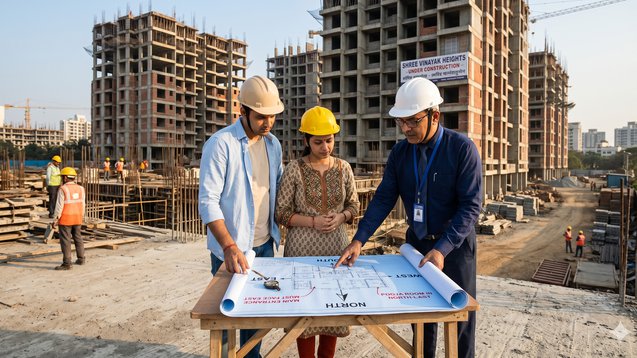
Vastu Tips for Under-Construction Properties
Introduction:
The process of purchasing an under-construction property in India presents distinct challenges when compared to the process of buying a home that is ready for occupancy. Your decision-making process extends beyond existing options because you will allocate funds to an investment which remains in development. Vastu Shastra gains increased importance because of this situation. Think about it. When you book a flat in a developing project in Bangalore, Pune, or even a fast-growing Tier 2 city like Lucknow, you often get access to floor plans, tower orientation, and layout details before construction is completed. The system provides you with an exceptional benefit; you can assess Vastu elements at an early stage which enables you to choose better options. But here’s the challenge. Many buyers either ignore Vastu completely during booking or overthink it based on incomplete information. Builders, on the other hand, often label projects as “Vastu-friendly” without clearly explaining what that means. So how do you strike the right balance? This blog provides practical Vastu guidelines which you can use to evaluate under-construction properties through assessment processes and determination of essential elements and assessment of permissible changes. The guide enables you to make informed investment decisions whether you search Property Aaj for options or explore the project site.
Importance of Vastu in Construction Projects
Homebuyers face permanent conditions when they purchase an existing home. The people who buy properties that builders currently construct face different possibilities. The situation provides a major benefit. The first-stage buyers in Tier 1 cities can select superior units inside a building project because they can assess different unit orientations and their respective floor heights and architectural designs. The developers in Tier 2 cities provide their customers with design flexibility which includes minor changes to their building layouts. The optimal time to assess building design exists at this moment:
Building orientation
Unit facing
Placement of rooms
Balcony direction
The buyers in Tier 3 cities usually make property reservations in advance because they want to obtain units that meet Vastu requirements. The following situation serves as a real-world demonstration: Two buyers in Hyderabad book flats in the same project. The buyer who booked first received a unit that faced north-east direction. The other buyer who booked later faced restricted selection. People need to understand how timing affects their situation.
Understanding Project Orientation Before You Book
One big advantage of properties that are still being built is that you can see the site plans. Before you book, make sure to ask for:
Master layout plan
Tower orientation
Unit direction
When it comes to Vastu, North and east-facing units are usually the most preferred. The north-east corners are thought to be very auspicious. Let's be practical. In cities with dense populations towers are often built to use the land as much as possible. Not just for Vastu perfection. Instead of looking for the perfect option, find the best one that's available. In cities like Mumbai or Gurgaon even high-end projects can have orientations in the same tower. Websites, like Property Aaj let you easily compare these options.
Selecting the Right Unit Within the Project
Not all flats in the same building are equal. Even within one tower:
Some units get better sunlight
Some have better airflow
Some align better with Vastu
When evaluating units, focus on:
Entrance direction
Balcony placement
Natural light
For example:
A mid-floor east-facing unit with open views may feel significantly better than a top-floor west-facing unit with heat exposure even if both are Vastu-acceptable. In Tier 1 cities, such micro-level differences can impact resale value. In Tier 2 and Tier 3 cities, they influence buyer satisfaction more directly
Entrance Direction: Early Advantage in Under-Construction Projects
Unlike ready properties, under-construction projects often allow you to choose the entrance direction if you book early.
Ideal directions:
North
East
Acceptable:
West (with good planning)
Debated:
South (but not always negative)
Here’s the key insight:
In early booking stages, you have the luxury of choice. Later, you may have to compromise. In cities like Bangalore and Pune, early investors often pick units based on entrance direction for both personal use and resale advantage.
Design Stage - Kitchen and Bedroom Planning
Under-construction rental properties have a major advantage at this stage.
You can now see how kitchens will be placed based on the following positions:
Kitchen - (preferable position is southeast).
Master Bedroom - (preferable position southwest).
Children's Bedroom - (preferable position is northwest/west).
Depending on the project, some developers of Tier 2 cities will allow minor changes to the location of dishwasher kitchen bases or entryways. In Tier 1 cities you are somewhat limited in terms of customisation; however, being aware of various options allows you to make better choices. For example, in Chennai, a buyer that is looking for a unit will be able to find one where the kitchen is already placed according to Vastu guidelines, so he/she will not have to move it later.
Direction of the Sunlight, Balcony, and Windows
The amount of sunshine will affect how well you can enjoy your home, both for comfort, as well as from a Vastu perspective. When looking at new construction properties, look for:
The location of the balcony
The orientation and placement of windows
Other constructions around you
In general, the preferred orientations for your balcony are the north and east direction, while west-facing balconies provide beautiful views at sunset. In urban areas, window and view orientation take precedence over strict adherence to Vastu. Consider the following:
Will sunlight be obstructed by buildings nearby?
Do the windows allow for cross ventilation?
These factors greatly impact the liveability of the new home and the potential future demand for renting it out.
Building Area and Floor Positioning
The construction of buildings under development provides the benefit of selecting your desired floor level. Higher floors:
They provide superior lighting and ventilation to building occupants.
They create a quieter environment while they decrease elements that produce noise and pollution.
Vastu does not impose any particular floor height requirements but this system operates better when spaces receive maximum natural light.
The evaluation of building position requires verification through two specific conditions.
The northern and eastern open areas produce beneficial effects for the building.
The building site should not be located in areas with high traffic density.
People in Tier 1 cities must make concessions because they cannot reach their ideal solutions. In Tier 2 cities, you may find better planning.
Legal and RERA Verification Are Very Important
As you consider Vastu, also remember that you must verify legal safety. Be sure to do a thorough review of an under-construction property:
RERA registration
Plans and approvals
Reputable builder
For Example: Maharashtra has MahaRERA governing all projects. Different states have separate RERA regulators with slightly different compliance requirements. Even if the Vastu is perfect, but there are delays in completing the project or there are problems with the legality of the project, the Vastu won't help you at all. You can use sites, such as Property Aaj, to help you find a project that has been verified and can reduce your risk.
Understanding prices, investments, & Vastu premium.
Let's talk about finances. For an under-construction property:
Pricing will be lower when properties are at an earlier stage of development.
Vastu compliant units could very well sell at higher prices than non-Vastu compliant units as time goes by.
The majority of buyers in the major cities will pay a premium for units that face north-east or east, compared to buyers in other tier-2 localisation.
For an investment:
In Australia, Vastu compliant units attract more interest from buyers.
As a result, they tend to sell faster than non-Vastu compliant units.
However, appreciation is still strongly driven by location.
The best-case is to take a balanced approach and remember not to pay too much for the sake of Vastu compliance.
Common Mistakes Home Buyers Make
Here are some mistakes people make:
Booking a flat without checking its orientation
Believing everything the builder says
Not paying attention to the layout
Focusing much on one Vastu rule
For instance: A home buyer books a flat that is said to be Vastu-friendly but they don't check the floor plan. Later they find out that the kitchen is not in a spot. You can avoid these surprises by doing your research. Check the flats orientation and layout before booking. Don't just rely on what the builder tells you. Look at the floor plan. Make sure the Vastu rules work for you. A home buyer should always do their homework before making a decision. It's their dream home all.
How to Check Before Buying a Flat
Here is a way:
Look at the master plan
Pick units based on their direction
See where the rooms are
Make sure there is sunlight and air
Check if all papers are okay
Tools on Property Aaj can help you with this. Think about your future. You are not just buying a flat, you are choosing where you will live.
Conclusion:
The advantage of under-construction properties allows you to make decisions before the final design work begins. The early stage of Vastu implementation offers you the maximum chance to succeed. You can evaluate direction, layout, and surroundings before committing. People should avoid the need for perfection. Real estate transactions in Tier 1 cities necessitate adaptable approaches because these markets require flexible solutions. You should prioritize Vastu principles which determine entrance and kitchen and bedroom locations while considering factors such as location and legal security and cost. Vastu principles continue to impact buyer behavior in Tier 2 and Tier 3 cities because key principles provide better customer contentment and improved resale value. A thoughtful, informed decision will provide future benefits for you.
FAQs
1. Is Vastu more important for under-construction properties?
Yes, because you have more flexibility to choose direction and layout before construction is complete.
2. Can I customize Vastu aspects in under-construction flats?
In some cases, especially in Tier 2 cities, minor customizations are possible. In metro cities, options are limited.
3. Do Vastu-compliant units cost more?
They may be priced slightly higher, especially in premium projects or later stages of construction.
4. Should I book early for better Vastu options?
Yes, early booking gives you more choices in terms of direction and layout.
5. Does Vastu affect resale value?
Yes, especially in Tier 2 and Tier 3 cities where buyer preferences strongly favor Vastu-compliant homes.
6. How can I verify project details?
Use trusted platforms like Property Aaj and check RERA registration before making a decision.