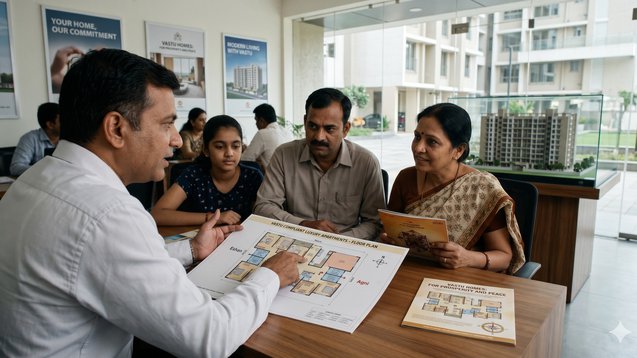
How Builders Market Vastu Homes
Introduction:
New residential project brochures in India which people read today always display the term Vastu-compliant as their main design element . The term appears throughout the text because it functions as an essential element of the content. The presence of Vastu in most cases proves to be an intentional design choice. Vastu has evolved into a marketing tool which Indian real estate developers use today. The Vastu system enables builders to sell their projects through any housing development in Gurgaon or Nashik or third-tier cities. The term Vastu-compliant which builders use in their projects needs to be explained through its actual meaning. The study of Vastu focuses on its design requirement which people use for marketing purposes. Buyers interested in Property Aaj (https://www.propertyaaj.com) face this issue as a major challenge. You might find two similar properties, same price, same location but one highlights Vastu compliance while the other doesn’t. The Vastu-marketed project appears more appealing to architects and design experts. The article explains how Indian builders use Vastu home decoration to sell their properties to customers while showing which elements of their business operations they actually perform.
Why Vastu Is So Significant to Selling
To start with, we should consider why builders are placing so much emphasis on Vastu. It’s simple, the demand for homes based on Vastu is real! There is no doubt about that. Home purchases in India are not solely about money; they are about emotions, cultures, and spirituality. To many families, their home is not just simply an investment but rather a significant lifetime commitment. As a result of this, anything that offers the opportunity for growth, peace, and positivity becomes very important. In major cities such as Mumbai, Bengaluru, and Delhi NCR where the consumer is highly practical, Vastu will lend an additional perceived value to their home. However, in Tier 2 cities such as Nashik, Indore, or Lucknow it frequently becomes the deciding element. In addition, in smaller towns (Tier 3), Vastu can frequently take precedence over all other factors. Builders have a solid grasp on this type of thinking. Thus, builders have not simply disregarded Vastu; they have embraced it as an added value component of their homes (i.e., similar to amenities, location, and price).
What Builders Actually Mean by Vastu-Compliant
Here is where things get a little complicated. When a builder says that a project is Vastu-Compliant it does not always mean that every single flat is following the Vastu principles. In cases it means that the project is using the basic Vastu guidelines. This could include things like:
Most of the units are facing east or north
The main entrances are properly aligned
The kitchen and bedroom are placed in a way that follows the Vastu logic
There are spaces or balconies in the favourable directions
But when you have a really big apartment complex it is almost impossible to make every single unit perfectly aligned with the Vastu principles. There are a lot of things that get in the way like the structure of the building and the shape of the land and the Floor Area Ratio limitations. So what do the builders do in this situation? They try to make the best of it. Then they market the whole project as being Vastu-friendly. For people who are looking to buy a property on Property Aaj (https://www.propertyaaj.com) this is something that they should know about. A project that is Vastu-Compliant does not mean that every single flat in that project is Vastu-perfect. The Vastu-Compliant project and the Vastu-perfect flat are not the thing.
How to Make Sense of Marketing Language vs Reality
Examples of Marketing Language used with Real Estate Marketing in the Real Estate Industry is about creating a "perception" in the minds of buyers. Vastu is an ideal example of this type of marketing. Examples of common phrases are:
"Designed using an Ancient Vastu Principle"
"Scientifically Planned Vastu Layout"
"100% Vastu Compliant Homes"
However, should these statements be taken at face value? Probably not! While some real estate developments are based on some of the principles of Vastu, many are more concerned with the words used than the facts surrounding them. In Tier 1 markets people who want to buy a house will probably check if what the builders say is true.. In Tier 2 and Tier 3 cities people often make decisions based on how they feel about the house. That does not mean that builders are trying to trick people.. It does mean that buyers should ask the builders some specific questions about the house.
What does it mean for a house to be Vastu-compliant?
Which directions do the builders think are important, for a Vastu-compliant house?
Are all the houses built in a way that follows Vastu rules or only some of them?
If buyers ask these questions they will have an understanding of what they are getting and that can save them from making wrong assumptions later about the Vastu-compliant house.
How Builders Design Layouts to Appeal to Vastu Buyers
Modern builders don’t just market Vastu they design around it where possible. For example:
Entrances are often planned in east or north directions
Living rooms are positioned to receive maximum light
Kitchens are placed in southeast zones wherever feasible
Bedrooms are aligned for optimal sleeping directions
In large townships builders create clusters where most units follow similar directional alignment. In Tier 1 cities space constraints limit flexibility While builders in Tier 2 and Tier 3 cities can use Vastu design because land parcels are bigger. This is why you’ll often find better Vastu-aligned layouts in emerging cities compared to congested metro areas.
Pricing Advantage of Vastu-Compliant Units
Many buyers overlook this fact because Vastu impacts their pricing assessment. East-facing or north-facing flats command higher prices in the real estate market. The market price increases between three to ten percent in various cities and projects. The market price increases because customers want more of the product. The first-tier cities show a subtle price increase which remains detectable. The second-tier markets display a more visible price increase. The third-tier cities show that buyer preferences change because of this factor. Builders use this to their advantage:
The “Vastu-perfect” designation markets their top-tier units.
The market offers competitive pricing for their less desirable properties.
The “better energy” upgrade option motivates buyers to enhance their purchases.
The situation presents investors with an intriguing investment opportunity. The rental yield from a unit becomes more profitable when its entry cost decreases.
Vastu Marketing in Luxury vs Affordable Projects
The market segment determines how Vastu marketing efforts will proceed. The luxury market uses Vastu as a component of its complete lifestyle package. The system functions through its core design elements which include wellness and energy balance components. The system provides direct information about directions and layouts and their respective advantages in mid-range housing. Vastu functions as a powerful marketing tool in affordable housing projects. The company uses its marketing campaign to show complete design compliance which helps them sell to new customers who contact them for their first purchase. Property Aaj users start their property search by selecting their preferred budget range but they choose Vastu as their final property decision factor.
Tier-Wise Buyer Psychology Around Vastu Homes
Understanding the psychology of buyers based on tier levels across different cities is an important step in the process of understanding buyer psychology. In Tier I Cities, the buyer is very practical and looks at several factors before making a purchase, such as location, connectivity, and return on investment. Although they will take into consideration Vastu, for most buyers, it will not be a determining factor in their ultimate decision to purchase. On the other hand, Tier II Cities will have a balance of respect for Vastu as well as respect for pricing or location. In Tier III Cities, Vastu compliance will generally weigh heavily on the buyer’s mind. A buyer may wish to wait up to 8 months before purchasing if a non-compliant home is available for them to purchase. Because of this, many builders will adjust their marketing efforts accordingly to reflect the psychology of buyers in each market segment. This is why the same builder can place a greater emphasis on Vastu for a Tier II project while placing more value on the addition of selling amenities in a Metro project.
Legal and Regulatory Perspective Where Vastu Stands
Vastu holds no legal validity in the field of real estate according to this essential information. The RERA guidelines together with home loan approvals and stamp duty and registration processes do not recognize Vastu compliance requirements. Banks will approve a loan application for a flat that faces west. Vastu principles do not influence authorities about approved building layouts. Vastu exists as an individual choice because it lacks any legal validity. The market demand for Vastu-compliant properties exists since the technology has developed. A property that follows Vastu principles will sell more quickly than other properties. A non-compliant one might take longer-but it won't be unsellable.
Real-Life Scenario: A Buyer’s Decision Journey
Let’s take a practical example. An IT professional in Pune is choosing between two 2BHK apartments:
Flat A: East-facing, slightly higher price
Flat B: West-facing, better layout and lower cost
Initially, they preferred Flat A because of Vastu requirements. But after evaluating commute, layout efficiency, and budget, they choose Flat B. They made small Vastu changes when they adjusted their lighting and furniture arrangement and decorative items at the entrance. Result? A comfortable home without overspending. This is the reality for many buyers today balancing practicality with belief.
Here’s How to Make Better Buying Decisions
What steps can be taken to evaluate a Vastu home as marketed?
Always ask for the *real and actual* floor plans. Don’t base your decision solely on the marketing language there.
Value *functionality*. A house that is well-ventilated, has lots of natural light, etc., often feels much more comfortable than, say, a perfect *Vastu* floor plan.
Take into consideration the *flexibility* of the home. Small problems with Vastu can be fixed easily without changing walls.
Use platforms like Property Aaj (https://www.propertyaaj.com) to compare homes in your area before making your final decision.
Ultimately, your goal is to find the right home for you, not necessarily the perfect home.
Conclusion
Vastu has become a very important part of real estate marketing in India, and for good reason. It has a strong connection to how buyers think, their cultural beliefs, and how they make decisions based on their feelings. But like any other marketing tool, it has to be understood in its own right. Builders do use Vastu principles, but not always in the best way. Sometimes, marketing language makes things seem bigger than they are. And prices can show how much people think something is worth instead of how different it really is. As a buyer, being aware is your best weapon. Don't ignore Vastu, but don't let it take over everything else. Pay attention to the layout, ventilation, location, and how well it works in the long run. Don't let Vastu hold you back; let it guide you. A home isn't just about where it is; it's also about how it fits into your life.
FAQs
1. Do all builders genuinely follow Vastu principles in their projects?
Most builders follow basic Vastu guidelines which include entrance direction and room placement but they face challenges with complete compliance because of building design limitations. The marketing claims need verification through actual evidence because specifics require confirmation.
2. Why do east-facing flats cost more in many projects?
The traditional belief which associates east-facing flats with auspiciousness drives people to seek these apartments. Builders use this demand to price such units slightly higher compared to west or south-facing options.
3. Is it risky to buy a non-Vastu-compliant home?
The answer depends on particular circumstances. Many homeowners live comfortably in such homes. Proper lighting and layout planning together with minor adjustments enable effective management of Vastu issues.
4. Does Vastu affect home loan approval or legal documentation?
Vastu does not hold any value for banks and legal authorities. Home loans registration and approvals occur through assessment of legal and financial aspects which do not consider directional orientation.
5. Are Vastu-compliant homes better for resale?
The answer to this question depends on specific market conditions. The property will attract more buyers in Tier 2 and Tier 3 cities. The main factors which determine resale value are location and pricing.
6. Should I prioritize Vastu over location and budget?
The answer to this question should be no according to ideal standards. The first priority should be location because budget and usability need to come first. Vastu can be a secondary factor. The approach which maintains balance between two elements leads to best long-term results.