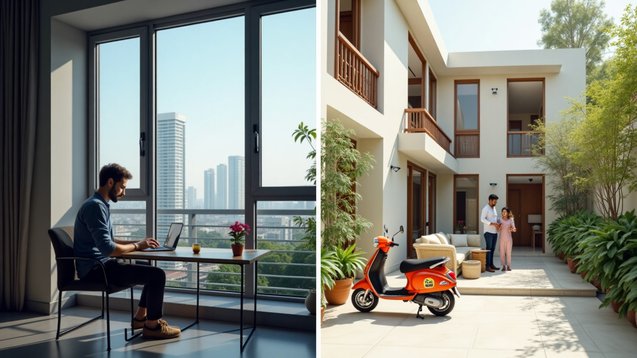
Introduction
India's rental housing sector is experiencing a paradigm shift in 2025. Economic revival, hybrid work patterns, and enhanced infrastructure are making both metro cities and Tier 2 cities witness distinctive rental patterns. As metros still charge premium rents in upscale areas, Tier 2 cities are also becoming low-cost and profitable options for both renters and owners.
As demand becomes increasingly diversified, portals like Property Aaj have become a necessity for navigating the shifting landscape. Whether one is a professional looking for a flat in Mumbai's Andheri or a family looking for a 3 BHK in Bhopal, having the facility to browse verified listings, compare rentals, and sign rental deeds online is transforming the way Indians rent homes today.
The Shifting Dynamics of Metro City Rentals
High Demand in Business and Tech Hubs
Metropolitan cities like Delhi, Mumbai, Bengaluru, Chennai, Hyderabad, and Pune continue to be rent hotspots as they are employment drivers. With jobs courtesy of tech, finance, and consultancy companies attracting professionals throughout the year, residential demand is growing—particularly near corporate offices and metro-connected areas.
In Mumbai, areas such as Powai, Bandra, and Lower Parel are witnessing rents increase by 12–18% year-on-year. Likewise, Bengaluru's Whitefield and HSR Layout are still drawing IT professionals, driving rental rates higher.
Preference for Compact But Premium Homes
Renters in metros value:
Distance to offices or public transport
Contemporary amenities (gym, security, parking)
Furnished or semi-furnished apartments
Because of increasing rents, the tenants are settling for size but not lifestyle or location. Therefore, 1 and 2 BHK apartments with smart interior and maintenance facilities are highly sought after.
On Property Aaj, options such as "furnished only," "walk to metro," and "under ₹25,000 rent" are the most frequently applied filters in such markets.
Landlords Getting More Leverage
The post-pandemic market rebound and growing in-migration to urban areas have tipped the equation in favor of landlords. Most now insist on:
3–6 months' rent as advance
Strict lease conditions
Increased rent hikes per annum
Online platforms such as Property Aaj make it possible for landlords to put up properties, handle leads, and even sign rental contracts online—reducing vacancy duration and paperwork issues.
Tier 2 Cities: India's Emerging Rental Stars
Affordable Yet Rising Demand
Cities such as Indore, Lucknow, Bhopal, Coimbatore, Bhubaneswar, Jaipur, and Surat are now attracting renters who are priced out of metros or want a superior quality of life.
In these cities, renters can readily discover 2 or 3 BHK flats for below ₹15,000/month—a small fraction of metro rents. This affordability is particularly appealing to:
Remote workers
Retirees
Small business owners
Students and healthcare professionals
On Property Aaj, Tier 2 city listings have risen by more than 40% in 2025, indicating increased interest and supply.
Effect of Work-from-Home and Hybrid Work Models
The pandemic re-mapped the geography of work. Today, people drawing metro salaries are choosing to reside in Tier 2 cities and work from there. They get:
Lower living costs
Less traffic
Better savings
This is especially evident in Kochi, Chandigarh, and Mysuru, where professionals are renting high-end apartments in calmer localities—typically offering finer amenities than they'd find for the same price in a metro.
Investment Options for Landlords
In Tier 2 cities, rental returns are now on par—or sometimes even better—than metros due to:
Lower cost of purchasing a property
Strong local industry, student, and medical tourism demand
Fewer legal and registration issues
Landlords who utilize Property Aaj in Nagpur or Vadodara cities mention that they are able to find tenants 3x quicker by utilizing digital resources such as:
Online listing management
Rental agreement templates
Lead tracking dashboard
These resources have created a level playing ground between metro and non-metro property investors.
Key Differences in Metro vs. Tier 2 Rental Trends
This comparison highlights how Tier 2 cities are closing the gap while offering a fresh balance of affordability and opportunity.
How Property Aaj Assists Renters & Owners in Both Markets
Whether in Connaught Place or Kanpur, Property Aaj provides an easy rental experience:
Verified Listings: Stay away from fraud and misunderstandings with real photos and transparent terms
Filter by Rent, Furnishing, Size, Proximity
EMI-to-Rent Comparison Tools: Choose between renting or purchasing better in a market
Instant Alerts: Receive alerts about new listings and rent reductions
Online Agreements & Documentation: For trouble-free move-ins
With rising traffic from metros and Tier 2 cities, Property Aaj is fast emerging as the most popular rental portal in India.
Conclusion
India's rental space in 2025 is no more metro-focused. While metro cities such as Bengaluru and Mumbai are still the rental giants, Tier 2 cities are establishing a robust niche with affordability, improved yields, and changing demand.
Whether you're a landlord seeking steady returns or a tenant seeking value, both market types have intriguing opportunities. And with digital tools like Property Aaj, smart rental choices—be they in any city tier—are now simpler than ever.
FAQs
Q1: Are rents increasing in Tier 2 cities?
Yes, consistently. Rents have increased 8–12% in certain Tier 2 cities as a result of enhanced infrastructure and increased demand.
Q2: Which cities offer the best rental yields in 2025?
Tier 2 cities like Indore, Bhopal, and Bhubaneswar offer higher yields (up to 5%) due to low property prices and steady occupancy.
Q3: Is it better to rent in a metro or a Tier 2 city?
Depends on your goals. Metros offer proximity to jobs; Tier 2 cities offer savings and space.
Q4: Are there verified rentals available in Tier 2 cities on Property Aaj?
Yes. Property Aaj has verified listings all over India—South Delhi to Surat.
Q5: How have rentals been influenced by remote work?
Remote work has boosted rental demand in non-metros because individuals are moving away for lifestyle advantages while drawing metro salaries.