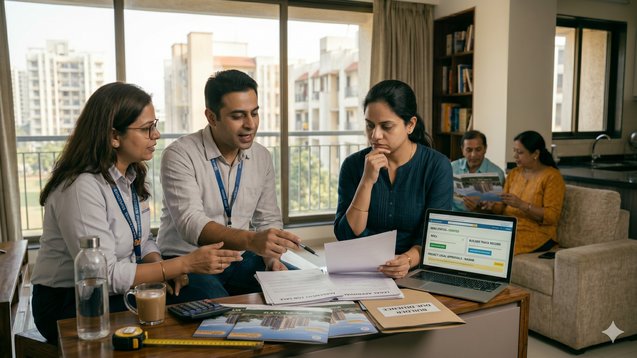
Introduction: When Doubt Enters the Buying Process
The real estate business in India depends on trust because home purchases require customers to interact with developers and brokers while dealing with extended construction periods. But what happens when you find a property that fits your budget, location, and requirements, yet something about the builder doesn’t feel completely right? Most buyers fail to recognize how common this situation actually is. Maybe the builder is relatively unknown.Your understanding of the builder depends on their mixed reputation. The builder needs to prove to you that their work meets your requirements. The small doubt about this matter expands to make all decisions appear dangerous. The situation requires you to stop and consider it. Property acquisition differs from other buying activities because it results in permanent obligations. The builder creates more severe damage when he fails to deliver work because it results in financial loss and affects your time and peace of mind and future plans. This concern develops differently across different Indian cities which operate at various tiers. Customers in Tier 1 cities need to assess both established builders and newly established companies. In Tier 2 and Tier 3 markets, the risk can be higher due to lower transparency and fewer large, reputed players. The objective requires you to analyze every builder whose trustworthiness remains uncertain to decrease your decision-making risks through your assessment. We will explain the entire process so you can handle this situation with both clear understanding and strong assurance.
Start by Understanding the Source of Your Doubt
The process of decision-making requires you to establish the specific source of your discomfort before proceeding. The situation requires evaluation to determine whether it pertains to three specific areas: A brand that lacks recognition according to customer perception, The situation involves The project execution process, The sales team lacks proper communication methods to convey their information. A new builder has entered the market in a Tier 2 city because his business needs to establish itself as an unproven entity. The builder who operates in Tier 1 cities and has multiple delayed projects causes major issues. You can handle your doubt when you establish its cause because you will then use logical thinking methods to solve the problem.
Research the Builder’s Track Record Thoroughly
Your most effective tool exists in this particular resource. The evaluation process needs to extend beyond marketing brochures and sales presentations. Check previous projects together with their delivery timelines and construction quality and customer reviews. The builder's completed projects should be visited if it is feasible to do so. The residents should be interviewed about their experiences with project delays and maintenance problems and their overall contentment. In Tier 1 cities, this information is usually easier to find. The information becomes available in Tier 2 and Tier 3 cities through extra research work, which proves beneficial for obtaining results. The project details and developer history should be investigated while you browse listings on Property Aaj. A builder's past performance provides the best evidence about his upcoming reliability.
Prioritise RERA Registration and Compliance
The Real Estate Regulatory Authority (RERA) has enhanced transparency in Indian real estate markets through its initiatives but requires active usage to deliver benefits. The RERA registration status of a project must get verified before any other steps can proceed. The process guarantees that official project information gets documented with established project date schedules while providing buyers legal rights to protection from delays and disputes. The RERA portal provides access to project progress updates together with approval details and complaint records. The regulations for compliance become more rigorous in Tier 1 cities compared to Tier 2 and Tier 3 markets which permit partial compliance for some projects during this phase. The registration process becomes more urgent because projects in Tier 2 and Tier 3 markets continue to operate under incomplete or postponed compliance. A builder who postpones or skips RERA registration creates a significant danger to the project.
Consider Ready-to-Move Properties for Lower Risk
The most effective method to decrease risk about a builder whom you mistrust completely involves selecting a property which has already been constructed. The process between two parties receives completed that process through which they achieve outcomes which include three main elements. You can inspect the flat and assess its building status while meeting current residents of the property. Ready properties in Tier 1 cities cost more than other options because they provide buyers with financial security. The properties which exist in Tier 2 and Tier 3 cities deliver exceptional value through their lower risk profiles. You can use this method to gain property advantages while limiting your need for builder performance.
Examine Legal Documents in Detail
The need for documentation increases during times of low trust between parties. The organization must establish complete legal documentation which includes ownership information, necessary permits, construction designs, and their applicable completion documents. The organization should hire a legal specialist who will conduct separate document verification. This process requires additional time, but it creates exceptional security measures. The step which buyers often skip leads to their future regret because it especially affects their work with unknown developers. Your trust requirements decrease when you possess a legally secure property.
Analyse Pricing: Is the Risk Already Discounted?
The pricing of properties from less-reliable builders goes down because builders need to find buyers for their properties. This raises an important question: Is the lower price worth the higher risk? A property which costs 10 to 15 percent less than similar options in the same area shows that the market sees the builder as unreliable. You can use Property Aaj to compare prices of similar projects while determining whether the discount is valid. The price difference needs to be evaluated through this question: Am I comfortable taking this risk for the savings? The decision requires awareness because it does not have a single correct response.
Start with Smaller Exposure if You’re Unsure
The project requires your presence if you want to work on it. The project requires your presence if you want to work on it. You should choose between two options which include either a major investment or a top-tier unit or a base investment or a unit which has superior resale value. The method provides financial protection because it enables you to evaluate the builder's ability to complete projects. An investor who operates in a Tier 2 city will purchase a small unit located within a developing project while choosing to avoid high-value properties.
Look for External Signals of Credibility
The existence of reliable construction work can be proven through various indicators which discoverability reaches beyond established partnerships with reputable banks and financial institutions which authorize their work and their connections to recognized contractors and architects. Banks conduct their own investigation process to assess project eligibility before they grant home loan approvals. The project gains increased trustworthiness when multiple banks show their readiness to provide funding. The indirect signals presented here enable you to evaluate risk through a more precise measurement method.
Avoid Emotional or Pressure-Based Decisions
You should not make decisions when you are experiencing strong emotions or you feel pressured to choose. Your decision about a builder should not be made through hasty judgment when you lack confidence in their ability. Sales teams may push you with statements like: "Limited units left" or "Prices increasing soon." The need for caution should not be replaced by pressure. You need to examine every detail which includes price information and legal details and construction standards and builder reputation. You will have new chances even if you miss this single opportunity.
Have a Clear Exit Strategy
The exit options need to be evaluated before you make your final decision. The property needs to have easy resale potential. The area needs to show evidence of active rental demand. Future buyers will experience the same trust issues that current buyers encounter. The exit process becomes easier in Tier 1 cities because their resale markets operate at higher efficiency. The resale process in Tier 2 and Tier 3 cities depends primarily on two factors which are location and builder reputation. The implementation of a precise exit plan decreases all risks that extend beyond the immediate future.
Conclusion: Trust Matters, but Verification Matters More
People find it difficult to pick a property when their trust in the builder remains unproven. People can choose to stay at the property instead of leaving at once. People need to establish informed verification as their main approach instead of using blind trust. The builder's track record, RERA compliance, pricing information, and Property Aaj platform serve as essential resources for your decision-making process. The Indian real estate market offers various investment opportunities which generate different risk levels throughout its Tier 1 metropolitan areas and developing Tier 2 and Tier 3 cities. Your job is to understand that risk and decide what you’re comfortable with. Trusting someone does not lead to the best property decision because people need to evaluate between their properties by using proper evaluation methods.
FAQs
1. Is it safe to buy from a new or unknown builder?
The process requires extensive investigation before reaching a conclusion. The decision-making process needs your assessment of previous projects and their legal endorsements and their financial support.
2. What is the role of RERA in such cases?
The project needs registration because RERA delivers both transparency and legal safeguards.
3.Should I avoid under-construction projects with doubtful builders?
Investing in ready-to-move properties becomes safer when you doubt a builder because these properties remove delivery uncertainties.
4. How can I verify a builder’s credibility?
Investigate previous projects and customer reviews and bank endorsements and the builder's overall market image.
5. Does a lower price mean higher risk?
The answer is yes according to common practice. The market sees lower prices as evidence of higher risk which needs careful examination before making a decision.
6. What should I do if I still feel unsure?
You need to take additional time while getting professional guidance about all your options before making your final choice.
Read more about property matters with our specialists and browse the latest property listings on Property Aaj. Download the app from the Play Store and App Store now for easy buying, selling, and renting!