Introduction
Home buyers assess four main factors which include price and location and amenities and appreciation potential when they choose their future residence. Citizens form active community bonds which create a substantial impact on their ability to experience happiness throughout their lives. A property exists as more than a building constructed from concrete and steel materials. People create a common space which they use to determine security measures and upkeep procedures and community relations and their way of life. Active resident communities provide better daily experiences while they maintain property values and support efficient management of shared obligations. Citizens in Tier 1 cities which include Mumbai and Delhi NCR and Bengaluru need to participate in organized activities because their cities contain many people and have complicated systems. The structured resident welfare associations of Indore and Lucknow and Coimbatore are now crucial because their Tier 2 cities experience fast township development. The residents of Tier 3 towns usually depend on their local connections but modern gated communities require official systems to build social ties among residents. The resident community strength assessment enables you to avoid future home problems because it helps residents evaluate their onsite living experience at Property Aaj (https://www.propertyaaj.com).
Community Culture and Everyday Living Experience
The cultural practices of residential societies determine their residents' daily activities more than homebuyers expect. Psychological comfort develops through the establishment of a cooperative and respectful environment. The neighbors create a stable and welcoming atmosphere through their practice of greeting each other and their open communication and their adherence to common rules. The professional demands of Tier 1 cities create high stress levels, which residents can manage by returning to their peaceful home environments. Tier 2 cities establish organized communities that help families and professionals create business connections. The social environment of traditional social spaces in Tier 3 towns creates advantages for modern apartment residents through their use of official systems that maintain social order. The daily atmosphere of a community depends on its cultural values, which determine how peaceful its residents experience their most ordinary activities.
Maintenance and Infrastructure Standards
Community activity reaches its highest level which community members demonstrate through their shared infrastructure maintenance activities. The corridors stay clean, elevators operate properly, gardens receive proper upkeep, parking spaces have correct signage, and lighting functions properly because the community manages these facilities through successful maintenance operations. Tier 1 high-rise projects require continuous monitoring for their advanced systems which include fire safety networks and lift operations and water pump systems and power backup equipment. The active resident associations guarantee that inspections happen at the right time while vendors stay responsible for their work. The structured community oversight system in Tier 2 townships maintains all recreational facilities and internal roads at their ideal operational standards. The organized participation in Tier 3 towns helps to maintain reliable waste management systems and security services which serve as essential public utilities. The presence of neglected infrastructure shows that different organizations have poor communication with each other. Active resident participation establishes well-maintained environments.
Security and Collective Responsibility
Safety improves when people in the community take part in all aspects of their residential community. The security systems achieve better results when the residents work together with security personnel to check visitor entries and report any suspicious activities. Active communities in Tier 1 cities use digital access systems and visitor tracking logs and emergency protocols. The same structured methods that Tier 1 cities use to manage security operations now become common in Tier 2 developments. In Tier 3 towns where people know each other better, community monitoring supports official security operations. The community creates its own safety plan through active security protection. The community creates awareness which results in safer public spaces that protect children and elderly residents and working professionals.
Social Engagement and Emotional Well-Being
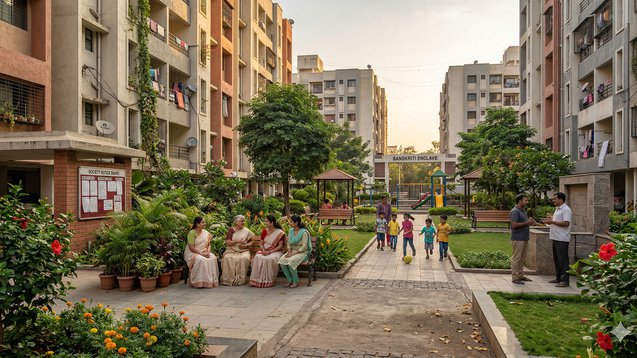
The resident community that maintains active participation organizes social events and celebrations and sports competitions and cultural gatherings for its members. The activities create a feeling of belonging which is shared by the community members. The residents of Tier 1 cities experience social isolation but their engagement helps them reduce stress while developing social relationships. The organized events that take place in Tier 2 cities help people to build professional networks while connecting with their local community. The social ties of Tier 3 towns help residents to build social relationships with their neighbors through traditional ways while they keep up with their modern home life. Safe peer interaction through protected environments allows children to interact with their friends. Senior citizens experience companionship. Families feel connected rather than isolated. People derive emotional comfort from community connections which exist as an important advantage of strong communities but remain hidden from view.
Conflict Management and Structured Governance
Shared living inevitably produces occasional disagreements. Parking disputes, pet policies, noise complaints, and financial concerns can arise in any society. The active resident association establishes its operational framework through dedicated meeting schedules that handle disputes in a just manner. Structured governance systems in Tier 1 high-density complexes control all operational matters to prevent any minor disputes from becoming major problems. The projects of Tier 2 and Tier 3 require organizations to use open communication channels and established procedures as their primary means of building mutual understanding. Before purchasing through Property Aaj (https://www.propertyaaj.com), inquire about how governance functions within the society. The organization needs to provide information about its meeting schedule together with the methods used to share official announcements. The process of effective governance leads to a decrease in persistent problems that last throughout the entire period.
Financial Transparency and Accountability
The maintenance charges establish an ongoing financial obligation that must be paid. The active resident community ensures that all financial resources are used according to established guidelines. The organization shows its accountability through three methods which include regular financial audits and open budget procedures and full disclosure of its spending activities. Tier 1 cities require professional management services because their operating budgets exceed their actual spending. The financial monitoring system that residents establish in Tier 2 and Tier 3 cities enables them to establish confidence while stopping financial misconduct. People maintain their financial discipline because it ensures they sustain their desired standard of living while protecting their property investments. Financial matters that remain hidden lead to two problems which include unpredictable fee increases and the improper use of designated funds. The community needs financial transparency which holds equal importance to property valuation according to residents who evaluate their land ownership.
Adaptability to Changing Needs
The community must adjust its active operations to meet changing needs. Families expand their members, infrastructure experiences its natural decline, and regulations undergo their scheduled modifications with each passing year. The organized societies possess the ability to enhance security systems while establishing sustainable practices and updating their parking regulations whenever they find it essential. Cities classified as Tier 1 require their residents to follow established procedures for coping with new urban development regulations. The governance structure of Tier 2 cities enables their expansion through its adaptable framework. The increasing residential density of Tier 3 towns creates a demand for structured systems that handle population growth. The communities which successfully adjust to new circumstances maintain their organizational structure. Organizations that refuse to embrace transformation, will face operational challenges.
Impact on Rental Demand and Resale Value
The market value of a property depends on the strength of its community according to investment professionals. Tenants and buyers show a preference for communities that maintain their infrastructure and minimize internal disputes. The strong rental demand for properties in well-managed communities, which operate in Tier 1 cities, results from tenants who prefer secure environments. Organized associations in Tier 2 townships create a perception of premium value. Strong governance systems in Tier 3 projects establish a reputational advantage for emerging markets. The community reputation functions as a crucial evaluation aspect when you browse Property Aaj listings at (https://www.propertyaaj.com.) A business environment with a strong internal ecosystem attracts higher interest from external markets.
Balancing Activity With Privacy
The active communities provide multiple benefits but their advantages are outweighed by personal preferences. Some buyers choose to live in spaces that provide them with minimal interaction in combination with peaceful surroundings. The large society will host multiple events which some members will choose not to attend. People in Tier 1 cities consider their privacy rights to be of utmost importance. People in Tier 2 and Tier 3 towns experience social interactions that occur more organically throughout their daily lives. Your personality and lifestyle and your expectations will determine the best option for you. You should select a space which matches your preferred level of comfort.
Conclusion
The selection of a property located within a neighborhood that has active residents results in better security measures and better infrastructure standards and better financial recordkeeping and better mental health outcomes and better potential for future property value growth. Structured participation serves as the essential requirement that enables Tier 1 cities to handle their complicated high-density urban areas. The organized communities in Tier 2 cities work to improve township development and maintain community stability. The formal resident systems in Tier 3 towns enable their residential areas to develop into new housing designs. You should assess all aspects of the building including its design and amenities and its operational structure through the Property Aaj website at httpswww.propertyaaj.combefore completing your purchase. You should speak with residents and view common areas to learn about the decision-making process. Your investment will remain protected through a strong community. Your daily existence will become better through this experience. A house functions as a place for people to stay. A community serves as a space where individuals can find their sense of belonging.
FAQs
1. How do I identify a healthy resident community before buying?
The process requires you to observe maintenance standards and speak with current residents and review meeting frequency and check financial transparency.
2. Does an active community always mean higher maintenance charges?
Active management results in cost savings because it directs resources toward essential expenses while maintaining financial sustainability.
3. Are gated townships better at community management?
The structured systems of large townships exist in Tier 1 and Tier 2 cities but their success relies on how much residents take part.
4. Can weak community management reduce property value?
Poor maintenance together with unresolved conflicts causes damage to resale demand of properties.
5. Should investors consider community strength?
The answer is yes. The governance of society directly affects how tenants choose to live in their homes and how they see property market value.
6. Is strong community involvement suitable for everyone?
Personal preference determines the answer. You should assess if your preferred way of life corresponds with your current social activities.
Read more about property matters with our specialists and browse the latest property listings on Property Aaj. Download the app from the Play Store and App Store now for easy buying, selling, and renting!