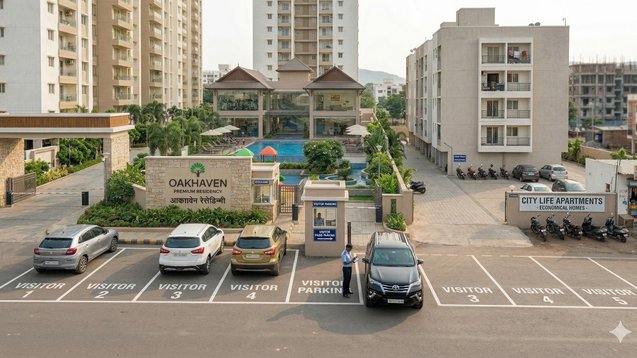
Introduction
People purchase homes because they need more than just space and features and their location needs to matter. The process requires an evaluation of all aspects that will impact your daily life after you complete the move into your new home. The parking space for visitors remains one element that buyers tend to miss during site inspections. The first impression creates a secondary impression. Your primary concern centers on securing your parking space. The situation becomes problematic when there are no special areas available for treating friends as guests. The urban tension in Tier 1 cities which includes Mumbai and Delhi NCR and Bengaluru results from insufficient parking spaces. The two cities of Jaipur and Lucknow and Coimbatore have seen a rapid increase in vehicle ownership because residents experience rising economic prosperity. The newly developed gated communities in Tier 3 towns have become popular among families who possess multiple vehicles. Changes in mobility habits have become a national trend throughout India. You should check visitor parking availability before you choose a home from Property Aaj (https://www.propertyaaj.com). The small detail affects your daily activities and social interactions and your ability to sell the property and your overall contentment with life.
Understanding Visitor Parking vs Resident Parking
Each apartment receives a designated parking space which can be located in covered areas or at stilted or underground parking facilities. The visitor parking area operates as a shared space that allows short-term parking for guest vehicles. The confusion begins when buyers assume that “parking available” automatically includes visitor space. The statement does not convey that information. In Tier 1 cities, developers use their land resources to create maximum underground parking spaces for residents while designing their projects with minimal parking space for visitors. Tier 2 cities provide more planning space than Tier 1 cities yet face challenges with enforcement. Residents in Tier 3 towns use open areas as parking spaces even though no official parking spaces exist. When you examine Property Aaj listings on their website (https://www.propertyaaj.com) you need to ask this question: Does the parking area for visitors have separate boundaries? How many parking spaces exist? Does it exist as part of the approved design document? The present explanation creates understanding which prevents future problems.
Daily Convenience and Social Comfort
The process of hosting a housewarming party or a festival or a birthday party requires the following steps. Security personnel inform guests that there is no parking area which they can use. The drivers choose to park their vehicles on the main road which leads to the possibility of receiving fines and experiencing parking difficulties. Improper roadside parking in Tier 1 cities generates municipal penalties for the violation. The narrow lanes of Tier 2 cities create conditions which lead to traffic congestion. In informal parking areas of Tier 3 towns residents engage in parking disputes with their neighbors. Indian households maintain social interactions with other people. Relatives visit their family members on a regular basis. Friends visit their homes without making any prior arrangements. The design of a home should create an atmosphere which invites people to enter. Visitors can park their vehicles in sufficient space which allows you to maintain your social activities without any stress and to enjoy your time with friends.
Impact on Society Harmony
Parking disputes represent a primary source of conflict between residents. When there is not enough parking space for visitors, guests will park their vehicles in resident parking areas for short durations. The situation results in disputes and resident complaints which sometimes escalate into official society conflicts. The security team at large Tier 1 townships monitors visitor parking while they record all parking activities through digital systems. The manual tracking system used in Tier 2 and Tier 3 projects creates opportunities for misuse and confusion. A visitor parking system which designers construct with careful planning eliminates all unnecessary disputes while it helps residents share their community space.
Effect on Resale Value and Rental Demand
Buyers and tenants today assess parking facilities before reaching their final decisions. Properties in Tier 1 markets provide structured visitor parking which helps them achieve better organization and higher quality appearance. Upwardly mobile buyers in Tier 2 cities expect to see planned infrastructure development in their communities. The new developments in Tier 3 towns which offer organized parking systems create a distinct identity compared to traditional standalone buildings. Adequate visitor parking at your property will create a positive effect on buyer perception when you plan to resell or rent in the future. The project layouts on Property Aaj (https://www.propertyaaj.com) require you to review them carefully while you browse properties. Parking diagrams show the extent to which developers have dedicated their efforts to this planning element.
Parking Ratios and Practical Evaluation
The national standard for visitor parking does not exist, but parking facilities typically allocate between 5% and 10% of their total parking capacity to visitor parking. The 150-unit project needs more than three or four visitor parking spaces. The following visitor parking criteria need to be checked during site visits. The visitor parking area needs assessment through these three questions. The validation process requires assessment of which parking spaces need to be inspected. The validation process requires assessment of which parking spaces need to be inspected. Premium projects in Tier 1 cities include basement visitor parking space. Tier 2 cities establish surface parking spaces through their standard operating procedures. The parking area from which drivers need to park their vehicles exists within Tier 3 towns. Marketing materials make claims about product performance which actual product performance exceeds.
Legal and RERA Transparency
The governing body for parking rules in India established their regulations through municipal legislation and RERA regulations which state government bodies implemented. RERA requires project layout information to be disclosed by developers although different states establish their own parking space requirements. The states of Maharashtra and Karnataka enforce their laws with more rigorous standards than other areas. The new markets which include Tier 2 and Tier 3 areas show better transparency results while people must continue with their thorough checking processes.
Security and Design Considerations
The visitor parking space must show up in the official building plan which Property Aaj (https://www.propertyaaj.com) has listed for its property. Security and Design Considerations Visitor parking should not compromise safety. The location should provide direct access to the entrance while offering CCTV surveillance and restricted entry points. The design of parking spaces generates hidden areas and traffic congestion through its implementation. Major construction sites in Tier 1 cities use integrated boom barriers together with digital visitor entry systems which handle visitor access. City security systems in Tier 2 and Tier 3 cities have started to implement comparable protection measures. A well-designed visitor parking area balances accessibility with protection.
Future-Proofing Your Investment
The number of vehicles owned by people in India keeps increasing. A young couple may own one car today but two in a few years. Families will increase their social events as time passes. People will discover their current needs exceed what they have now. Initial planning for Tier 1 cities needs special attention because these cities have restricted development options. The land situation in Tier 2 and Tier 3 cities provides developers with greater design freedom but only when they design their projects effectively. A project with extra parking space for visitors will provide the organization with better ability to handle future developments.
Balancing Cost and Livability
The requirement for visitor parking space leads to increased project expenditures because land needs to be allocated. The additional expense needs to be paid because of the requirement but it provides extended benefits which need to be evaluated. The buyers in Tier 2 and Tier 3 markets should maintain their requirement for this particular feature because it remains essential. Homebuyers need to find a solution which establishes a balance between their budget limits and their requirements for comfortable living space. The presence of sufficient visitor parking spaces enables visitors to experience daily comfort in a significant yet understated way.
Conclusion
Visitor parking ranks as the most essential element which Indian residential properties need to show in their marketing materials. The system provides multiple benefits because it enables social interactions while it decreases conflicts and increases property resale value and it provides users with day-to-day operational support. The system helps you to avoid parking difficulties which occur in urban areas of Tier 1 cities. The system helps you to fulfill your emerging lifestyle requirements which have begun to develop in Tier 2 cities. The system demonstrates forward-thinking development practices through its modern infrastructure design which exists in Tier 3 towns. Property Aaj (https://www.propertyaaj.com) provides more information than just interior design and facility details to help you find your ideal residence. You need to examine the parking design because you need to raise specific inquiries while preparing for future developments. First impressions matter because a home needs to create an inviting atmosphere for visitors. The system provides sufficient visitor parking space which enables your guests to enjoy comfort while your society functions properly and your residential experience remains free from difficulties throughout the upcoming years.
FAQs
1. How much visitor parking is considered adequate in a residential project?
People evaluate the required amount of visitor parking in residential projects through national standards which allocate 5% to 10% of total parking spaces for visitor parking needs. In high-density Tier 1 cities, slightly higher allocation is beneficial. The assessment of visitor parking capacity needs to be analyzed through its entire relationship with total housing units available at the site.
2. Can visitor parking impact property resale value?
Yes. Buyers increasingly consider parking convenience when evaluating properties. The presence of sufficient visitor parking space in urban areas with limited parking availability helps to raise the property value which results in better sales outcomes for the property.
3. Is visitor parking mandatory under RERA regulations?
RERA requires parking layouts to be included in project disclosures which must maintain project transparency. The rules for visitor parking require compliance with both state and municipal regulations. Buyers should verify approved plans before purchase.
4. What problems arise if visitor parking is insufficient?
The community faces multiple problems because people create traffic jams while fighting with others and using other people's designated parking areas plus they need to pay fines for violations in areas that require strict enforcement. Over time, this can reduce community harmony.
5. Should I prioritize visitor parking over extra amenities?
People who live in busy urban areas or host many visitors should choose visitor parking as their most useful asset because it provides better value than any high-end facility. Your personal habits and needs will determine this outcome.
6. How can I verify visitor parking during site visits?
The visitor parking area requires you to examine the layout plan, assess the number of designated visitor parking spaces and check their position in relation to building entrances while you find out about security operations and parking regulations. The sales team needs to present more than just spoken evidence to achieve their goals.
Read more about property matters with our specialists and browse the latest property listings on Property Aaj. Download the app from the Play Store and App Store now for easy buying, selling, and renting!